Autism/ADHD, a ‘quantum’ spectrum
the genetic origin of autism, hypersensitivity, ADHD and high intellectual potential
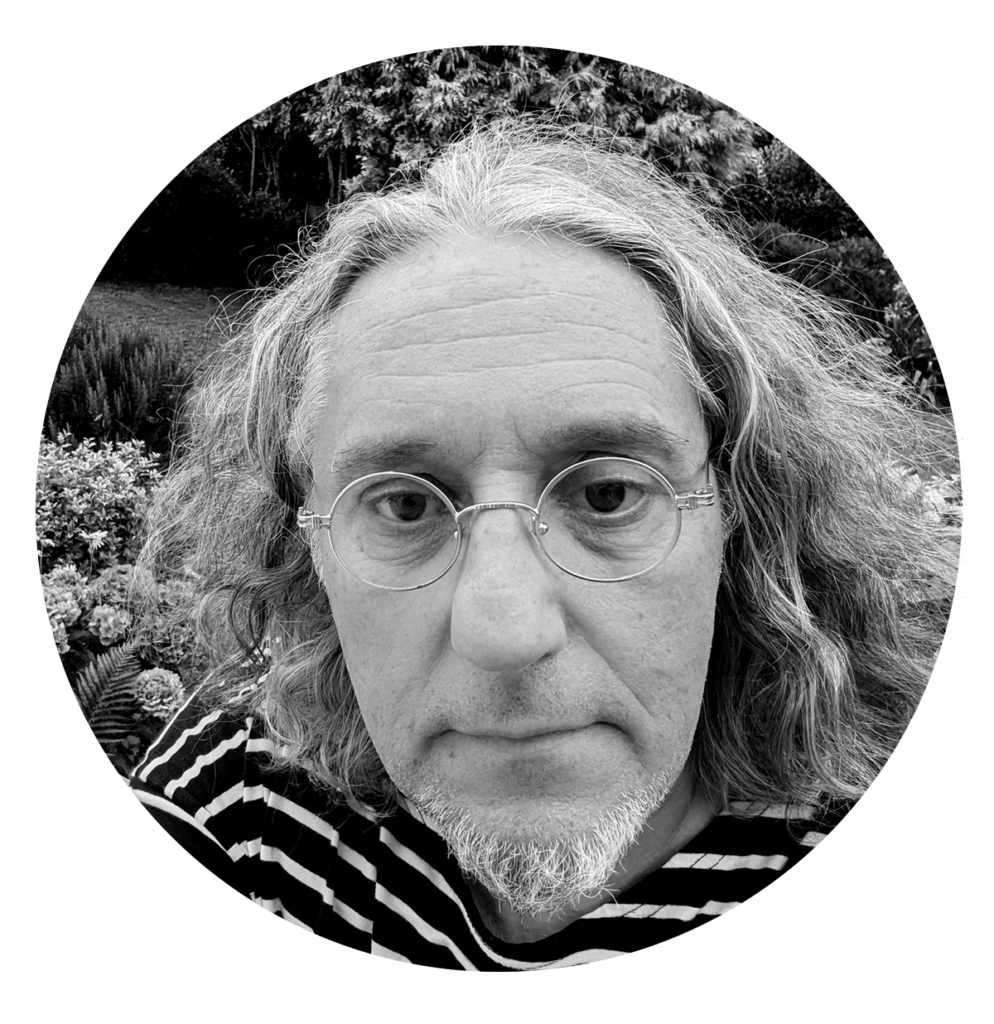
Jules Dorval
Volunteer consultant and research into the Autism Spectrum and ADHD: understanding and improving the autistic condition. I give talks and training courses.
Researching solutions for autism, neuroscience, synthesis of data, psychosynthesis. The physical and spiritual (transpersonal) realms. Research in biochemistry, psychology and sociology.
I was a Senior Graphic Designer and Art Director, a manager, creative, designer, and specialist in e-marketing and social media. A zebra and AS*, a philosopher, born in the Netherlands, I am fluent in Dutch, English and French.
* The Zebra is curious, intelligent, perceptive, a sensitive human being. He or she can find intelligent solutions to complex problems quickly and pragmatically. The Zebra is independent, passionate and responsible by temperament, and lives life fully. Creating is their greatest pleasure.
The zebra, or person with high potential, has a particular potential: in other words, a natural aptitude in one or more specific fields. The name zebra has become a term encompassing people on the AS spectrum.
AS: Autism and ADHD have a genetic origin without pervasive disorders, with abilities outside the norm.
– – –
How can we free ourselves from the labels imposed on us, how can we find meaning, a purpose in life? How can we use these extraordinary qualities? How can we escape loneliness. How to behave as a support person, what to do and what not to do (do and don’t). Why not impose things through authority, but instead reason together? How to act as a role model so that a child can develop (setting an example)? Adapting their environment. How to live without a mask. Discrimination, loneliness. What is an autistic person’s identity? The strengths and weaknesses of current therapies. The principle of becoming part of their world. How to communicate? The role of positive speech. Achieving something, despite social anxiety. How to create a life based on values, passions, goals…
I studied neuroscience to understand the various disorders observed. Facial recognition, navigation, difficulties with concentration. I studied the role of neurotransmitters and the effects of dopamine, adrenaline and cortisol, which weigh heavily on the disorders and particularities of ASD. I studied the methods of American and English psychiatrists in relation to their clients with ASD, clinical history-taking, the DSM 5. How to manage depression, anxiety. Emotional complexes. I studied the keys to education in neuroscience. Mitochondrial disorders in autism. Dietetics and metabolism. »
I am based in Brittany, France
I invite you to contact me so we can find solutions to your request.
Kind regards, Jules Dorval
Resource person for autism/hypersensitivity and ADHD, talks.
Study sources:
- PHD Valery Gaus, psychiatrist in NY, a leading specialist in autism, CBT (cognitive behavioural therapy).
- PHD Alok Kanojija, Philadelphia, specialising in addiction, anxiety and depression.
- Sarah Hendricxks, UK, author and specialist in female AS syndrome, sexuality and addictions among autistic people.
- Nancy Kanwisher. MIT OpenCourseWare, neuroscience: The brain
- Céline Alvarez: Cognitive science (education).
- Bruno Gepner, University of Aix-en-Provence: Temporospatial processing disorders.
- Corine Sombrun: ASC, altered states of consciousness.
- Lise St-Charles and Brigitte Harrisson, Canada. Authors specialising in autism, the conceptual saccadic language LSC.
- Carl Gustav Jung: Emotional complexes.
- Piero Ferrucci: Positive psychology, kindness as a key; a good relationship with an AS person opens the door to their ability to listen and act, to learn, to overcome difficulties.
- Paige Hennekam, known as Paige Layle, is a Canadian ADHD and autism-acceptance activist and author. Book: “But Everyone Feels This Way”: How an Autism Diagnosis Saved My Life
- Daniel J. Siegel, MD, is a clinical professor of psychiatry at the University of California, Los Angeles School of Medicine, where he founded and directs the Mindful Awareness Research Center.
- Jeffrey Schwartz, a neuropsychiatrist at UCLA, states: “You are more than your brain.”
- Vera Helleman is the author of “The Power of Autism” and, among other works, “The Emotion Encyclopedia”. She is also the founder and trainer at the Emotion Expertise Center.
- Josef Schovanec, born on 2 December 1981 in Charenton-le-Pont, is a French philosopher, writer and traveller of Czech origin. Autistic himself, he campaigns for the dignity of autistic people.
- Hugo Horiot, born on 3 August 1982 in Dijon, is a French actor and writer and, above all, a campaigner for the dignity of autistic people.
- Until almost the age of 30, Alexandra Reynaud was an Aspergirl without knowing it. She is the author of the books L’Enfant atypique and Les Tribulations d’un petit zèbre, and the creator of the blogs Les Tribulations d’un petit zèbre and Les Tribulations d’une Aspergirl.
- Professor Marie K. Harder, University of Brighton, UK, and Fundan University in China. A book on AS for friends and colleagues. An illustrated book to improve behaviour at work if you work with an autistic colleague.
- Daniel Tammet, born Daniel Paul Corney on 31 January 1979 in Barking, England, is a British writer, poet and hyperpolyglot. He was diagnosed with epilepsy in childhood, then with AS syndrome as an adult.
- Tony Attwood, born on 9 February 1952 in Birmingham, is a British psychologist specialising in AS syndrome and high-functioning autism.
- André Stern
I never went to school, but I am and always was amazed by life; that is what I am passionate about.
André Stern is an international speaker and author of the books: Et je ne suis jamais allé à l’école (Actes Sud), Jouer (Actes Sud), Tous enthousiastes (Horay), Les rythmes et rituels de l’enfant (Marabout), Je t’aime parce que tu es comme tu es (Marabout). - Jacob L. Barnett, born in Indianapolis on 26 May 1998, is an American mathematician and astrophysicist, known for having been a child prodigy. TED Talks.
- Dr Bruno Donatini: a leading specialist in the gut
Gastroenterologist, hepatologist, oncologist and immunologist. The impact of digestive flora on depression and anxiety. - Abraham Harold Maslow, born on 1 April 1908 in New York and deceased on 8 June 1970 in Menlo Park, California, was an American humanistic psychologist, considered the father of the humanistic approach in psychology.
- Roberto Assagioli, born on 27 February 1888 in Venice and deceased on 23 August 1974 in Capolona, Arezzo, was a physician, neuropsychiatrist and pioneer of Italian psychoanalysis. Initially a disciple of Freud, he parted ways with his mentor to develop his own approach to psychotherapy, which he called psychosynthesis.
Talks
In 2018, I began a study project on autism and its particularities, with the aim of passing on this knowledge and these experiences through writings and talks addressed to therapists, doctors, psychologists and parents.
I have been studying psychology for 20 years and, over the last eight years, autism and ADHD through the work of leading specialists in autism, psychology and neuroscience.
In these talks, I address the genetic origin of autism, hypersensitivity, high intellectual potential, autism-related disorders, emotions (how they work), behavioural disorders, the origins of depression, anxiety and behavioural solutions:
How can we free ourselves from the labels imposed on us, how can we find meaning, a purpose in life?
How can we use these extraordinary qualities?
How can we escape loneliness?
How to behave as a support person, what to do and what not to do (do and don’t)?
Why not impose things through authority, but instead reason together?
How to act as a role model so that a child can develop (setting an example).
Adapting their environment?
How to live without a mask. Discrimination, loneliness.
What is an autistic person’s identity?
The strengths and weaknesses of current therapies.
The principle of becoming part of their world. How to communicate? The role of positive speech.
Achieving something, despite social anxiety.
How to create a life based on values, passions, goals…