A different BOOK
Observations of the heart and the Spirit through the Quantum Spectre
hypersensitivity, autism, dyslexia, dyspraxia, Tourette syndrome, bipolarity, ADHD (attention deficit hyperactivity disorder).
List of autism spectrum disorders A
tribute to AS autonomy
‘You must become the person you are.’ Do what only you can do. ‘Keep becoming who you are; be your own master and sculptor.’ Friedrich Nietzsche, also AS.
‘Forget what you already know, look at things from your unique perspective, stop learning within the system, follow your passions, create something (become independent).’ What Jacob Barnett, American mathematician and astrophysicist, said at the age of 11 (TED Talks), also AS.
‘No more becoming; you have already been for a long time.’ Elisa Mijn, on our wedding announcement, for our AS family, a long time ago already.
The most important part of your being has been waiting for you since eternity. To meet it, you need only take that step.’ Julespeter
Some positive indications about AS/ASD
1. Hyperfocus
2. Exceptional analytical abilities
3. Understands society as a whole.
4. Hyperintelligence
5. Tunnel focusing (concentrating while excluding the superfluous)
6. Often endowed with musicality
7. Very gifted with numbers and mathematics.
8. Polyglot, an ability to learn several languages.
9. Linguistic ability
10. Excellent manager and logistician,
11. Very gifted in computing.
12. Exceptional cook (AS people have the taste buds + the desire to invent)
13. Excellent at presenting (public speaking).
14. Good actors/actresses
15. Musicians, composers
16. Choreographers
17. Exceptional ergonomic vision
18. Excellent troubleshooter (knowing how to solve problems).
19. Masters multiple techniques with finesse.
20. Outstanding cooks and pastry chefs
21. Outstanding in science
22. Management
Disorders of the spectrum
1. Depression
2. Cycles of insomnia
3. Hypersensitivity
4. Lack of concentration
5. Exhaustion
6. Isolation
7. Stress
8. Tachycardia, cardiac arrhythmia
9. Bowel syndrome
10. Hyperintelligence / impatience / boredom
11. Mental dysfunction
12. Nervous-system problems
13. Neurotransmitter imbalance…
14. Atypical problems of people with high potential
15. Psychopathic behaviour (or even asocial, egocentric behaviour)
16. Energy vampirism
17. Disorders of volition (applying the will to actions)
18. Apragmatism in certain situations
19. Obsessive compulsions
20. Thought disorders
21. Obsessive and intrusive ideas
22. Obsessive cycles
23. Distrust, positive schizophrenia
24. Perceptual disorders
25. Perception different from the norm
26. Derealisation
27. Misophonia
28. Communication disorders
29. Disorders of the form and content of language
30. Logorrhoea
31. Affected speech
32. Functional disorders
33. Mutism
34. Autistic withdrawal
35. Behavioural disorders
36. Agitation
37. Phobic behaviours
38. Mood disorders
39. A state of recurrent depression
40. Euphoria
41. Mood disorders, states of disturbance, excitement, depression.
42. Disorders of alertness
43. A slight, permanent reduction in alertness
44. Emotional and affective disorders
45. Anxiety, anguish
46. Doubt
47. Affective indifference
48. Affective discordance
49. Moderate disorders
50. Anxiety or anxiety attacks that are controlled but detrimental to concentration
51. Irritability
52. Agoraphobia
53. Information-management disorders
54. Disorders in managing information about other people
55. Disorders in managing information about oneself
56. Disorders in managing non-social information
57. Deficits in social skills
58. Deficits in activities of daily living
59. Alexithymia
60. Identity disorders
61. Personality disorders
62. Obsessive disorders
63. Hyperfocus disorders
64. Disorders of bodily perception
65. Eating disorders
66. Effects of products containing gluten
67. Effects of sugar
68. Effects of dairy products
69. Rejection of certain textures
70. Rejection of bitterness and foods rich in sulphur and minerals
Temporospatial processing disorders: 27 specific disorders
DTTS are considered early and central neuropsychological disorders, from which numerous developmental difficulties cascade: namely the behavioural, motor and cognitive manifestations of autistic people. Source: Bruno Gepner
1. Disorders of visual motion processing
2. Disorders of lip-movement perception (movements of the lips)
3. Perceptual disorders of facial/bodily emotions
4. Empathising deficit
5. Impaired vision of E-motion
6. Mind-blindness (areas of mental blindness)
7. Executive dysfunction and motor disorders (volition)
8. Disorders of visuomotor integration
9. Visual proprioceptive disorders (perception of one's body and objects in space)
10. Cognitive disorders (failure to register perception, memorisation, reasoning, emotions: physiological/neurological origin)
11. Imitation deficits
12. Slowing of sensorimotor and cognitive processing
13. Language disorders
14. Motor anticipation deficit (volition)
15. Deficits in representing an internal model
16. Deficit in processing proprioceptive flow (not registering information about one's body and movements in space)
17. Joint-attention deficit (observing situations without synthesising them)
18. Eye-contact disorders
19. Deficit in detecting gaze direction
20. Deficit in perceiving eye movements
21. Overfocused static attention (ocular disconnection)
22. Heightened local perception
23. Weak central coherence
24. Enhanced graphic abilities and spatial memory
25. Phoneme categorisation disorders
Supplementary entry: Deficit in verbal flow processing
26. Hallucinations
27. Disorganised speech
Brief psychotic disorders, lasting 1 to 3 days, observed in AS people:
1. Schizophrenia
2. Bipolarity
3. Neuroses
4. Psychosis
5. Psychotic depression
6. Delusions
7. Personality disorders
ASD Description of disorders of the autism spectrum
1. Depression
The child is perfect, but their journey through the world is difficult.
I start from the principle that an AS child born into the world is perfect, but different from the norm. Theoretically, he says, ‘if the environment responds well and supports them well’, after 18 years a complete, harmonious human being is ready for life. There is a built-in compass that brings them safely to port; only bad weather and too many obstacles make them drift ever further from the course of a beautiful being full of potential. A fine example of a journey that works is Iris Grace: ‘The little girl who opens up to the world thanks to a cat’. Her parents found the best way to support her. A book for parents of AS children to read.
When our ‘autistic child of the heart’ becomes depressed
(AS = autism spectrum)
The social environment is not designed to welcome autistic people; parents often find themselves at a loss as to how to manage the situation, the education system is not adapted, and the surrounding setting can generate stress in the child.
In many cases, the child is traumatised and isolated. I am not saying the system is responsible, simply that the current way of doing things is not suited to autistic people and that the result is often disastrous. Perhaps rather strong words for you, but gradually you will become aware of a different reality and find solutions to change this.
According to Valérie Gaus's Figure 1.1.01 (PhD and clinical psychologist in New York), a series of factors leads the child, and also the adult, step by step towards anxiety and depression.
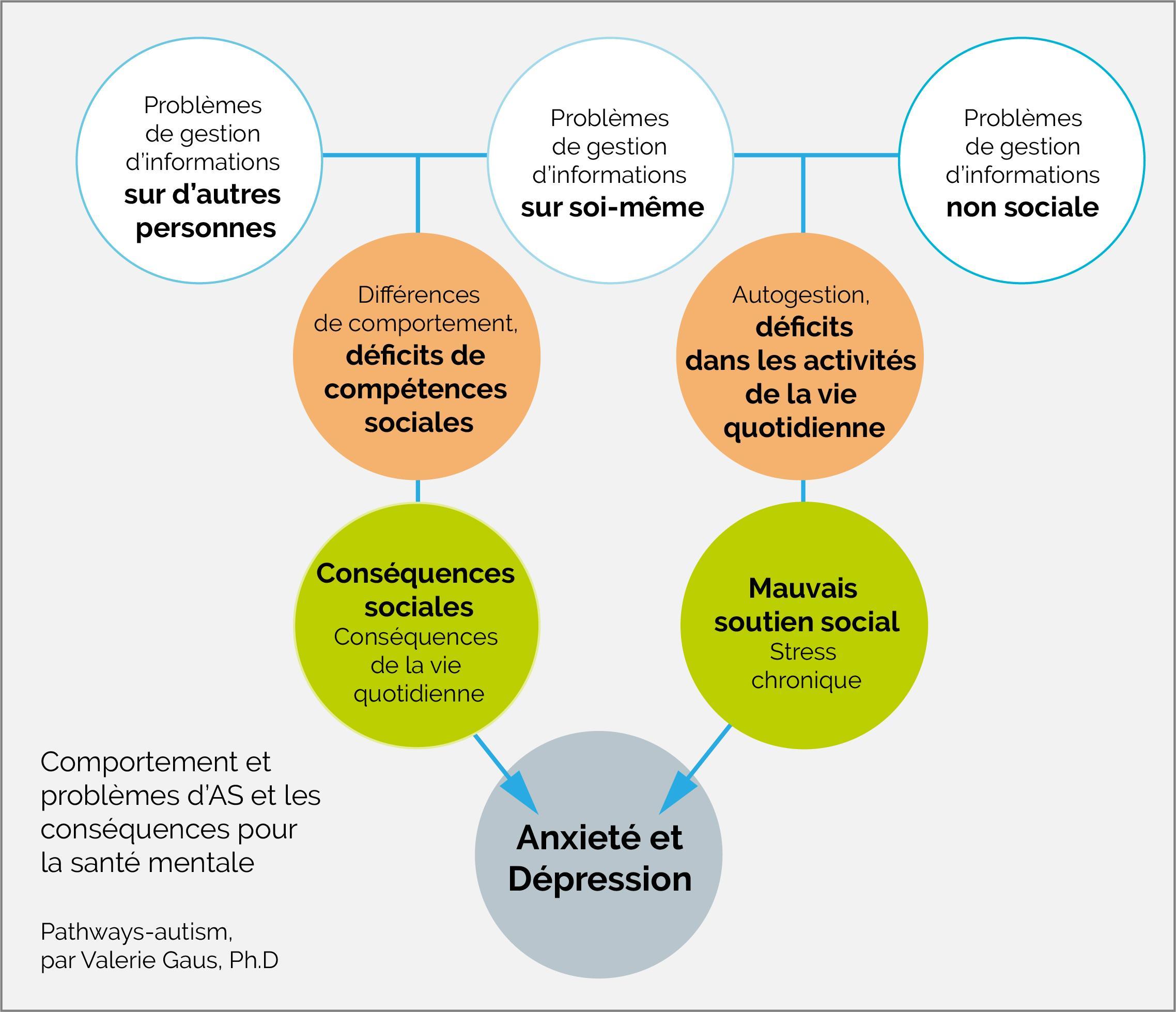
figure 1.1.01 Cognitive-Behavioral Therapy for Adults with Autism Spectrum, Valerie Gaus, PhD, November 2018.
That day, he came home with a heavy heart and a muddled mind. In class, he felt uncomfortable, unable to answer the teacher's questions appropriately, while laughter broke out around him. In his head he wandered elsewhere, and his answer proved completely out of step, despite his perfect knowledge of the subject. A grey veil seemed to fall over him, stifling every desire, in an everyday life where this situation repeated itself endlessly. His classmates' mockery and bullying became unbearable, while the din, the smells and the multitude of impressions prevented him from concentrating. Every morning he went to class with a knot in his stomach. For far too long, he had been unable to sleep or clear his thoughts. Retreating into his bubble became a struggle, and all he wanted was to flee, to escape that feeling of helplessness, to run without ever looking back, to put a definitive end to this suffering.
Valérie Gaus's diagram broadly illustrates dysfunction in managing and interpreting information: a process that goes off the rails. At every stage of life, the impact on the AS person varies, but ultimately the result remains the same: depression and anxiety take hold.
Physiological and genetic factors can also be seen to exert an influence. I therefore distinguish several forms of depression: social depression, physiological depression, digestive depression, as well as innate and genetic depression.
There is also depression linked to metabolism and digestion, cyclical depression resulting from exhaustion and a lack of light exposure, and finally social depression associated with circumstances. As the factors are many, we will define the basic principles and suggest some solutions.
Comorbidity
The combination of disorders generates specific reactions that exacerbate one another. Multiple manifestations appear, requiring care and special attention. Classifying symptoms in psychiatry and psychology sometimes proves complex.
Our AS person's need to remain in their bubble is often associated with obsessive behaviour. This takes the form of a passion for video games, repetitive activities, excessive reading and various addictions, leading to exhaustion. Furthermore, overconsumption of food, sugar and processed products, lack of sleep, concentration problems and irritability in social interactions can lead to depression.
It is essential to note that comorbidity — the simultaneous presence of several mental or physical disorders — can make the diagnosis and treatment of psychological disorders more complex.
In the case of autism, it is not uncommon for disorders such as depression, anxiety and obsessive behaviours to emerge.
According to Dr Bruno Donatini, a recognised specialist in the gut, depression and anxiety can alter the digestive flora, leading to intestinal malabsorption and dysbiosis: an imbalance in the biodiversity of the intestinal flora. This imbalance involves a decrease in beneficial bacteria and a proliferation of harmful ones, which can promote the emergence of depressive syndromes. It therefore appears essential for autistic people to learn to manage and control their depression and anxiety in order to improve their quality of life.
Methods
Developing the will in all its aspects (psychosynthesis, Roberto Assagioli and Piero Ferrucci) to hold on and find a way through.
Learning
Meditation to connect with one's intuition, to find calm. Technical breathing (pranayama) to stabilise the flow of energy in the body. Yoga, the sun salutation, to find points of reference in mind and body.
Setting goals in life
Learning to take on every kind of obstacle, even the most difficult, to transform oneself in the service of others and loved ones, and thus find Dharma, while organising goals in life and creating a chain of values. Source: Dr K. (Alok Kanojia), Healthy Gamer, psychiatrist and addiction specialist. Working at Harvard Medical School, McLean Hospital and Massachusetts General Hospital, and also directly online on his Twitch channel, his mental health project currently reaches more than 200,000 people.
Medicinal plants: saffron and St John's wort (be careful about interactions with other medicines), ashwagandha and curcumin. The dosage suited to the person and the moment is the key to success.
In countries where it is legal, microdosed psilocybin is a good shock remedy for severe depression (also a good remedy for various addictions), because ‘substance abuse is very well known among AS people’ as a way of escaping depression and anxiety.
2. Cycles of insomnia
He had never slept well. When he was still a baby, his father had rocked him for hours, doing Indian dances: ‘hahi héhéhé, héhéhé’, all night until his parents were exhausted, but at least he was not screaming. Later, when he was older, from the age of four, sleep became a major reason for arriving late to class, a major reason for being poorly regarded at school: ‘the teachers were not happy at all’, they did not understand. No excuse accepted, no pleasant reaction from the teachers. To remain on good terms, his parents had to invent all sorts of excuses, which helped a great deal: ‘the pupil was brilliant’.
The insomnia persisted and became one of the main causes of a real disability. Melatonin helped him, at times ‘a lot’, but at other times stress, the excitement of video games and anxiety won, and sleep would not come. After three days of monitoring in hospital by specialists, they concluded: everything is normal, there is no problem with going home! Thank you! ‘This could happen to you too; stay strong.’ There are methods that work and, after all, things improve from the age of 18; and if not: ‘hahi héhé, hahi héhé’.
Some ideas for better sleep:
Intensive sport, an adapted diet, eating within a shorter time window, not eating after 6 p.m., filtering light from LED screens after 7 p.m., gentler lamps without UV, sounds of nature in the bedroom at night: flowing water, wind in the leaves, etc. Creating a clear day/night difference with light.
A duvet weighted with glass beads, a psychiatric solution that holds the body, was developed by Temple Grandin, an autistic American scientist.
Natural products: melatonin (dosage is very important).
3. Hypersensitivity
Hypersensitivity has different levels in the AS person.
The first level:
The best known is that of highly developed senses. The easiest description is to speak of sensitivity ‘outside the norm’. There are positive and negative consequences. You can imagine them. The positives: intense observations are possible, powerful and very subtle sensations; all the senses are so sensitive that they take us into unknown dimensions, listening to environmental sounds with all these senses. The negative: being bombarded and overwhelmed by sounds, smells, light, textures and tastes that are too strong. The AS person often has to wear protection, glasses, noise-cancelling headphones, soft, special, close-fitting clothing to regulate temperature (a very complicated subject). Hearing conversations far away in the house, following them word for word, hearing tiny noises, the floor creaking two rooms away, hearing every little sound others make with their mouths: it can end in ‘misophonia’, becoming agitated and feeling hatred and anger rise out of all proportion.
I have heard the sound of a firefly's beating wings and the crackling of an ant's legs as it climbs a tree.
It is the management of auditory information and ultra-concentration, discerning things undetectable to a normal ear, that make the AS person exceptional.
‘One day, as he looked at the starry sky, the impression of the depths of the universe in all its dimensions and movements entered him through all his senses and into his consciousness, and he felt at one with the universe.’ He was only seven years old.’
The second level:
feeling other people's emotions, being enveloped and overwhelmed by the emotions, desires, frustrations, feelings and moods of others. Reading other people's unconscious, the layers of other people's dreams.
He had a rather scientific way of seeing things; at secondary school, it was mathematics and engineering sciences that really excited him. What was he to do with all these feelings and emotions of others that poured into him? They had found no place in his universe. He read the emotional problems of almost all his teachers on their faces. He felt them on his skin and everywhere, like a pollution of the senses. ‘Nothing to do with this bloody mess of intrusive impressions and information’; he would rather not look at all, know nothing, not know them, and slam the door, run away, erase, forget, throw all these impressions into the deepest well.’
The third level:
The third level is mental, involving the ability to read and sense thoughts and intentions.
A damned load of information that occupies the AS person's living space and that they cannot manage. Because they must first think and feel their own thoughts and emotions before making room for other people's images and mental clouds, and extracting correct data from them.
Other people's thoughts troubled him, put his own thoughts in jeopardy: an overflow of opinions, visions and vague ideas. ‘If only they could think a little more clearly, in a more organised and precise way, it would have caused fewer problems, but not this jumble of thoughts going in every direction, like a discussion interrupted by words without reason…’ So difficult to concentrate, to keep one's own thoughts clear.
4. Lack of concentration
A clear head requires suitable circumstances, but above all enough energy. If your energy is absorbed by strong, disturbing factors, it has already been used up. The main disturbing factors: anxiety, noise, stress, depression, managing internal and external information, stress, managing social information.
5. Exhaustion
Exhaustion is frequent; the way the AS and ADHD brain functions is particular. It is like a computer running at 3,000 revolutions per minute. The motor heats up and uses a lot of fuel; the head becomes very hot around the cortex at the top and back of the skull. The nervous system is pushed to its limit by excessive impressions, noise, the management of social complications and the obsessive way of dealing with topics and interests, which costs too much energy; consequently, the metabolism, as well as the management and conversion of fuel into energy, cannot meet this demand.
Advice: a different pace of life with more rest and suitable food is greatly needed; sugar, processed foods and gluten should be avoided. More of The diet consists of one third plant proteins, one third vegetables and fruit, and one third starchy foods. Yoga for circulation can start very young: breathing and meditation to rebalance body and mind.
6. Isolation
Isolation is a consequence of exclusion by society and a lack of shared social reference points with those around us. What is different in the AS person becomes a real disability that can be described as a pervasive disorder, because it takes hold step by step and social contact becomes almost impossible. The AS person suffers from this loneliness. Social difficulties are a stereotype of AS people that, for once, I can confirm. It becomes increasingly difficult to approach others as the traumas of failed communication pile up. In some cases, it resembles Japanese hikikomori: the AS person shuts themselves in their room, no longer goes out; sometimes a family member is allowed in to bring food.
Coming out of isolation and resuming social contact against the current of anxiety, finding shared interests with others, and gradually rebuilding trust. Behavioural therapy (CBT) is a valuable aid, but it is better to find a therapist you can trust and get along with.
7. Stress
Stress has multiple factors that produce heightened alertness and reduce the expression of a number of positive and negative signals. It is an altered state of consciousness (ASC) involving hyperfocus. For some, it stimulates creativity, practical intuition, physical strength and willpower, but it comes at an energy cost.
I knew someone, an AS person who ran on stress in all sorts of areas, in the morning when he got up and anxiety gripped his stomach. All the hormones needed for a good state of stress began to be distributed. He became Superman. It allowed him to shower quickly, eat breakfast, drive very fast to work, accomplish enormous tasks, be creative and productive, and run his business while doing lots of other things. When he was in a kind of happy trance, his stress was fed by oxytocin; when things were going badly psychologically, his stress was fuelled by adrenaline. He was rarely ill, because his immune system was boosted by oxytocin and adrenaline. He was very strong, very fast and very sturdy, obsessive and focused, but eventually adrenaline took over; in the long term, adrenaline is not beneficial, and stress, combined with other autism-related disorders, cost him years of his life. The lesson is that, as AS people, we have a great deal to learn in order to find balance.
8. Tachycardia, cardiac arrhythmia
With heightened sensitivity, the AS person quickly perceives the functioning of different organs. They feel their activity, particularly that of the heart, liver, kidneys and stomach. They also observe much more. This can quickly cause cardiac arrhythmias and considerable anxiety. Eventually, it passes.
9. Bowel syndrome, intestines
There are various reasons why irritable bowel syndrome is such a prominent factor in an AS person's life: the head and the gut are directly linked and have a crucial influence on one another. Gut dysfunction, including its flora, porous walls, cytokine levels, neurotransmitter production, toxin elimination and mitochondrial functioning, is essential to understand. The intestines play a central role in various physiological aspects of AS, autism itself. Gut dysfunction leads to irritation; it is therefore essential to learn to care for it by following dietary do's and don'ts to support it.
Blood sugar
To balance blood sugar, it is recommended to eat less wheat and fruit late in the day, reduce gluten and lactose, increase vegetable consumption (which can be complicated with autism) and favour better proteins. Everything organic; avoid sweets and processed food. Preferably prepare meals yourself.
Gluten and AS
Gluten is a bomb of glucosides that causes an insulin overdose and has the effect of opening the intestinal walls. One consequence is developmental disorders; this is not yet very well known. In the case of autism spectrum disorders, it is recommended to adopt a diet free of gluten, lactose and casein, while supplementing plant-based milk with calcium and magnesium. This diet has the effect of considerably reducing these disorders. Any product that causes inflammation (in the intestines) should be avoided!
The gut must be brought into good condition before results can be obtained. There are enough accounts in France pointing in this direction. People describe complementary treatments, sometimes a course of antibiotics targeted at the gut, others vitamin B12 injections.
Nathalie Champoux has written two books on this subject: the first is a recipe book (Santé, le guide pour toute la famille) and the booklet (Être ou ne plus être autiste).
The intestines are the key and the sounding board of the brain.
The ‘glymphatic’ system (the lymphatic connection between brain and intestines) must be detoxified, and the same is true of the intestines.
The intestines are where serotonin and dopamine are produced. Scientific research at the University of Virginia has shown that this is the key to reducing mental disorders (also known in Ayurvedic medicine).
During sleep, many detoxification processes take place and neurotransmitters are produced. Even body position during sleep matters for more effective detoxification: 25% of people sleep on their side rather than on their back or stomach.
Every morning he got up at seven to go to secondary school. His social anxiety prevented him from seeing school as a welcoming place of learning, even though he loved discovering new things and was among the best in his class. Before he could even make his way to the toilet, cramps were already starting to torment him. As soon as he sat down there, everything seized up: nothing could be done, it was over, ruined, over. He could not be on time, and the idea of spending an entire day with this pain was unbearable. Alas, the school toilets had become the scene of real social terrorism: another classmate had already had his head plunged into the bowl by the little demons of the class, and books had been thrown in before the toilet was flushed. So he arrived only after eleven in the morning, and almost every day his parents found themselves in complete disarray.
10. Hyperintelligence / impatience / boredom / disgust
We realised quite quickly that when we are normal, with an IQ of around ‘90’, society accepts us and everything goes relatively well, but as soon as we are more intelligent, say with an IQ of ‘130’, we are seen as extraterrestrials. Don't get me started on those who break every scale.
IQ and EQ develop naturally when we are curious. So we read many books of every kind, because we observe society and how it works a great deal, because we are interested in philosophy, art, music, physics, chemistry and even sport, because we have a natural desire to communicate and learn languages, because words and wordplay give us pleasure, especially because we begin to see structures in different languages.
Things become complicated when, from our earliest childhood, our intuition, intelligence and powers of deduction reveal the mysteries of life and society. Everything then becomes clear, and lies, whether insignificant or colossal, end up repelling us incessantly. We thus come to turn away from the world.
11. Mental dysfunction
The brain can become dysfunctional when the biochemical system is disrupted. In scientific terms, we would say that temporospatial processing disorders (DTTS) have occurred. It is important to understand that many of these disorders concern the time and space in which we make observations that are misinterpreted. I will give a few examples here, and later describe the full list of 27 disorders I have observed in AS people. An article on Cairn.info by Bruno Gepner of the University of Aix-en-Provence helped me complete these observations.
Some examples: disorders in processing visual motion, perceiving lip movements (movements of the lips), and facial/bodily emotions. Here we are already well within the difficulties of ASD.
Visual proprioceptive disorders (perception of one's body and objects in space). Cognitive disorders (failure to register perception, memorisation, reasoning, emotions: physiological/neurological origin). Eye-contact disorders and disorganised speech.
It is not always something lasting; it can be short-lived.
I present a recent example from neurobiology here. The myth that dopamine only provides pleasure after effort is now the subject of much debate. Thanks to researchers' sustained attention, a new role for this molecule has been revealed. Dopamine records events occurring in the brain and sorts them at the moment of this recording. In the context of autism, this mechanism could lead to various disorders, such as recording incorrect information, misinterpretations, or even the appearance of positive schizophrenia symptoms. This phenomenon could also be linked to other dysfunctions listed in DTTS. However, observations show that, fortunately, this effect is not permanent.
12. Nervous-system problems
The nervous system is extremely sensitive in AS people. Fatigue and overwork do no good. We must also mention neuroleptic medicines, anxiolytics and all sorts of sleeping pills, sedatives and stimulants that affect the nervous system beneath the skin. An AS person can become completely destabilised and have serious nervous crises even with antihistamines. Think before taking or prescribing medication for an AS person; solutions are more likely to be found in psychotherapeutic techniques. Withdrawal from medication can last more than a year or even two.
13. Neurotransmitter imbalance
For around ten years we have observed disorders caused by the distribution and reception of neurotransmitters. First, we became aware of neuroscience data to understand vision. This current, evolving scientific approach aims to compare it with our family reality, 24 hours a day.
Many AS people have metabolic systems that are cyclically out of balance: the thyroid, immune system, digestive system and neuronal system. Hormone levels are in constant disarray, causing various disorders.
One consequence is a disrupted distribution of
● Serotonin
● Noradrenaline
● Inhibitors (such as GABA)
● Dopamine (regulates, among other things, emotion, stress responses, sleep and appetite)
● Melatonin (sleep, immune system)
● Cytokines active in the digestive system
● adrenaline (provides drive, but also aggression), a restricted view of things (natural defence system);
● Cortisol (the stress hormone that stabilises intense reactions. Cortisol, the stress hormone that stabilises intense sensory reactions, keeps us from sleeping so that we remain alert. One of the origins of sleep deprivation.
14. Atypical problems in people with high potential (zebras)
People with high potential have a highly capable mind that takes precedence in their emotional and social development. This creates areas of tension, frustration and emotional responses. In their youth, AS people are often confused with people with high potential or zebras, because they share many characteristics. As with AS people, the zebra's identity is a genuine problem. ‘Who am I?’ These children regularly skip classes and find themselves surrounded by children who are more emotionally and socially mature. Lack of identity, illustrated by the question ‘who am I?’, seems to be one source of the problem, as does being different, which triggers rejection instincts in allistic people. Ultimately, while others build their identity, the zebra cannot invest enough in their own identity or assemble relevant reference points. The zebra's brain branches like a tree and works with images. Once this way of functioning is properly understood, it becomes an asset for structuring ideas, facilitating learning, setting goals and building one's world on values.
Personally, I do not believe in building identity by taking IQ tests. I believe we must grow by setting goals and creating values; it is work, overcoming obstacles, developing one's will, ‘goodwill’, kindness, and finding confidence in the community of zebras and AS people by studying their specific qualities.
15. Psychopathic behaviour (perceived as asocial, egocentric)
Children described as ‘AS’ and ‘zebras’ are often perceived as self-absorbed and egocentric. I had never observed children with such intense concentration and such pronounced obsessions. They seem to exclude others, turning in on themselves in every gesture, like a horse whose gaze, fixed in one direction, seems even more sensitive and attentive to what is happening around it.
Their brains and perception are so absorbed by the demands of survival and everyday functioning that the other person's presence becomes almost nonexistent. Thus every social interaction meets with great frustration for the person making the effort to communicate.
Without an explicitly established identity, they cling to the slightest opportunity to reveal their talent, which, like their passions, ends up forming the very essence of their being. Managing social information and sharing prove to be a difficult mountain to climb, a learning process that takes time. Nevertheless, the multiplicity of emotional responses, exacerbated by a hostile climate that excludes difference, often leads to the emergence of behaviours marked by cruelty and domination.
Supporting these children then becomes an absolute necessity.
When I felt my integrity threatened — whether by illness or trauma — and faced my inability to cope with this ordeal, I observed a complete dysfunction of my being. This experience was accompanied by extreme panic, a genuine catastrophic reaction.
Source: Pierre-Alain JOSEPH, University of Bordeaux
Overall, recurrent manifestations of psychosis in various forms and degrees of severity are possible.
Definition: psychosis/neurosis
A profound alteration of the person's consciousness (disorganisation of thought) and their relationship with reality.
In neurobiology, it has recently been discovered that the origins may lie in dopamine as well as over- and undermethylation.
16. Energy vampirism
I have observed that energy vampirism occurs in both children and adults.
Example: creating a conflict that causes irritation and a strong emotional reaction; the person provoking it absorbs the energy released (vampirism).
This kind of problem can become repetitive, compulsive and perverse behaviour in the AS person, and lead to a permanently negative approach to situations. The solution is to explain clearly what is happening and to send an ‘I-message’ (say how you feel in this situation), explaining that this behaviour hurts you and the family too. If we do not intervene quickly enough in this kind of situation, the person who is suffering will turn increasingly towards the negative and towards increasingly dark behaviour.
CBT (cognitive behavioural therapy) always asks us to demonstrate the negative situation and show what positive thing we can do or say instead: a form of re-education that lasts three weeks to establish the change in behaviour. It works better within the family, where we are much more present than an outside therapist.
17. Disorders of volition (applying the will to actions)
Disorders of volition manifest as difficulty controlling one's body to perform intended actions.
In this passage, I highlight several key points of psychosynthesis:
1. Training the will
Psychosynthesis emphasises educating and training the will, considered the best asset for harmonising the relationship between thought and movement. In other words, even when the intention is there (‘the head gives the order’), movements sometimes do not follow smoothly because of physiological disturbances.
2. Disturbances in the thought–movement connection –
In the AS person, certain movements can be ‘undermined’ by dysfunctions in the circuit connecting thought to movement. Although not a permanent problem, these disturbances can have a considerable impact on daily life.
3. The effect of intentional training
By training the will with greater intention, the biochemistry of body and brain adjusts to generate more reliable reactions, thus allowing better control of movements.
4. The influence of the digestive system
I believe many problems with coordination or the functioning of movements may originate in digestive-system dysfunction. The neurotransmitters needed to make movements are produced in the digestive system, the intestines.
5. Adapting one's diet therefore becomes a necessary component in restoring overall balance.
18. Apragmatism in certain situations
Doing things, cooking, washing, all the actions of life require many functional parameters and, alas, the various factors are not always at their best. Disorders caused by the poor distribution of neurotransmitters, together with organising and understanding information from within and outside oneself, do not always allow an appropriate response. The spectrum of actions is a little too broad to describe here. In general, however, we can say that in fine movements or applying the will in more complex situations, it is always training the will in combination with bringing the digestive system into good condition that can improve the situation. As for apragmatism in interpreting information, cognitive behavioural therapy (CBT) will help with understanding and responding better.
19. Obsessive-compulsive disorder (OCD)
This is where the AS person feels constant pressure saying: ‘I have to do this and that.’ It runs in a loop. Many AS people function with OCD throughout their lives. They nevertheless manage to master and control themselves, keeping their obsessions under control through willpower and reasoning. The AS person cannot always control their impulses, but can learn to manage the situation better. Learning meditation, ‘focusing’ and ‘mindfulness’, ‘defocusing’, plus a suitable diet to neutralise physiological pressure, plus more release through sport, music or art, can help a great deal. CBT is important for understanding one's own impulses.
Physical compulsions, bodily movements, serve to balance and restructure the brain, thoughts, impressions and emotions.
20. Thought disorders
The AS person is born with an ASC, an ‘altered state of consciousness’; it is there from the start. The state of consciousness is different, something allistic people find difficult to conceive. That does not mean our AS state of thought is disturbed, but the information perceived is different. There is much additional information we can learn to interpret throughout life, linked to the AS person's more developed and sensitive senses.
It is like changing to glasses with a new prescription: at first it feels strange, but our brain adapts. ‘When we look through binoculars, we see things differently: in more detail.’
Our senses send information through neurons to the centre of our brain. The information is distributed to assigned processing areas where it is computer-processed, as neuroscience puts it. The brain creates algorithms to automate the process; neurotransmitters carry information. The process of transmission and reception requires sufficient neurotransmitters suited to the task and active reception areas. When the process is out of balance, the head becomes disturbed or dysfunctional.
Thought disorders in the AS person are currently being studied by neuroscience, which focuses on salience in the functioning of dopamine (a neurotransmitter) in the brain. Dopamine records and sorts events in a particular way: salience is how an event is highlighted and ranked. Many thought disorders in AS people are linked to the functioning and distribution of dopamine. Dopamine can make us misinterpret information, turning it into a false thought. In the worst cases, a misinterpreted information record is filed away.
Altered consciousness gives thoughts a different interpretation. Allistic people experience ASC when they take substances described as hallucinogens; these states are comparable to the AS person's natural state of consciousness, perceiving another world, said to see other planes.
I am sincerely sorry for all those unable to perceive these different planes. Most of humanity cannot see them, but that does not mean they do not exist. You see, in many areas the AS person really is different: it is not only a difference in perception through the seven senses, but also a completely different way of managing information.
ASC is a major asset in the artistic world: many artists have an AS genetic background.
21. Obsessions and obsessive, intrusive ideas
Where does obsession come from? Let us begin by seeing obsession as something positive. Obsession helps us achieve improbable goals, go beyond the boundaries of what is possible. Obsessions are often out of step with the environment, order and ‘good’ behaviour, and AS people know this well: there are many obsessions, some of them overwhelming.
Rafael Nadal, the exceptional tennis player, displays numerous obsessive traits expressed through a true passion for the game. His behaviour takes the form of intensive, energetic practice, marked by repetitive and powerful movements. Although highly effective, this approach sometimes gives him a playing style somewhat lacking in spontaneity because of its repetitiveness.
Before each serve, he meticulously makes sure his T-shirt and underwear are perfectly in place. He touches his face in an almost ritual manner, ensuring no detail interferes with his usual stroke, both powerful and precise. Over the years, these obsessive impulses have turned into a creative force that has enabled him to evolve, achieve new successes and adapt to opponents trying to imitate his game.
Thus, far from being a disability, this obsession has been a real driving force for him, enabling him to overcome injuries, setbacks and countless challenges. Ultimately, we might wonder whether these obsessions are as much an asset as a burden. What do you think?
The intrusive thoughts of the branching, associative brain can be compared to an old Ajax search engine. A word evokes multiple related topics, and this search engine can visualise all these associations, allowing us to follow several directions or branches where we discover new associations. When someone speaks, the AS person, or zebra, begins to be overwhelmed by multiple possibilities. Dopamine's salience effect can lead to the intense and exaggerated recording of many topics and emotions. These topics set the association system going again, and we collapse under intense, intrusive thoughts.
— Oh my dear AS, do not let your ideas and feelings overwhelm you. Meditate to distinguish truth from falsehood and temper the intensity of your fixations.’ That is how you stop this infernal machine of intrusive thoughts.
Psychological keys to meditate on:
● My thoughts are images I have made.
● I have no neutral thoughts.
● I see no neutral things.
● I am not alone in experiencing the effects of what I see.
● I am not alone in experiencing the effects of my thoughts.
● I am determined to see.
● I am determined to see things differently.
22. Obsessive cycles
I have observed obsessive cycles in AS people. For periods of varying length, the AS person finds fulfilment in a particular activity or subject, meeting the needs of the moment. These phases can last up to three years — a duration I use as an example because it reflects my personal experience. At the end of this period comes an intermediate phase marked by depression that smothers all enthusiasm, until a new obsession emerges.
As a support person, it is therefore essential always to consider new ideas for what comes next, especially since preparation time is precious. The transition between these cycles is difficult, and it is over time that the AS person learns to manage depression.
23. Distrust, positive schizophrenia
There are subtle aspects linked to the biochemical disorder of AS functioning, which may have various origins and lead to states of micropsychosis. First, under pressure, in a state of stress and anxiety and in a complicated social climate, the metabolism begins to tip. Dopamine, serotonin, noradrenaline and adrenaline are poorly distributed and poorly received, as are inhibitors such as GABA, which can normally calm but are also poorly received.
After many years observing the effects of medication, I came to an undeniable conclusion: extreme vigilance is needed when giving these treatments to an AS person. Results consistently prove disappointing, or even disastrous. The effect is comparable to using the wrong fuel in a car, causing an immediate or sometimes delayed imbalance. Moreover, these medicines are generally metabolised (and filtered) within a few days. As the AS person's brain, like their metabolism, is fundamentally different, it is preferable to avoid this practice as much as possible.
How many times have I seen this state of micropsychosis, distrust and schizophrenia rise to the surface? The remedy consists of good social support from a loved one, great gentleness, settling the AS person into a reassuring environment, which also includes gentle touch and holding hands. Listening.
Positive schizophrenia is slightly distorted stored information and decisions based on distorted information.
24. Perceptual disorders
Perception is crucial for allistic people; aligning perceptions into a shared vision is a real characteristic of social desire. The person with ASD rarely shares a common perception. They do not perceive things as you do, but with different characteristics. Their brain does not allow automatic perception or functional automatic associations.
When I photograph a white wall, my brain automatically convinces me it is immaculate and the light illuminating it is pure white. Yet when I examine the image afterwards, the wall turns out to be covered in marks and the light appears yellow-tinged. This phenomenon reveals a cerebral autocorrection, a subtle adaptation of our perception. Conversely, the AS person immediately perceives the light's temperature and unfailingly detects these imperfections. In other words, stripped of its automatic processes and autocorrection, the brain would offer a raw view, like that of the AS person.
Disturbed perception is the moment when the AS person's brain malfunctions and the construction of thought, memories and vision cannot harmonise properly.
25. Perception different from the norm
The data forming an AS person's perception stand out for their authenticity, autonomy and unconventional nature. This is not disturbed perception, but an imaginative world rich in layers of information. It combines with a remarkably efficient analytical brain, observation of unmatched depth and extremely acute senses, orchestrating finely tuned information management. All of this unfolds in an altered state of consciousness, enriched by additional variations in the flow of information.
Perception within the norm is simply impossible. ‘It is like forcing a giant to sit in a house built for dwarfs.’
> Other perception anecdotes with the Giant
26. Derealisation
We have all, at some point, experienced that strange feeling of unreality. When we set off on the road with our mind elsewhere, we may lose our bearings. Neuroscience teaches us that our brain relies on patterns, models and fixed reference points that a simple lapse of concentration can disrupt. It is often then that panic overwhelms us and we no longer recognise where we are or which way to go. The AS person experiences the same thing; in the middle of a situation, reality may suddenly slip away. The way back sometimes seems endless, because panic and stress make them lose all composure. According to neuroscience, it is better to move about calmly until the ‘map’ in our head, that is, in our brain, returns to normal. The AS person, like others, often makes bodily movements to regain their bearings.
27. Misophonia
Misophonia (etymologically ‘hatred of sound’) is a rarely diagnosed but common neuropsychological disorder, characterised by highly unpleasant mental states (anger, hatred, anxiety, rage, disgust) triggered by specific sounds. The sounds may be loud or quiet.
Serious and very troublesome, this auditory irritation from little noises made by a neighbour or loved one, a creaking floor, a squeaking door, a small sound made by the mouth, chewing, wheezing. Irritability turns into hatred, an emotional explosion of anger, rage.
With their developed senses, AS people can develop misophonia more easily. Misophonia is difficult to manage or cure; practising the projection of a positive sound or image and using a great deal of willpower can genuinely replace the trigger. It takes a lot of time and practice.
Therapeutic example: in cases of misophonia, repeat and meditate on one sentence a day.
● I am upset because I hear something that is not there.
● I am not the victim of what I hear or of who makes the sound.
● There is another way to interpret the sounds I hear.
● I hear something pleasant instead (a sound you like).
28. Communication disorders
Communication is not a mystery. It involves harmonising thoughts, symbols and speech while making sure the message is understood. Simple, isn't it? Just align one's ideas, express oneself clearly, make oneself understood, listen and infer meaning.
For people on the autism spectrum, many elements can disrupt this process. Yet once the AS person has managed to grasp all the information needed for the exchange, they prove to be an exceptional communicator: a spokesperson, a presenter of ideas, even an outstanding salesperson.
As long as exchanges do not venture into human relationships and social interactions, everything goes well. In the professional world, however, specific support is needed both for the AS person and for their environment. In this regard, Marie Harder of the University of Bristol has produced a short book that the AS individual can share at work to promote better mutual understanding.
An illustrated book by Marie K. Harder on AS, for loved ones and colleagues.
29. Disorders of the form and content of language
There are times in AS people's youth when language can pose problems. There comes a time when the gap between the desire to communicate and the technique of speaking is out of balance. Producing sounds and conveying them appropriately, articulating and lining words up require the AS person to understand what the other can interpret.
The breath is too weak, or the words do not come out of the mouth; mumbling with the head down, in a monotonous voice without nuance: everything can be learned. Be patient, start practising, listen to beautiful voices. AS people can easily reproduce the pronunciation and intonation of those around them; one need only create a model environment for the AS person to develop a vocal identity.
From a very young age, I expressed myself in refined, surprising sentences, imbued with dignity and poetry. Yet this excess of eloquence inevitably attracted mockery from both children and adults, who did not hesitate to ridicule this pretentious little boy.
This is a common aspect of AS people that is not often mentioned: affected speech, one of their various characteristics. Josef Schovanec adopted a Swiss-German accent; he spent time there in his youth.
30. Logorrhoea
Logorrhoea, a river of words, is linked to the AS person's obsessive character (the ADHD part): the desire to communicate current passions can be overwhelming. Over time, the AS person learns to channel their energies, but sharing passions remains.
In Breton, the term ‘Téodeg’ describes someone who speaks at length, covering a multitude of subjects in a continuous flow of words. By contrast, the AS person is characterised by concentrating on a specific theme. Of course, AS Téodegs also exist, because the mind, both branching and associative, moves from one subject to another with the liveliness of jumping from one paving stone to another, or through the countless branches of a tree. Many AS people are diagnosed with ADHD.
‘Being present with someone is a true gift.’ The gift of attention may be the most precious and most envied of all, even if we do not always realise it. Words of Piero Ferrucci
31. Affected speech
An AS person who expresses themselves with a certain affected refinement has a remarkably subtle vocabulary. However, they often seem unable to grasp implications and understand social conventions. Some specialists regard this affected speech as a disorder. It thus reflects unelaborated communication — a monologue punctuated by precise elements that escape understanding — and consequently provokes reactions and mockery.
I believe this disorder is not simply affected speech, but a communication problem. Be careful not to interrupt this impulse if you are not ready to understand those who stand out. The AS person approaches things somewhat differently, whether in mathematical calculations, ways of speaking or ways of thinking. The survival of tomorrow's humanity may depend on this minority of today.
32. Functional disorders
There are many reasons why AS people develop somatic illnesses. Cause and effect play an essential role. Many of these functional disorders are linked to social dysfunction. The AS person can somatise: stress, anxiety, isolation, pace, pressure, obligations, mockery, social misunderstanding, fatigue.
33. Mutism
When social misunderstanding deprives us of speech, whether through fear or inability, this silence often has its roots in childhood, where deep traumas can leave lasting scars.
34. Autistic withdrawal
Withdrawal into oneself can occur at any age in AS people, and the main reason is a question of energy. The environment consumes so much energy that managing information and interactions becomes too much.
35. Behavioural disorders
In my experience, what are usually called ‘autistic behavioural disorders’ are often interpreted through the lens of allistic specialists. Yet for me, every behaviour is a natural expression of my being, even if it may be perceived as disruptive in an environment shaped by allistic standards. I have discovered that many of these manifestations actually express inner agitation, requiring an outward gesture — through rituals or repetitive movements — to restore an essential balance.
● The autistic person first seeks inner balance before a social response.
● Processes information one item at a time, without automatic processes.
● Every event, impression and piece of information requires neural connections to place it in context: first managing the information, then an appropriate response.
● The autistic person speaks another language. A more visual one.
● They must not be taught to be normal; bodily movements have meaning.
(Source: Lise St Charles and Brigitte Harrisson)
36. Agitation
The AS person may express themselves forcefully: agitation, shouting, crying, aggression towards others or themselves, avoidance of the situation, withdrawal, etc.
At the origin lies the hammer effect, a great slap to end a situation of suffering, to leave the room, the situation (source: Hilde de Clercq).
37. Phobic behaviours
Phobic reactions can indeed take on particular proportions. This is linked especially to how dopamine functions, how events are recorded in the brain and the salience effect, which can distort and amplify the object of the phobia. One may find oneself in extreme states of anxiety and stress. The way information is recorded in the brain, through a computer-like algorithm that is distorted in this case, leads to strong reactions.
Cognitive behavioural therapy (CBT) adapted for autism offers solutions aimed at restoring a sound algorithm and providing correct, undistorted information.
Sentences that help transform false information stuck in the brain into something positive:
● I am in danger nowhere in the world.
● I am affected only by my own thoughts.
● I am upset because I perceive something that does not exist.
● I see something pleasant in its place.
38. Mood disorders
In cycles of depression, anxiety, lack of sleep, stress, social pressure and misunderstanding, there are enough elements to tip the AS person's sensitive state. Mood is regularly outside a certain norm. The AS person is very aware of this. The ultimate solutions are:
Learning meditation to connect with one's intuition and regain calm. Technical breathing (pranayama) to stabilise the flow of energy in the body. Yoga, the sun salutation, to find reference points in mind and body. Setting goals in life to help find a way out of the tunnel. Mindfulness practice to accept the disturbing elements of our environment.
39. A state of recurrent depression
Long and short cycles of depression occur; depression appears again, but we can learn to manage this condition and free ourselves from it. See topic 1 on depression.
40. Euphoria
Euphoria and depression bring bipolar disorders to mind. I have noticed and determined that these two extremes are generally less pronounced in AS people, but consulting a specialist professional is imperative.
When we face everyday difficulties, there are moments when our condition improves, and at those times the hormonal and neuronal system seems to be celebrating, while the return to depression may also exceed usual norms. Observationally, it resembles bipolarity, but ultimately that is not what it is (fortunately), because it is temporary (with exceptions). Cycles in a person with bipolar disorder are much longer than what generally occurs in AS people.
41. Mood disorders 02, states of disturbance, excitement, depression
Mood disorders manifest in many ways. The term is indeed generic, because disturbances, disorders, excitement and depression each have their specific triggers. Depending on encounters, obligations, light intensity, sounds, noise and many other factors, reactions vary considerably. Twenty years of observations have never prepared me for these surprises, sometimes negative but sometimes also positive.
‘It is the famous box of chocolates: you never know what reaction will come next, sometimes intense and sometimes mild.’
The AS person is sometimes very present and lucid, at other times in a fog; this does not look like behaviour different from the norm.
42. Disorders of alertness
Sometimes I lose my perception of my surroundings, leaving a trail of disorder behind me. I undertake successive actions that never reach completion, making the situation particularly perilous. The solution lies in not remaining alone and receiving, from time to time, the help needed to put things back in order.
43. A slight, permanent reduction in alertness
Being fully present and 100% clear-headed in their surroundings is impossible for an AS. Their focus is generally directed towards a specific goal or subject, while a broader view requires a conscious effort to include everything around them. We might say that their alertness is slightly below the norm.
44. Emotional and affective disorders
This concerns the management of internal and external information. Understanding emotions in their context and giving them their rightful place is not one of an AS's strengths, which creates real emotional problems and intense, disturbing reactions. Kindness, listening and forgiveness remain essential keys.
45. Anxiety, anguish
There are deeply emotional aspects to anguish. Although it is mechanical in nature and related to neuroscience, it finds expression in the realm of emotions. In anxiety disorders, many triggers combine: worrying social situations activate the response, and the body's biochemistry engages to produce various protective reactions.
The AS is then ready to flee, hide, shout, raise their voice, react physically or even bang on the table. These reactions lead to disabling social dysfunction.
Anxiety is the chronic consequence of anguish and trauma. Biochemically, hormone production induces a state of hypervigilance.
This state affects not only the AS but also their parents, who are likewise traumatised by a succession of incidents day and night. The chronic production of adrenaline proves particularly destructive to the body, causing accelerated ageing. This climate of hypervigilance harms social relationships, both for the AS and for their parents.
Managing anguish and anxiety is a true psychotherapeutic exercise, requiring a profound change in behaviour.
● I am in danger nowhere in the world.
● I am affected only by my own thoughts and feelings.
● I am upset because I feel something that is not there.
● I could feel peace instead.
46. Doubt
Doubt resembles anguish: first and foremost, it is a biochemical defence mechanism expressed as a feeling. Doubt protects us, but when it becomes chronic, it turns into a real disability for the AS, preventing them from trusting life and others. In AS individuals, this state is a consequence of hypervigilance, stress and anxiety.
47. Affective indifference
The combination of anguish, doubt, stress and intense emotions does not provide fertile ground for emotional connection.
First, the other person becomes a disturbing factor, even an enemy, and later emotional indifference sets in. Even those closest are kept at a distance, and isolation and loneliness add to a pathological condition. CBT adapted for AS can help a person move beyond all these defence mechanisms.
● I have trusted others, who are one with me.
● I will never be alone again.
● I will be still for a moment and go home.
● I can be free of suffering today.
● I could see peace instead.
48. Affective discordance
Under the pressure of anguish, social disorders and stress, uncontrollable expressions and reactions develop: inappropriate facial expressions, mannerisms, and distortions of verbal and emotional expression. This disorder becomes a real disability. It is rarer in AS individuals, but it may depend on neurodevelopment. Some Brain Gym or primitive movements can help restore an acceptable situation.
49. Moderate disorders
An AS presents with severely disabling disorders, yet most of them are benign. Fortunately, they appear and they make some. Life as an AS is unusual, with constant changes, like seasons. One of the reasons why clinical analyses lack information and data.
50. Anxiety or anxiety attacks that are controlled but detrimental to concentration
Concentration depends on many factors, including energy. For example, an AS uses substantial amounts of energy: an overactive brain, disturbed digestion and an anxious state draw on a great deal of energy, leading to reduced concentration.
On the other hand, when drive and enthusiasm are present, oxytocin boosts energy and the entire system. However, anguish can completely interrupt this momentum, turning the positive cycle into a depressive state.
Over time, I have observed the development of the AS, who adapts to overcome crises and disturbances while setting goals that give their existence profound meaning. This journey revealed to me that one of their essential characteristics lies in the development of self-awareness, an ability to observe my being beyond the outlines of mere personality. Researchers have indeed identified this trait as a fundamental diagnostic marker of AS. For my part, this self-awareness proved to be the key to psychosynthesis, an approach I found particularly beneficial.
51. Irritability
Irritability is one consequence of the comorbidity of all these disorders. It is a moderate and recurring disorder. A word of advice: give the AS space and treat him or her gently and kindly, because the response is surprising.
52. Agoraphobia
Agoraphobia results from the AS's heightened sensitivity, combined with close observation and the speed with which they detect the slightest changes and movements. Every detail thus becomes perceptible. Dopamine and the concept of salience can alter the recording of memories in the brain, making the spider seem increasingly large and frightening. Psychotherapy can help alleviate this anxiety-provoking effect and correct the memory process.
53. Information-management disorders
An AS needs a great deal of time to understand all kinds of external and social information, and in the midst of action it arrives very quickly, too quickly. In encounters, in town, on public transport, at work, at school. In neurotypical people, information processing is automatic. For the AS, everything is manual. Nothing is automatic; everything requires preparation.
As with an automatic car, all you have to do is press the accelerator and off it goes; the sensors in modern vehicles measure distance, make parking effortless and also spot pedestrians who surprise us as they cross. This is a description of the allistic person.
“And now the AS is the vintage manual car: everything has to be done by hand—the gearbox, the clutch, steering without power assistance and therefore very heavy, one mirror on the left instead of the three found in modern cars, and an engine that struggles to start.”
Understanding the social world proves to be a complex undertaking that sometimes draws on all my energy and abilities as an AS. Social information often arrives with a disconcerting intensity, too immediate, almost too intimate: the ability to detect a multitude of personal details turns out to be unsettling. For my part, I am naturally reserved and have little desire to dwell on all these elements. Yet make no mistake: most of us have the ability to read facial expressions, and far more besides, even if we instinctively choose to look away. Because deciphering a face is not simply a matter of grasping its features; it means exploring an entire universe, discovering a whole story. We are not impulsive beings, eager to sniff out every scrap of information that comes our way.
54. Disorders in managing information about other people
Much information has to be recorded manually; most of the time, the details are fleeting. Through repeated encounters, a person may gain importance and find their place. Yet these data remain limited or incomplete, without any profile, structured frame of reference or algorithm being established. These interactions therefore require considerable energy, and social management struggles to function without a clear objective or a concrete framework to motivate such an investment.
55. Disorders in managing information about oneself
Thanks to this great sensitivity, many signals are picked up, but they do not find their place. In the AS, identity does not take shape, so there is no point of reference for comparing situations, feelings or preferences. This is an awareness rooted in the present moment, confronted with a flood of information that leads nowhere. Living in the present is a dream for many, but being unable to know how to respond makes the situation far more complex.
56. Disorders in managing non-social information
Non-social information—for example, finding one's way, navigating a building, understanding where things are or locating one's pyjamas and clean socks—can quickly become a real puzzle. We then ask ourselves:
● Where am I?
● How do I get from A to B?
● Where can I take refuge?
● Where can I eat?
Mental maps in the brain
Each place calls on specific orientation mechanisms. We constantly hold information about our surroundings: their layout, their dimensions, the objects they contain and the arrangement of the space. These data are processed in particular areas of the brain, where neurotransmitters ensure their transmission. The information is then transformed into algorithms and stored in our minds, like a document.
Origins of the disorders
Difficulties with orientation may be linked to:
● A deficit in the transport of information
● A failure to create supporting algorithms
● An inappropriate way of recording information
Conversely, some people with autism spectrum disorders (AS) have exceptional navigation skills, to the point where this abundance of information can become overwhelming.
Many researchers have explored this field, although the disorders associated with autism remain largely misunderstood. Drawing on more than twenty years of observations and knowledge of neuroscience, I am able to offer a few provisional syntheses.
Author: jp
Source: Massachusetts Institute of Technology (MIT), The Brain, by Nancy Kanwisher.
Therapeutic approaches
Several approaches can be considered to treat these disorders:
● Biochemical and dietary care
● Specific exercises
● Therapies aimed at stimulating the orientation process and self-awareness
57. Deficits in social skills
An inability to respond appropriately, interpret situations correctly and show visible empathy. A lack of listening and foresight is also observed. This concerns the ability to decipher other people's intentions and anticipate what will be said before a person even speaks. Difficulties in interpreting gestures and communicating appropriately are also noted.
To explore the subject further, see Marie Harder's book:
A book by Marie K. Harder on AS.
Origins of these disorders:
● A deficit in transmitting and receiving information in the relevant brain areas.
● A failure to establish supporting algorithms and patterns in the brain's cognitive areas.
● An alteration in how information is memorised and activated in the social process.
These disorders may originate in various factors:
● Disorders caused by toxins that the brain has not cleared.
● Disturbances linked to micro-inflammation in the brain.
● A biochemical obstruction that hinders the activity and maturation of cognitive areas.
● A lack of adequate nourishment for specific areas.
● A dysfunction of neurotransmitter receptors.
The proposed solutions are:
● Overall optimisation of the digestive system—particularly the intestines—accompanied by dietary supplements intended to combat micro-inflammation. A dietary system called micronutrition.
● Breathing exercises (pranayama) intended to stimulate the clearance of toxins from the brain to the lymphatic system and improve the absorption of carbohydrates and proteins.
● Meditation and mindfulness exercises to gain a better grasp of one's surroundings.
● Practical exercises to acquire the basics of social gestures in a reassuring and effective way.
58. Deficits in activities of daily living
A very important and all too often underestimated point: our dear AS, a person of remarkable intelligence and competence, nevertheless struggles with everyday movements. She has trouble even finding objects, clothes, storage solutions or managing her time; nothing happens automatically. However, everything can be learned over time, through much effort, willpower and practice. Ideally, she would have a male or female companion of a similar age, or a complementary partner who needed someone competent in various fields by their side.
59. Alexithymia
Alexithymia is defined as difficulty identifying, distinguishing and expressing one's emotions, or even understanding those of others. This personality trait is also observed in some people with an autism spectrum disorder.
60. Identity disorders
The AS's main challenge lies in the absence of a distinct, clearly defined identity with reference points that would give every piece of information a meaning and a place. Most AS individuals avoid gazing at faces, because it would mean entering an intimate space they prefer not to cross into, although a minority do so nonetheless. Furthermore, the AS misinterprets facial expressions and remembers very few of them, because all these faces are unfamiliar: they do not engage and immediately forget them. In conclusion, although the AS picks up a multitude of information, managing it remains complex, and few AS individuals succeed in building an identity of their own and optimising communication.
Identity, a real problem for the AS,
Examples:
The kind of question that does not work for the AS:
“What do you think?” (the AS usually gives no answer) “What do you want?” does not suit the AS, because the AS does not feel involved in the allistic concept of identity. These questions must be rephrased in an open way, unrelated to identity. For example: “What is the best meal, the best destination, the best music at the moment?” Informal second-person address should be avoided if one wishes to establish a genuine dialogue.
Source: Véra Helleman
The AS's refuge
The AS's identity lies in their passions: these are their refuge, their fixed point, their goal and their escape. “I am the sum of my passions; I am my heart's and my mind's desire for knowledge.” Some passions are fleeting, while others endure, sometimes for a lifetime.
Allistic people build their identity differently. It rests on a series of automatic processes linked to opinions, convictions, projections of self-images, and emotions and memories, all repeating according to circumstances. There are also centres of shared thought, along with attitudes and facial expressions that adapt to situations.
The AS, by contrast, does not possess these automatic processes. Their greatest strengths lie in their ability to produce original and independent thoughts and to create in unprecedented ways. An AS identity, if such a thing exists, is therefore characterised by its originality and independence. To illustrate this, let us quote Jacob Barnett…
Jacob Barnett (AS):
“Forget what you already know, look at things from your unique perspective, stop learning, never stop thinking, follow your passions and create something.”
In his youth, Jacob's extreme attention to detail held back his learning: he had great difficulty communicating and even functioning normally. He enrolled at Indiana University at the age of 10, without having attended school, having managed to absorb the vast majority of his institution's mathematics curriculum in just two weeks.
61. Minor personality disorders
Types of personality disorders
Each disorder is distinguished by specific traits. Paranoid disorder is characterised by excessive mistrust and constant suspicion. Schizoid disorder manifests as a marked lack of interest in others. Schizotypal disorder is distinguished by eccentric ideas and behaviour. Being eccentric is not a fault in itself; it simply means refusing pretence, which can require a great deal of energy. Moreover, the origins of these disorders are known and lie in the fields of biochemistry and neuroscience, with dopamine dysfunction notably implicated in positive schizophrenia.
62. Obsessive disorders
Obsessive-compulsive disorders (OCD) in the AS are generally treated with cognitive behavioural therapies. However, for the AS, this OCD is a means of organising and structuring both internal and external information. It would therefore be a grave mistake to try to correct these compulsive behaviours: the AS will eventually, when the time comes, correct their OCD or not, but if they still need it to regain peace, do not intervene.
63. Hyperfocus disorders
The AS knows extreme attention to detail, work and creation. It is a gift, but also a social prison in which he or she is confined; hyperfocus makes it possible to filter out everything superfluous, but simultaneously excludes social contact. Energy is not always available. This state can last day and night when sustained by the distribution of oxytocin; we feel a slight euphoria, and our concentration and strength increase.
When he entered his bubble of concentration, he was unreachable; he did not even hear his name or see incidents happening right beside him. “It's not fair, it's not friendly, it's not polite and it's not kind”
(a quotation from the series Poldark), says someone close to him who feels completely excluded and mistreated. This is not a rare situation; it happens regularly.
I have always paid extreme attention to detail, both in my work and in my creations. This precious gift, distinctive to AS individuals, also proved to be a kind of social prison in which I often felt confined. My hyperfocus allowed me to eliminate everything superfluous, but at the same time it isolated me from human contact. My energy was not inexhaustible; this state could persist day and night, especially when the release of oxytocin washed over me, bringing a slight euphoria and strengthening both my concentration and my strength.
64. Disorders of bodily perception
The AS's bodily perception is something very particular and little understood. One aspect is feeling things that one sees: when one sees the gesture, the feeling of being touched really has to enter awareness visually. Any physical approach must be made from the front, otherwise the delayed reaction could come as a surprise. Stress, panic, anxiety.
Another little-known aspect of bodily perception is the ability to hear and feel the activity of the organs. The heartbeat, the tiny movements of pressure and decompression in the liver, spleen, gallbladder, kidneys, intestines, the condition of the epidermis.
65. Eating disorders
Balance blood sugar, less wheat and fruit towards the end of the day, less gluten, less lactose, more vegetables (this can be complicated with autism), better proteins. Everything organic, avoid sweets and industrially produced food. Preferably prepare meals yourself.
Emulsifiers
The emulsifiers found in industrially produced foods directly attack the intestinal lining, leading to the immediate absorption of various harmful substances, with no protection for our bodies. These toxins then circulate throughout the body and disrupt the proper functioning of the brain.
How is it that we pay so little attention to what we consume, and to the health of our loved ones, our children and even our pets?
66. Effects of products containing gluten
Gluten is a carbohydrate bomb that causes an overproduction of insulin and has the effect of opening the intestinal walls. Gliadin-α circulates freely in the blood, and it is quite possible that this is at the root of neurodevelopmental disorders.
Much research focuses on gluten intolerance, but researchers have “missed the elephant in the room”. Gluten has far more significant disruptive factors, causing micro-inflammation and excess weight and disturbing the neurotransmitter system. “At times, I don't know whether to laugh or cry at this lack of awareness.”
In the case of autism-related disorders, adopting a gluten-free diet is recommended, at least for a while, along with avoiding lactose and casein, while supplementing plant-based milk with calcium and magnesium. This diet has the effect of considerably reducing AS disorders. Every product that causes inflammation (in the intestines) must be avoided!
If we adopt a low-carbohydrate diet, we find that carbohydrates lead to an unbalanced distribution of energy. After eating carbohydrate-rich foods, we feel a surge of energy, soon followed by a crash, which awakens the appetite again and restarts the cycle: eating, digesting, rising energy, then a sudden fall. Our bodies are thus overworked, subjected to constant harassment that creates an almost addictive imbalance.
Furthermore, gluten seems to cause an overproduction of insulin, which coats the gluten and transforms it into a form of body fat that is difficult to mobilise.
I recommend finding a harmonious balance between vegetables rich in slow-release carbohydrates, plant proteins and fast-release carbohydrates. To use a food-loving image, if our diet were a cake divided into three slices, the combination of vegetables and proteins should represent more than half of that cake.
Finally, it is preferable to eat fruit between meals and avoid combining it with cereals or sugars.
67. Effects of sugar
Throughout my journey, I have come to understand how much sugar, ubiquitous and formidably addictive, can affect our everyday lives. This compound, particularly in the form of trisaccharides, is much more than a simple pleasure for the palate: it disrupts concentration, drains energy, encourages poor fat storage and throws metabolism out of balance. For those of us who live with autism spectrum disorders, as well as for “zebras”, hyperactive people and, indeed, everyone, this stimulant that disrupts the brain and hormonal system presents a real challenge.
I have often reflected on this vicious circle of addictions that keeps us in a state of constant consumption. Sugar, salt, glutamates (which excite the brain), alcohol, tobacco, coffee, not forgetting refined flours and cereals as well as gluten, form a chain that, though seemingly harmless to some, creates profound dysfunction. This is particularly true for those who struggle every day for a dignified existence. It seems essential to me, especially for those concerned, to rethink these habits in order to envisage a more balanced life.
68. Some consequences of dairy products
I discovered that milk does not contain the enzyme lactase, which is essential for digesting its natural sugar. Yet what surprised me most was the impact of caseins, which seem to be at the root of many disturbances. These milk proteins bear a striking resemblance to gliadin-α, one of the components of gluten. When the intestinal wall becomes too permeable, these molecules circulate freely in the blood and cross the blood-brain barrier, which normally protects the brain and central nervous system. This abnormal passage causes mild inflammation and disrupts neurotransmitter production, which can lead to various neurological problems, an unbalanced distribution of neurotransmitters and disorders of neurological development.
69. Rejection of certain textures
The texture of fruit and vegetables can sometimes bother the AS. Although fibre is essential to the proper functioning of the intestines, it is surprising that what the AS needs for their health is so difficult to accept. From the earliest age, it is vital never to force an AS to eat; instead, offer a wide variety of flavours and colours without any pressure.
There are three mechanisms to be aware of:
– The recording of experiences in files in the brain,
– The distortion or exaggeration of information through dopamine's salience effect,
– Negative information can emerge from a file at any moment.
For example, the texture and taste of leeks, onions or red kuri squash can surface and spoil an otherwise successful meal. Through the salience effect, fibres can take on disproportionate importance in the AS's mind, which can compromise their meals for years. Allowing the AS to discover new flavours freely, without traumatising pressure, helps develop genuine culinary pleasure over the long term. Furthermore, avoiding red meat is recommended because of the bacteriological risks and the burden it places on sensitive intestines.
70. Rejection of bitterness and foods rich in sulphur and minerals
A phenomenon typically observed in the AS emerges: all tastes and products containing natural substances essential to the proper functioning and well-being of overburdened organs consistently prove difficult to swallow. Bitterness and vegetables rich in sulphur and certain minerals—despite their benefits for the liver, intestines and circulation—are rejected. This rejection is not permanent, especially if you follow the advice never to force or pressure our “AS close to our heart”.
Outside the norms
A cyclical imbalance in metabolic systems
Many AS individuals experience a cyclical imbalance in their metabolic systems. The thyroid, immune system, digestive system, neuronal system and hormonal system are in a constant state of disorder, leading to DTTS.
Among the consequences, a disturbed distribution of the following is observed:
● Serotonin
● Noradrenaline
● Adrenaline
● Inhibitors (such as GABA)
● Dopamine (which regulates, among other things, emotion, stress responses, sleep and appetite)
● Melatonin (involved in sleep and the immune system)
● Cytokines in the digestive system
● Cortisol (the stress hormone, which regulates blood sugar levels and also dampens strong sensory reactions)
DTTS (temporo-spatial processing disorders) Bruno Gepner
Child and adolescent psychiatry department, hôpital Montperrin, Université de Provence (Aix-Marseille 1)
1. Disorders of visual motion processing
Some autistic children may have difficulties with the visual perception of movement, whether movement in their surroundings or facial and bodily movements, particularly those associated with emotions.
2. Disorders in the perception of lip movements
Reading lip movements and recognising facial expressions is a skill generally mastered by allistic people. However, over time, autistic people can also develop these abilities.
3. Difficulties in perceiving facial and bodily emotions
Managing emotional information proves complex. Without effective automatic processing by the brain, this information is difficult to integrate. Yet it might be better understood if facial and bodily expressions were slower. Indeed, the part of autistic people's brains that processes this information automatically is often underdeveloped. Therapeutic support such as Brain Gym, combined with cognitive behavioural therapy (CBT), can stimulate neurodevelopment and help with understanding emotions.
4. Empathy deficit
The communication and social difficulties observed in autistic people are partly explained by a misinterpretation of facial and bodily expressions, as well as a lack of empathic expression within the rhythm of communication. These neurodevelopmental problems hinder interaction, communication and behaviour.
At the root lie a state of stress, adrenaline production and a defensive state. Adrenaline leads to black-and-white perception, leaving no room for the subtlety of empathy.
5. Impaired vision of E-motion
For allistic people, emotions have reference points, making it possible to identify an emotion by comparing it with internal markers—a little like having a list of emoticons (a smile, anger, a wink, etc.), each reference automatically validated. In autistic people, however, this automatic mechanism for building an emotional identity does not exist, making emotions very difficult or even impossible to read. Over time, and in adulthood, autistic people eventually grasp certain nuances in emotional expression, even if processing them remains relatively slow for achieving a high level of communication. Emoticons can be a great help in identifying emotions in others.
6. Mind-blindness (areas of mental blindness)
I know examples of mind-blindness. Some scientists, for example, also seem to fall victim to this blindness: they concentrate on the meticulous study of a subject without trying to grasp it as a whole. It is like being shielded from one's surroundings, limiting oneself to a focus on tiny details.
A concrete example: “Often, when he entered the kitchen where several people were preparing the meal, he ended up taking over the entire sink without noticing that he was encroaching on other people's space. He asked questions without realising he had already asked them. We then became invisible. Later, he did not even remember our presence or the fact that we had answered his questions.”
7. Executive dysfunction and motor disorders (volition)
Applying the will to carrying out motor movements can be compromised by physiological problems affecting the circuit linking thought to movement. In other words, even when the intention is there, the movement is not always carried out as desired. Executive movements are everyday actions such as sitting down, standing up, brushing one's teeth, eating or getting dressed, and they involve both executive and independent living skills. These movements generally require no conscious thought. However, the AS must make particular efforts because their executive functioning is immature.
To perform exceptional movements outside our routine, we need to mobilise and plan our executive and motor functions. In these situations, we can say that the AS has additional acquired abilities.
8. Disorders of visuomotor integration
Learning difficulties associated with neurodevelopment and immature brain processes find a response in Brain Gym, a method intended to stimulate this neurodevelopment. This approach was originally based on the work of Temple Sedgwick Fay, an American neurologist and neurosurgeon, whose studies were taken up by Harald Blomberg (RMT—Rhythmic Movement Training) and Béatriz Padovan (the Padovan method).
“It is not my eye that sees, it is not my ear that hears, but my whole being that sees and hears.” Aristotle
“A scientist is a blind person who begins to see things; an AS is a sighted person who has difficulty explaining everything they see.” jp
9. Visual proprioceptive disorders (perception of one's body and objects in space)
Proprioception is the sense that allows us to know the position of our body in space. When it is impaired, we risk bumping into open doors, knocking our knees against chairs or hitting our elbow against the table.
The somesthetic—or somatosensory—system gathers sensory information from our entire body through receptors in the skin, muscles, joints and skeleton, as well as those in the heart, lungs, digestive system and endocrine system. Our receptors are indeed everywhere, and in a person with AS, information may be disrupted: sometimes perceived in an amplified or even extreme way, and at other times imperceptible, delayed or absent.
An illustrative example: if we approach an AS person from behind and touch their shoulder, they may not perceive the contact immediately or, conversely, may feel it too intensely. Such a situation risks triggering panic and disorientation. It is therefore preferable for your gesture to be visible first, so that the sensation of being touched can then take shape.
“Perception in the AS is different. If we compare an allistic person's perception with that of a bee, a dog or a cat, the AS person would be more like a cat, while the allistic person would be comparable to a dog. We too often regard the allistic person's perception as the norm, whereas today we are entering an era of new perceptual norms, those of the AS.”
10. Cognitive disorders (failure to register perception, memorisation, reasoning, emotions: physiological/neurological origin)
Cognitive processes comprise all the mental mechanisms that allow an individual to receive, process, store and use information or knowledge.
A cognitive disorder is characterised by a set of symptoms—including difficulties with memory and perception—that prevent the AS from coming forward and acting appropriately at the right moment.
In the case of DTTS disorders, cognitive functioning is present, but it does not activate normally. One must be an attentive observer to identify triggers and cognitive reactions in the AS.
“You have to be AS to truly perceive all the AS's subtle cognitive processes.”
11. Imitation deficits
For a child, imitation is a way of learning, allowing gestures and reactions to be internalised. The AS initially records these behaviours without reproducing them immediately, but these imitative gestures resurface later, sometimes much later: months or even years afterwards. At the right moment, they are applied. Meanwhile, researchers are mistaken, because learning through imitation is very much present.
“You have to be AS to truly observe another AS and retain that observation so that you can recognise them later (it is almost magical).”
12. Slowing of sensorimotor and cognitive processing
Certain factors slow down rapid information processing in the AS. Other processes, by contrast, are accelerated in areas of obsession and passion—whether sport, mathematics, science, cooking, music, choreography or many other fields.
“But where is this disability, this disorder?” The answer is right next door: it is the professor syndrome. He excels in the area of his professional predilection, but proves incapable of managing the ordinary aspects of everyday life.
13. Language disorders
Language disorders can impair both a person's ability to learn to speak and their ability to communicate. Their forms and causes are highly varied. One example is aphasia (or mutism), which involves a loss of the ability to speak or understand language, whether written or spoken. There is also dysphasia, a language development disorder in children affecting both writing and speech.
We have already explored many avenues concerning the origins in the AS. It is crucial to understand that everything depends on the moment. Expectations are often misplaced: an AS is different, and do not apply excessive pressure. The disorders can disappear quickly if certain rules are followed:
1. dietary,
2. neurodevelopmental (primitive movements, Brain Gym and a stimulating environment),
3. An environment that stimulates interests and encourages engagement.
“Allistic expectations represent the greatest obstacle to the AS's development”, because they create an inappropriate, constrained and tense environment.
14. Motor anticipation deficit (volition)
Motor anticipation is the fundamental aspect of volition, that is, the ability to mobilise one's will to carry out movements. At times, I compare the AS to an astronaut on the Moon or another planet who has to remotely command a specific gesture to operate the robotic arm of their suit, and whose gesture does not work. It is not simply an isolated, faulty circuit, but a complex set of connectors, receptors and commands (hormones) that fail to activate.
The therapeutic protocol rests on “a great deal of patience” and the use of neurodevelopmental and primitive movements intended to stimulate the neuronal system.
15. Deficits in representing an internal model
Internal representation is linked to a reassuring model offered by the mother or father and plays a part in building the fundamental identity in which the AS finds calm and attachment. Identity formation is a mechanism typically observed in neurotypical people, whose absence is striking in the AS, while attachment nevertheless takes shape.
16. Deficit in processing proprioceptive flow
Proprioception is the sense that allows us to know our body's position in space. It relies both on the information picked up by receptors and on its processing, which may be impaired in the AS. Indeed, when the flow of information becomes too great, external disturbances occur regularly.
17. Joint attention deficit (observing situations without integrating the whole)
According to van Dalen's (AS) explanation:
Take the example of a hammer lying on a table. At first, I do not perceive the object as such, but only separate elements: a square-shaped block of iron and, right beside it, a wooden stick, each existing independently of the other. Shortly afterwards, these perceptions come together to evoke the image of a hammer, and later I am able to name the object: “HAMMER”. Later still, I learn that this object has a specific function, namely “HITTING”.
After Hilde Clercq.
Likewise, when a finger is pointed towards an object and the child simply stares at the finger, joint attention is not yet effective. The autistic child (AS) focuses on this detail, admiring it without managing to move beyond the attraction of the finger, and is not yet able to put it all together. This type of difficulty may persist into adulthood in some autistic people, manifesting as hyperfocus and an obsession with details.
18. Eye-contact disorders
Rapid movements of the eyeballs, along with those of other parts of the other person's face (eyelids, eyebrows, lips, etc.), can create an overload of information that is difficult for the AS to process.
19. Deficit in detecting gaze direction
It is joint attention that is not working: the direction of the eyes is impossible to follow, and an eye looking in a particular direction does not provide enough information to form a synthesis.
20. Deficit in perceiving eye movements
Too much information is difficult for the AS to manage; there are also difficulties tolerating the energy and tension of another person's gaze, with the added emotions radiating from the eyes (unbearable). Contrary to what people think, the AS captures far more information than allistic people; the synthesis of that information simply produces a different result.
21. Overfocused static attention (ocular disconnection)
When my gaze becomes fixed, I notice my attention turning towards unsuspected inner realms. A subtle tension then settles in my eyes, revealing the full intensity of observing my inner world.
22. Enhanced local perception: the intense increase, or, conversely, decrease in local concentration is both an ability and a weakness of the AS.
23. Weak central coherence
Central coherence consists of putting oneself in another person's place to understand their thoughts, beliefs, emotions and state of mind. Depending on the AS's intelligence and analytical ability, this capacity may be excellent or poor. One thing is certain: the conclusions and results obtained through allistic conclusions are different in the AS and do not manifest automatically. Nevertheless, they are often positive, despite the existence of familiar stereotypes.
24. Enhanced graphic abilities and spatial memory
In AS individuals, almost everything works differently. Both superior abilities and abilities below the norm are observed. Stereotypes should be treated with caution.
It is essential first to understand how processes work at the level of neuroscience and to realise that, where neuronal variations are concerned, anything and its opposite are possible.
Do not forget that it is mainly deficits that are recorded, while normal or above-average functioning often goes unnoticed.
25. Dysfunction in phoneme categorisation
Classification and values follow different norms in the AS; normality does not exist, everything is unique, and the value of events and things is necessarily not the same as yours.
Something to reflect on: the question of perceiving and categorising phonemes, highlighting the idea that classification norms—that is, the criteria used to distinguish one sound from another, for example—are not universal. Here are a few key points to clarify this:
1. Variations in classification norms:
The principal formulation is considered “normal” or “correct” in the categorisation of expressions, which may vary according to the reference points used. Each individual may apply their own criteria.
2. The uniqueness of perceptual systems:
The expression “Everything is unique, and the value of events or things is not necessarily the same for everyone” emphasises that the perception and interpretation of sounds—and the expressions of things—rest on subjective mental constructions. In some cases, such as people with language disorders or neurodevelopmental particularities, the way these sounds are categorised may vary and is not a standard.
3. Linguistic implications and language disorders:
Disorders in phoneme categorisation highlight that the “normed” or standardised allistic approach is not always the most suitable for understanding and helping each individual. The allistic “norms” used can be seen as conventions that do not correspond to the reality of someone who is different, or to their perceptual or cognitive system. The functioning of “the AS” and their reference points often differ from the norm and vary with particular contexts.
In sum, this passage highlights the relativity of categorisation criteria, reminding us that the uniqueness of perceptual experience means there is no absolute normality in interpretation.
26. Hallucinations
The AS may see different things at any moment. If this perception is misunderstood, we will call it hallucinations, while leading specialists in altered states of consciousness, such as Rick Doblin, maintain that it is a reality perceived on other planes.
27. Disorganised speech
The AS may sometimes present with mild symptoms of psychosis, including disorganised speech. These manifestations are generally short-lived and result from underlying disorders. For example, lack of sleep can, after about five days, cause incoherence and mild psychotic phenomena. Depression and other moderate psychotic symptoms may also appear, such as episodes of anxiety. It is important to stress that true psychosis is markedly more severe and persistent. In this particular case, the mild symptoms observed are attributable to the distribution of dopamine and its effects, as recognised by the scientific community.
Source: World Psychiatry, February 2016, “Dopamine and the aberrant salience hypothesis of schizophrenia”, Oliver D. Howes and Matthew M. Nour
Temporo-Spatial Processing Disorders, DTTS, are part of Bruno Gepner's research
Université d'Aix-en-Provence
What if autistic people's problems with interaction and focus were linked to particular modes of perception? If their atypical behaviours stem from their way of seeing.
DTTS are considered early and pivotal neuropsychological disorders, from which many developmental difficulties cascade, namely the behavioural, motor and cognitive manifestations of autistic people or those on the quantum spectrum*.
This genetic spectrum manifests through the expression of multiple variations. In order to establish a categorisation, the scientific world has assigned several labels; although they do not encompass reality, these ideas can at least help formulate a working hypothesis.
The Ugly Duckling and his exclusion (the world of Hans Christian Andersen, also AS)
The others bully him and do nasty things, excluding him when he is different. Feeling lonely, he eventually withdraws into his own world.
One day, with a great deal of effort, we discover the beauty and extraordinary abilities of the swan that were hidden beneath strange plumage.
In the screenplay of the Korean series It’s Okay Not to Be Okay,
“It is a drama reflecting my personality, with its narrow-mindedness that failed to recognise and embrace the other person, and chose to give up simply to escape prejudice.”
Source: Jo Young, Korean writer
It frequently happens that people on the AS spectrum develop personality disorders, sometimes to the point of becoming borderline.
The autistic spectrum can be passed down through several generations. When parents are unable to support their children properly, this can lead to very different paths.
In my own immediate family, my brother became borderline because my parents had disengaged. An AS teenager can be particularly difficult to cope with, and the sacrifice needed to help them can be overwhelming. We knew that my brother had great qualities, as well as intellectual and creative abilities. Yet he could not bear the world and society in which he lived, and he did everything he could to escape them. He destroyed his body through drug addiction. Without support, an autistic person does not always find a fulfilling path.
In my family, there is a bit of everything: AS children, people with ADHD, parents suffering from personality disorders… and the outcome is not always happy. In such cases, parents often pass on their own neuroses and vulnerabilities to their children.
But there are also brighter paths, happy situations that lead to unexpected outcomes. Sometimes, the Ugly Duckling finally spreads his wings. jp
“May a garden full of wonders blossom, supported by the strength of your soul.” jp.
Lucid dreaming, knowing lucid consciousness, the knowing lucid being: what is accessible to the AS
Lucid dreaming is the reflection of the night, while knowing lucid consciousness is that of the dawn. The knowing lucid being (“lucid being”) represents the manifestation of the consciousness of the eternal soul.
Lucid consciousness manifests through immediate answers, without time for reflection. The speed of the responses is surprising, and the nature of this communication is direct and instantaneous.
The shaman's trance state lies in the realm of the collective unconscious. Information is extracted there and brought back to consciousness, activating certain psychotic abilities such as exceptional strength, increased resistance to pain and tenfold endurance. Self-healing capacities are also stimulated, although their effectiveness depends on the shaman's interpretative abilities.
Conversely, knowing lucid consciousness opens access to high-intensity multidimensional perception, while the body remains passive. Depending on the different altered states of consciousness, various physical “clusters” would be activated.
Note: the greatest danger to humanity remains humanity itself. That is why it is essential to continue studying how the human psyche works, as Jung emphasised. We still know too little about the mechanisms of our own minds. Human beings have confined their consciousness within the limits of space and time, even though we know they possess foresight, the ability to perceive beyond their immediate field of vision, and many other extraordinary abilities, albeit rare and still poorly understood.
An idea from behavioural therapy:
I am not my body, I am not my emotions, I am not my thoughts.
In neuroscience, many experiments have explored observing oneself in a detached way. Observing one's emotional states helps reduce the reactions they generate, making the situation more manageable.
The aim is not to become a robot, but to free oneself from certain emotions, thoughts, physical sensations or addictions so as not to be their slave. It is a matter of freeing oneself from automatic and obsessive reactions.
The AS is characterised by a naturally detached and disidentified approach, because everything is linked to the individual and their behaviour in a given situation. The AS does not build an identity in the conventional way, and emotional or behavioural reactions are often delayed.
The force centres of thoughts and influences
The force centres of shared thoughts are electromagnetic fields where shared ideas on specific subjects gather and grow stronger over time, particularly through repetition. These centres store thoughts, concepts and mental algorithms—structured patterns of thought that work like programmes which can be reproduced. Relatively stable, they develop into true group egregores, thereby forming influential force fields.
Energy fields
These centres are closely linked to our minds, to our ancestral heritage at the cellular and genetic levels, and to our blood, which has an electromagnetic dimension. They also perpetuate traditions and influence our thoughts in resonance with the environment in which we live. Our own thoughts and perspectives help nourish and sustain these energy fields.
The AS is particularly sensitive to the influences of shared thoughts, but repels them through discernment and the pursuit of independence. The allistic person, by contrast, is often shaped by collective thoughts on subjects such as politics, social events, health, education and the authorities.
Emotional force centres and desire
Emotions are in perpetual motion. Marketing has long relied on the ceaseless creation of new emotions to arouse impulses and desires.
We are constantly being pushed or drawn, but attraction is the most powerful mechanism. It exerts a subtle magnetism that influences our unconscious. Take an example: “I feel like a Coca-Cola.” This desire is shared by millions of people. A glimpse of the logo, the bottle or a glass full of bubbles and ice cubes is enough to intensify the desire.
When a force pushes us, we are aware of it. The influence of emotions, however, can seep into us without our realising it.
Emotional force centres generate collective movements. Their influence operates through all our senses, leading us to share our emotions, desires, fears and joys. We react to events together.
A young AS will refine their discernment and identify their emotions one by one, naming them so as no longer to be their slave.
These emotional centres also form egregores, concentrations of energy that may be heavy or light depending on their nature—whether beauty, sharing or a significant event. As human beings, we feed these centres with our emotions, thus allowing them to endure. Always seeking new sources of energy, these emotional centres have a shorter lifespan than those linked to thought. However, they often interact, activating one another in a process
Consciousness as a tool
Intuition, unconscious perception and sensory perception, combined with awareness of the soul, require a degree of mastery of consciousness to establish order within chaos. An intuitive person tends to lose touch with reality, wandering between different worlds until abruptly confronted with reality.
The AS (a highly sensitive person) possesses refined sensory perception, enriched by a multitude of additional information according to their capacities for hypersensitivity. With time, he or she learns to navigate this ever-moving world.
Furthermore, affects—those buried emotional states—can also influence our perception of reality.
Some notes by C. G. Jung on affects (uncontrollable emotional reactions)
Many gods of Antiquity are simply embodiments of affects; think of Mars, Venus, Eris, Eros and many others. Personifications of this kind abound, as C. G. Jung pointed out.
Antiquity used the expression “a thunderbolt of love” to evoke the arrows of the god of Love. Likewise, anger was symbolised by Eris, who threw the apple of discord among human beings.
There is a fourth group: flashes of thought (intuition), which can be a positive and liberating irruption of the unconscious or, conversely, a negative and distressing manifestation.
When a person feels something deeply unpleasant, they generally avoid talking about it. In society, it is considered good form not to dwell on one's psychological difficulties.
The AS behaves in a rather stoic manner. Not speaking, to avoid confusion. JP
Words are triggers for associations and affects, CG Jung. Words that heal the soul and create a connection with the world of the soul. JP
Jung took an interest in therapies using words as triggers for associations in the unconscious. He observed that certain words, hidden within sequences of terms, provoked emotional reactions and revealed psychological states in patients.
By selecting specific groups of words according to their associations, he revealed psychopathologies present within families. These discoveries reinforced his theories about the collective and familial unconscious. He thus found that around 30% of mental states within the families studied functioned similarly. Keen to maintain a scientific approach, he developed a rigorous system for obtaining convincing results in order to discover the keys that open the doors of the unconscious and identify the origins of human suffering.
As a researcher on the autism spectrum, I have found that many combined factors could trigger reactions and reveal emotional states in the AS.
The therapist must listen with their heart, intelligence, intuition and kindness, then heal through words. Certain words, specific to each individual, have the power to heal the wounds of the soul and the personality. However, this approach is effective only if the therapist is themselves well oriented and balanced in soul and mind.
Assagioli (a neuropsychiatrist and pioneer of Italian psychosynthesis) offers a comprehensive and dynamic vision of the human being. His approach seeks to integrate the four fundamental dimensions of being: the body, emotions, the mind and the soul.
For my part, my aim is to harmonise Spirit, Soul and body within human consciousness.
Altered State of Consciousness (ASC)
Throughout his life and at regular intervals, Carl Gustav Jung experienced various altered states of consciousness. One of the most striking was a phenomenon of automatic writing that, in just three days, enabled him to write Les Sept Sermons aux Morts [5], a profoundly mystical work addressing the notion of the pleroma. This term, of Greek origin, refers to fullness, or the world of pure spirit.
Nothingness is both empty and full…
Does the sensitivity specific to the autism spectrum (AS) allow more direct access to this pleroma? Choosing to move towards a more developed consciousness is a long and demanding path for many. I am convinced that the inaccessibility of the world as perceived by the average human being pushes people on the AS spectrum to develop this dimension of the mind further—a necessity, perhaps, dictated by survival.
The brain-gut connection
Many psychological disorders—depression, poor concentration, irritability, insomnia and various psychotic disorders—are often linked to poor intestinal health. The relationship between the brain and intestines is one of the essential keys to good mental health. The intestines supply energy, underpin the production and distribution of neurotransmitters, play a role in the glymphatic system (the communication channel between intestines and brain) and help eliminate toxins.
It is up to you alone to take charge of intestinal health, your own and your children's, to improve the autistic condition as well as the condition of allistic people.
This is a practical step: change your eating habits to achieve real results.
The will is a driving force.
It is also essential to learn about the realm of the will, a true tool for change in various aspects of life. Understanding how the brain works will allow you to manage your reactions and learn to overcome negative impulses, so that you do not become trapped in bad habits but instead transform them. This is not impossible; others have succeeded, although it requires considerable effort and willpower. I must admit that I do not know enough about your situation to offer personalised advice, but I can point you towards a few avenues to explore.
Freudian/Lacanian psychoanalysis
The mechanisms and rules of psychoanalysis are quite impressive. I think the mental aspect of this discipline—with its strict rules and its dogmatic, intellectual orientation—can close doors to human development, both for the therapist and the client, and I say this because we have experienced it in our personal lives.
Within these twentieth-century psychiatric dogmas, there is too little opportunity for the soul to express itself and allow consciousness to reach another plane. The Freudian/Lacanian methods steer us towards a life lived solely at the level of the Ego, without truly being animated by the soul. Freud once stated that he treated only one floor—the “Ego”—in the building of consciousness (that was how he defined himself).
It is, of course, possible to incorporate more elements of shock into therapy, as Lacan did, sometimes interrupting the session after significant revelations to direct the client's consciousness even further towards hidden affects.
The shock methods of psycho-spiritual movements
There have always been psycho-spiritual movements and leaders who shook their students, such as Gurdjieff, Andrew Cohen or Osho, who imposed shocking trials along the path to encourage the development of spiritual awareness.
The question remains: where does therapy really take us? Can it give life a deeper meaning? Are we building our soul in depth, or merely gazing at our own navel?
Unexpressed love
Unexpressed love, rejected love, turns into illness (according to Serguei Lazarev, from a karmic diagnosis perspective). In my view, the therapist must express herself and support her client with her whole soul, using her intellect simply as a tool. The therapist's orientation requires a true awareness of the soul and a spiritual approach.
Soul to soul
The encounter between therapist and client is a meeting from soul to soul, allowing authentic contact without the unwanted effects of overwhelming transference. This requires a great deal of work on oneself before the therapist is truly ready.
I have observed all kinds of therapists, prisoners of their own mind-led desires, relying on logical mechanisms and thereby becoming dogmatic judges of their clients. Under such conditions, how can the soul truly express itself?
Psychoanalysis can also be guided and enriched by the keys of the soul: kindness, beauty, harmony, coherence, peace, serenity, power, sharing, empathy, balance, modesty, mercy, compassion, sacrifice, healing, unity, love, humour, liberation, freedom, rightness, the heart, intuition, truth, inspiration, sensitivity, refinement, subtlety, strength, positive, constructive and honest energy, a sense of duty, true intelligence, a sunlit expression full of life, vitality and breathing, the breath of life, benevolence and goodness.
For me, therapy must turn towards the soul. At the same time, it can help clear away the dark aspects of the “Ego”—those impulses, desires, attractions and overwhelming disorders. Therapy can thus illuminate the darkness through an evolving consciousness, open a door, offer a new path and allow affects to lose their hold because they are no longer being fed.
I believe the best support for the AS is to help them find their soul consciousness. The soul leads the individual towards harmony, balance and joy.
Why can psychoanalysis not work for autistic people?
Even the wisest therapist faces the unknown when working with a person on the AS spectrum. The traditional dogmas and mechanisms of psychoanalysis rest on mistaken assumptions and interpretations without solid reference points, which scarcely correspond to these individuals' reality. AS generations, with their distinct genetic background, do not react like allistic people, and such interpretations or judgements can cause great harm.
Furthermore, family history and parental influence constitute a separate narrative, passed down from generation to generation. This is not a single story, but thousands of different stories, each shaped by the characteristics unique to each individual.
Perpetual evolution
An autistic person is a being in perpetual evolution, changing every day of their life. To communicate with them truly, one must speak with their soul, which requires developing a deep awareness of it. Yet once this awareness is acquired, the desire to practise psychoanalysis disappears, creating a major obstacle.
For the AS, it is not a matter of psychoanalysis, but of psychosynthesis. Exploring the unconscious through various techniques amounts to connecting the unconscious with identity.
The latter presents itself as a set of repetitions and automatic processes that mobilise different brain areas and require considerable energy. As Nadila sings in “Parle à ta tête”, this is the identity loop.
Cultivating an identity is normal for an allistic individual.
Gradually, allistic people cultivate an identity shaped by their ancestors, life experience, choices, tastes and feelings. The energy invested in the “self” is considerable: appearance, thoughts, convictions and personal culture form a daily routine.
The AS also possesses all this information, but does not organise it or constantly connect it with the records stored in certain parts of their brain. They rarely access it, because this proves too energy-consuming and too intimate. Absorbed in their passions, they struggle to explore their unconscious and move within a parallel world, a parallel consciousness, where information arrives differently. You are not truly present for them, except in the present moment, because your role differs from the one you usually embody.
Allistic people have difficulty adopting independent thought. They associate their ideas with their identity and with groups of collective thoughts, inevitably allowing themselves to be influenced by the latter, sharing those ideas and taking care not to stray from their identity. Who, then, guides the world in another direction, or even towards renewal? Those who have the freedom to think outside the usual frameworks.
The therapeutic work to be done with AS individuals
The AS is a free thinker, and even their unconscious has less influence over them. But where, then, do all their fears and anxieties come from? Many of the AS's fears come directly from the recent unconscious, that is, from the present, from recordings in the middle unconscious, and because the boundary between the present and the unconscious is infinitely thin, they feel all the closer. The work to be done with AS individuals thus consists in mastering the middle unconscious through the will and visualisation in the present, in order to correct the frightening image.
ACIM therapy
“I see nothing real at present.” “There is another way of observing the world.” “I could perceive peace instead.”
The size of the spider
The exaggerated size of a spider is one piece of evidence of excessive recording by dopamine in the brain. The spider can thus become gigantic! A disproportionate reality. Likewise, memories of moments we have lived through can be distorted as they are recorded. This amplified recording in memory is called dopaminergic salience. Dopamine plays an important role in various manifestations of the AS spectrum and psychopathies.
Hidden characteristics of AS
Around the world, many people on the AS spectrum remain discreet, not because they are forced to, but because they have no particular wish to put themselves forward. Yet they are appreciated for their exceptional creativity, their philosophy, their knowledge, their independence and their extraordinary achievements, and not for their AS-related characteristics.
Personally, I am often moved when I identify an AS characteristic: it is like being reunited with a member of my family or a dear friend with whom I share strong bonds. You want to take them in your arms and experience that moment fully. Above all, it is an emotion of affection, a powerful feeling of no longer being alone.
“Do you know that moment of loneliness when life seems complicated, when you struggle alone with all your willpower, with no one to support you?” leaves traces, an indelible mark that shows.”
The AS spectrum family or QS Quantum spectrum
We, members of the AS spectrum family or QS Quantum spectrum (which is even broader), are rather complex: a family that finds it difficult to live together, with a few exceptions. We are sensitive, equipped with a radar that allows us to detect one another unconsciously. For some of us, the AS signature is as clear as crystal. I send a greeting to a few hidden AS people, including Aurora Aksnes, Lady Gaga, Taylor Swift, Kit Harington and so many others!
To this whole community of souls, with every possible variation of the spectrum, who, despite their differences, form a unity: we are AS! I carry you in my heart! JP
Working at your own pace
The AS person often exerts a certain pressure during an exchange or discussion. “Keep to your own pace.” Do not let yourself be unsettled! Sometimes, achieving results requires more time. “AS time” can seem slow and put you under pressure because the answer does not come immediately. Be patient: once the foundations have been established, management and transformation can speed up considerably. That is why we speak of AS time!
Idiosyncrasy
Idiosyncrasy (meaning a distinctive temperament) is one of the markers of AS. The way of speaking, thinking and expressing oneself is unique and out of the ordinary.
Inner narration
Much research shows that inner speech (sometimes called “private speech” or “secret inner speech”) is essential for performing complex cognitive tasks such as thinking, planning, remembering and problem-solving, both in developing children and in adults. Preschool children are often observed (and heard) talking aloud to themselves, especially when they face a difficult task or try to solve a problem. This narration makes it easier to perform the task or solve the problem. It is thought that this “overt private speech” is gradually internalised and turns into inner speech around the age of 7
Source: Williams, Happé and Jarrold, 2008.
Sometimes, when older children face a particularly complex problem-solving task, they may whisper, stick out their tongues or move their lips as if they were speaking. This behaviour largely disappears with age, although some studies indicate that overt private speech persists in certain adults, particularly during difficult activities. Often, they do not even realise they are doing it.
Source: Duncan and Cheyne, 2002.
I have never found longitudinal evidence showing precisely how and when inner speech develops in AS children. Yet it is clear that these children—and, by extension, AS adults—do not use inner speech to perform cognitive tasks as easily as their allistic peers. Various studies have also confirmed this finding for me (Whitehouse, Maybery & Durkin, 2006; Wallace et al., 2012; Williams, Bowler & Jarrold, 2012), and I have observed that their performance on these tasks suffers as a result. Moreover, those whose verbal and communication skills are less developed seem to be at an even greater disadvantage than those with a better command of these abilities.
Schizophrenia has things in common with AS.
Throughout my experiences, I have found that patients with schizophrenia share, in many respects, surprising similarities with those with AS. In particular, I have observed that both profiles encounter difficulties in social cognition, which influences how they interact. Furthermore, their idiosyncratic use of language reflects a temperament that is both distinctive and unique. Finally, their beliefs and ways of thinking stand out through an originality all their own.
The tendency to compare behaviours associated with bipolar disorders or schizophrenia
There is often a tendency to compare behaviours associated with bipolar disorders or schizophrenia with the disorders observed in AS people. It should be clarified that bipolar disorder is characterised by long cycles lasting two to three months, during which the person goes through either a euphoric phase or a depressive phase. Schizophrenia, for its part, becomes permanently established in the individual. AS, however, can lead to periods of emotional oscillation due to an imbalance in the distribution of neurotransmitters and hormones, but these fluctuations are always short-lived.
Information on bipolarity and its cycles: Dr Alok Kanojia, American psychiatrist and addiction specialist (Healthy Gamer).
I want to make clear that the genetic AS spectrum is not an illness one contracts; we are AS because it is a genetically defined condition. Gene expression gives the AS person a difference from the allistic norm, with a very broad spectrum of variations.
An encounter with an AS person may be brief.
Indeed, the duration of an exchange, the amount of information shared and the energy invested are limited, which explains why these encounters are often short-lived and makes it difficult to establish lasting friendships. Shared activities can therefore end rather abruptly.
I remember my son's bicycle outings with friends suddenly coming to an end: he would say “I'm going home”, before slipping away without explanation. This is something you have to get used to: there is no particular reason, and friendships do not always grow stronger. As the saying goes: “If you care about this person, you have to persevere; it is not deliberate and it is nothing personal.”
An intense gaze
The intense eye–brain connection
Certain specific characteristics may indicate the presence of an autistic (AS) person. Normally, the eye is connected to different areas of the brain, depending on the activity and the environment.
One of the remarkable aspects of the autistic (AS) person is the intensity of the connection between the eye and certain neural areas. Thus, an intense, slightly fixed gaze often turns inward, reflecting highly sustained internal activity. This essentially mental activity may be accompanied by a radiance of the soul, which manifests itself as consciousness develops.
This particularity is found in autistic (AS) people, but also in certain artists, musicians, painters and other individuals endowed with intense activity, remarkable concentration, exceptional listening and an extraordinary capacity for visualisation. It would thus constitute one aspect of a distinctive and remarkable genetic profile.
By contrast, the allistic individual has a more outward-looking, social gaze; when they turn towards their inner world, however, their gaze expresses itself with a very different gentleness and dynamic.
How does the brain deal with complex events?
The brain records, filters and combines information. It raises questions such as: where were we, how did we perceive events, how were they recorded and in which regions of the brain were they stored? Neuroscience has studied the brain extensively to measure the intensity of reactions in active areas and identify storage locations. For example, complex events occurring close together in time and space can provide preprocessed data, allowing the causal system—consisting of the hippocampus interacting with the cortex—to separate and filter information using various markers, while indicating time and space. This causal system, resulting from the association of the cortex and hippocampus in an information circuit, works like a processor capable of extracting, sorting and interpreting data to reach a conclusion.
Misdirected and misinterpreted messages
An immature or disturbed brain can extract and transform information, resulting in an erroneous message and a false conclusion being sent to consciousness. In psychiatry, this phenomenon is referred to in English as “An Ill Posted Message”. Thus, a faulty message is transmitted.
“For various reasons, the AS person suffers from these distorted messages.” Fortunately, we can learn to observe and correct these distortions in order to rectify the messages within our brain! We must engage in dialogue with our brain!
The brain uses multiple areas to store this information in a two-dimensional way, recording both the characteristics of an object or person and their position in space and time. Cross-referencing these data generates answers and clarifies the conclusion. The latter turns into an algorithm that can lead to automatic behaviours, the establishment of routines and automatic recognition.
Social space, a point of view and markers of the original information.
The brain imposes a structure on us for perceiving the world.
Observation often takes place through a directional grid, with the brain recording images through a fixed structure comparable to a shoebox. The eye captures the opposite corners through a hole in the main wall, following diagonals leading towards those corners. Anything that appears crooked is corrected and aligned with the grid. The brain operates as if it had a pair of pre-oriented binoculars, projecting information through this grid. Confusion arises when the assembly of information is disrupted and the data used for calculation are incomplete, leading to a flawed final synthesis and a feeling of emptiness. The AS person regularly suffers from this type of disturbance. Paradoxically, the AS brain is capable of detecting changes or the presence of new and different objects with great acuity. “What's that thing there?”
Experiencing beauty intensely
Beauty has a profound influence on our psyche and our soul. Observing beauty affects each one of us. It is essential to respect another person's perception, because beauty is a variable and subjective notion.
Its influence on our being is remarkable: depending on what we contemplate, we can instantly reach peace, calm and joy.
“We nourish our bodies with nutrients, but our soul feeds on beauty, and in return it embraces us and cradles us in love and peace.” The soul is our best therapist.
It is crucial to realise that knowing how to observe, listen and feel joy is fundamental to nourishing our soul, learning to live in harmony with it and reserving a place for it in our lives. Experiencing beauty intensely, drinking it in with all our senses, is not always easy. On several occasions I have met people living in magnificent places—by the sea, near a forest or in the mountains—who rarely took the time to admire their surroundings.
Beauty when we live in a city
In a city, a multitude of artistic and craft expressions are available to us: works of art, remarkable architecture, performances, dance or music, all opportunities to appreciate beauty every day. Who realises that taking the time to observe all this is a key to achieving well-being and nourishing the soul? Living consciously with this beauty, so close to us, heals our wounds, repairs our cracks and restores our splendour.
Beauty is hidden in every scene of life, and your soul will help you discover it with ever greater ease. Drawn to this nectar, you will fly from flower to flower and share your happiness with others.
“Beauty is not a whim, but a vital need.” (Piero Ferrucci)
Contemporary life, with its technological stimuli, incessant communication and various means of transport, has made the world smaller and accessible. We are constantly bombarded with information, intensely and repetitively. We have become slaves to a frantic race, trapped in the stifling traffic of cities; like zombies, we wander through deserted shopping centres, becoming ghosts in our relationships, overwhelmed by a flood of stimuli that eventually distracts us to the point of making us absent.
“This is the poverty of the rich: the painful lack of meaning, values and beauty. It is the wasteland of the soul's exclusion.
“We think we can have everything, but ultimately we feel that we are nothing.” (Piero Ferrucci)
One of the keys to harmony and happiness lies in the art of perceiving the beauty around us and passing on to our children this attitude of observing every form of beauty: light, nature, but also gestures, words, music… So much beauty to discover.
And you, do you know how to soak up the nectar of beauty to nourish your soul?
Learning to observe beauty, to let it enter us and make room for it is an art in itself; it means intensely taking in this beauty so that we can then pass it on to our children. Beauty represents a door in consciousness that we must open each day, whenever we can, although we are too often absorbed by a thousand concerns.
Poorly conditioned
We are not conditioned to contemplate beauty: the child, naturally oriented towards a limited, adult world, seems not to be allowed to dream or look out of the window, except on those occasions when enlightened adults guide them in the search for beauty. Today's child has not learnt to honour beauty or express gratitude for it, and it is often considered superfluous.
Beauty and the golden ratio
Nature's architecture is built according to the golden ratio, that perfect and immaculate principle that offers rest and learning to the eye and brain. The soul finds peace in it through a soothing structure, while nature's colours and sounds relax the mind. Paying tribute to beauty means connecting to the almost invisible structure of our universe and repairing our miasmas, cracks and disturbances. Beauty connects us to the matrix of our being, to the mathematics of the universe from which we have been separated, yet which remains an essential part of the architecture of our body and mind.
Beauty is therapeutic.
Beauty acts right down to the level of our DNA and can redirect a disturbed system. It is true that it arouses emotions, often so intense that they become addictive. Conversely, ugliness disturbs us profoundly. Just as beauty heals, ugliness disrupts, destroys and undoes our inner structure, bringing disharmony and imbalance. It frequently expresses itself through acts of domination, aggression, the use of force, sexual violence or manipulation, thus plunging the individual into depression and shattering their identity and intimacy.
Recognising beauty is a form of intelligence that has developed over the centuries.
Further on, I describe Maslow's pyramid upside down. A desire lifts us towards values and beauty, opening our consciousness and connecting us to our soul. Indeed, the brain is programmed to recognise perfect aesthetics. Neuroscience studies carried out at the University of London have shown that contemplating objects and images designed according to the golden ratio triggers more intense neural activation than observing the same images slightly distorted. There is thus a strong correlation between what we perceive and our reaction to beauty or ugliness, with our entire nervous system reacting accordingly.
The sensitive (AS) person can find calm and structure by turning to aesthetic beauty as a form of therapy, whether by visualising images, recalling smells or appreciating colours, among other things. Neuroaesthetics, a new branch of neuroscience, shows that the empathy felt towards an object of beauty can be explained by the activation of our mirror neurons.
How does our aesthetic intelligence awaken within us?
Empathy manifests itself when we feel an affinity with the object or action we observe. For example, during a tennis match, the players' gestures can move us and allow us to experience the beauty of movement as an inner experience. Likewise, ballet or music makes us resonate in harmony with the beauty of the present moment. Once our aesthetic intelligence awakens within us, it unfolds, allowing us to experience moments of beauty every day.
Restructuring and restorative
Each of these intense moments may originate in different sources, depending on our personal tastes. For the AS person, these moments are restructuring and restorative. Depending on our progression through Maslow's pyramid (jp 2020), we are drawn to different expressions of beauty or ugliness: the object of our admiration can raise us up or bring us down. Experiences, inherent to human life, often explain our desire to move closer to beauty in response to dark and negative episodes. The solution lies in harmonising with what is luminous and light.
Encountering one's dark side is part of life, as is grasping its consequences.
The pyramid of dark desires
The inverted pyramid connects us to ugliness and the inability to fulfil our destiny in beauty. We embark on a self-destructive path, sometimes taking others with us, to erase the pain and frustrations accumulated through life's experiences. Ugliness and negativity then become a need, an insatiable thirst for vile acts. This destructive quest often originates in violence and wounds suffered in youth—or later—or in the inaccessibility of ardent desires.
We all have negative experiences at one time or another; they are an integral part of humanity and the world in which we live. These almost inevitable trials confront us with our own darkness, strengthen us, complete us and, ultimately, guide us towards a discernment that allows us to distinguish what is truly luminous and positive.
And where does AS fit into all this?
Why address these subjects? Because the AS person must understand these dynamics in order to find their place in life, orient themselves and recognise situations so that they can emerge unscathed.
Feeding on emotions of every kind.
Our emotional universe consists of multiple layers, a veritable architecture of our inner world. Some emotions, arising from the realm of beauty, fill us with wonder, while others, darker and heavier, weigh us down. Human beings feed on emotions and generate them to sustain themselves, while the media world operates like a machine for arousing these feelings. We let ourselves be carried away by those that, at that very moment, do us good, thus vibrating intensely to the rhythm of life. Cinema, music, television, social media, sports matches, games, even politics: all these worlds are sources of emotion.
Being able to say “no, thank you!”
By learning to recognise our feelings, we can avoid being overwhelmed and direct our attention towards what truly matters for the AS person. We will then be able, at the right time, to say “no, thank you!” Let us reflect on the different layers of emotion, extending from supreme beauty to absolute ugliness. This is not about rejecting what lives within us, but choosing which emotional waters we wish to navigate.
Where do we want to go? Who are we really?
I thus offer you a view of the architecture of our emotional world, an invitation to locate yourself, to adopt a slightly more abstract perspective and to follow a decidedly psychological method of orientation.
Becoming the observed observer
AS people, and AS girls in particular, are fascinated by the meticulous observation of the world around them. They thus become true micropsychologists—as Sarah Hendrickx (United Kingdom) points out—in their quest for an identity of their own. Alas, this approach only rarely bears fruit for the AS person.
Living peacefully on the AS spectrum
Some people on the AS spectrum have regularly told Valérie Gaus, a New York psychiatrist, that they were so different from allistic people that they could be considered another species.
This is hardly surprising, since that description suits us wonderfully. But how do we then welcome these “extraterrestrials”? Do we open every door when they arrive? Should we be afraid, erect barriers, even disinfect the spaces they visit? Do they have a heart and all their organs grouped together in the same place? Are they intelligent? Perhaps even more intelligent than we are? Are they coming to invade us? Should we treat them like intelligent animals, even put them in cages? And above all, keep our distance, because you never know!
Looking for what we have in common.
Yet we, members of the AS spectrum community —whether professionals or AS people—often focus on distinguishing our differences. We thus frequently forget that, beyond these contrasts, every person on the spectrum shares one fundamental point with allistic people: belonging to the same species, with the same origin. We remain human beings and, even though our brains and sensitivity function differently, our humanity continually guides us along the path of evolution.
The keys that help us overcome our difficulties in society are:
willpower, courage, realism, rationality, resilience, the ability to fully experience well-being and pleasure, understanding, foresight, optimism, responsibility, acceptance of our authenticity, having a purpose, perseverance and compassion.
They allow us to avoid being perceived as weirdos (strange people) when those around us constantly remind us that we are different, or even deficient.
Lyrics by Nirvana (grunge band):
When the lights go out, everything becomes less stressful. At last we are together, fully enjoying this moment. I feel both stupid and incredibly contagious.
Here we are now, facing ourselves. A mulatto, an albino, a mosquito (an AS person).
In adversity, I do my best. As for this gift, I feel blessed.
Singer Kurt Cobain, AS himself,
All our prejudices and projections, towards ourselves as well as others, imprison us. JP
Finding strength in your particularities
It is essential to draw on our differences to derive a unique strength from them. Our powers of observation allow us to understand how others project their expectations onto us, redefine these perceptions and thus emerge stronger.
Take the time to examine a list of personal keys. Identify those you already master and, if possible, ask those close to you to help you recognise those that are an integral part of your personality. This outside feedback is valuable for getting to know yourself better.
◊ willpower (built through effort and perseverance) ◊ courage (by overcoming these anxieties) ◊ realism (by accepting things as they are) ◊ rationality (finding the logic, the mechanism, the reason) ◊ resilience (bouncing back to reach your goal) ◊ perseverance (holding firm in all circumstances) ◊ the ability to fully experience well-being and pleasure ◊ understanding (the ability to understand and be understood, the situation, the other person and yourself) ◊ foresight (the ability to understand and anticipate what will happen) ◊ optimism (the ability to see the bright side of things and have confidence) ◊ responsibility (accepting your role and its consequences) ◊ authenticity (remaining yourself in all circumstances) ◊ having a purpose (accomplishing and achieving your goals) ◊ compassion (understanding others and their suffering)
Even if you find only one positive solution, this discovery will help you move forward. Remember that no one possesses all these qualities; they are the fruit of working on yourself!
For each problem identified, define a goal to reach, identify the obstacles and choose positive solutions to overcome the difficulties and adapt your life.
This is one of the keys to overcoming depression, finding self-esteem and loving yourself.
Let's get to work: this concerns everyone, AS and allistic alike!
A personal note on the difficulties of communicating and forming connections.
“I often find myself on the bank of a river, speaking to someone or a loved one on the other side. Suddenly I can no longer hear them, and that person moves away.” Is it from lack of interest? It is the story of my life. Am I the one who moved away, or was it the other person? Am I speaking a foreign language? Does my voice not carry?
Learning to solve problems
Problem-solving strategies allow you to act rationally, step by step, in a situation that might otherwise seem overwhelming or destabilising. Indeed, when you are deeply upset, it becomes difficult to remain objective and your judgement may be impaired. By following these guidelines, you will be able to clarify your thinking and mobilise your strengths to find appropriate solutions.
Solving problems step by step to improve your situation:
● Recognise and name your emotions.
● Organise your thoughts.
● Structure your life.
● Adapt your environment.
● Plan and organise your time.
● Use technology to navigate (smartphone)
● Create a space conducive to well-being and relaxation
● Learn to understand others better.
● Communicate effectively (use a smartphone)
Understanding AS better
It is essential to know how the brain, senses and emotions work, to identify difficulties and try to resolve them systematically, step by step. It is about understanding your own brain and how it works in order to turn weaknesses into strengths.
We have questions that can bring obstacles to light. Positive psychology helps transform them. However, every AS person is capable of doing this work independently. Outside help can speed up the process, provided it is objective and neutral.
Important advice
The AS person needs a warm, non-authoritarian environment. They often possess highly developed intelligence and, in many cases, develop beyond what therapists offer.
Do not underestimate the AS person, because this jeopardises their request for the help they truly need. Ask the right questions!
Do not underestimate the AS person's parents either: sharing the same genetic lineage, they have spent thousands of hours observing their child, 24 hours a day. Ask the right questions!
To therapists,
“You arrive with your toolbox, which you must adapt individually to each AS case.”
You cannot rely on a single method or expect work to inevitably lead to a specific result. Learning to act in this way requires many years of experience.
What matters most is welcoming the AS person unconditionally into your heart, with total commitment. You will learn to love the AS person as they are, to listen to them fully, without fearing any risk of transference. You will thus become an integral part of the AS person's universe, and they will accept and adopt you, giving true meaning to your efforts.
A situation to imagine
I kept asking myself: how could I fight this depression engulfing me, how could I manage time that always slipped away from me? I always left too late, invariably arrived late. The very thought of waiting, even for a minute, was unbearable.
Every appointment turned into an insurmountable ordeal. The presence of strangers made me uncomfortable, and the image of an unfamiliar face kept haunting me. The slightest noise, those small sounds that ought to stay in the background, assaulted me relentlessly. My noise-cancelling headphones, supposedly there to protect me, proved woefully inadequate, and frustration rose within me until it made me want to hit something to release my anger.
I found myself questioning other people's behaviour: “Why do they act like that?” What else do they have to do?” Everything seemed to intensify my unease, from the nauseating smell invading me despite my attempts to protect myself from it to the narrowness of the space crushing me. I wondered whether anyone else felt the same distress, whether they were sad or angry, or whether they were making fun of me.
Caught off guard by my own words and gestures, I felt that I no longer had a place in this world. Other people's strange looks overwhelmed me, and every ring, every passing minute tore away a little more of my calm.
Fatigue finally took over: a sleepless night, five extra hours in a whirlwind of helplessness, without energy bars or anything to ease my thirst for respite. The crisis rose within me and I exploded inwardly, driven by an irrepressible need to leave, to escape, without knowing where to go.
Psychological illnesses:
a hypothesis about their origins in neuroscience, neurobiochemistry and psychology
The accumulation of elements that shape our perception
The perception of perspective and depth results from the different viewpoints offered by our two eyes. In the brain, information is stored in various areas according to its nature. First recorded by the neurons of the eye, it is then sorted, segmented and analysed—for example, to recognise facial details, locate an object in space-time or identify outlines and colours—before being automatically compared with pre-established algorithms. Thus, each piece of information, as well as their combination, is classified according to its depth and importance, and an algorithm, with or without intensity, is stored in a specific location or combination of locations.
From the embryonic stage
The brain manages thousands of static and dynamic data concerning all kinds of subjects—objects, people—which give our existence a dimension of depth, both literary and philosophical.
Since our stay, like an astronaut, in our mother's womb, we have accumulated data that form the foundations, pillars and reference points of our mental health.
Biochemical amplification
Certain information and sensations benefit from biochemical amplification through neurotransmitters, for various reasons, and are thus recorded with varying intensity.
Beyond these pillars that form a solid base, certain significant events can disrupt mental balance. Sometimes a neuronal discharge, like a pistol shot, alters or erases files in various areas of memory.
How can this construction be compromised?
● Poor recording
● Poor information processing
● A fragile mental construction, disturbed from childhood
● Paradoxical information
● Inadequate distribution of neurotransmitters
● The use of drugs and medicines
● Strong emotions
● Cerebral microlesions
● Disturbances of the senses
● An imbalance in metabolism or digestion, or a dysfunctional thyroid
Some examples that weaken the robust structure of our mental health:
● child abuse
● incest (which disrupts parent–child roles)
● violence
● separation
● losses
● wars
● famine
● poisoning
● divorce
Everything that shocks and disrupts mental balance, as well as social and mental pressure. The foundations weaken and the tipping point becomes imminent.
To assess the mental health of a child or adult, it is essential to check the stability of their pillars and reference points, such as:
● the state of the unconscious (laden or untouched)
● awareness of the present moment
● the construction of identity
● the place the individual occupies in their life
● trust
● the expression of love
● the ability to envision the future
● the expression (or absence) of joy
● the ability to relax
Executive abilities, as well as original skills and know-how, should also be assessed.
How can this balance be restored? Must these pillars be rebuilt? How does autism, with its diversity, fit into this synthesis? What differences do we observe?
What is this “construction square” of balance in mental health?
● A balanced family life, in all its possible forms
● A harmonious, suitable environment
● An enlightened outlook on life
● Freedom of expression
Daily management and getting into shape
Expression
Freeing your voice, making sounds, singing, breathing well, meditation, structuring your thoughts, making movements, improving your circulation, training your willpower, adapting your diet, exercising, coming into contact with the elements, nature, earth, water, air, space.
Disturbances
Where do blockages occur? Where do things get stuck? Emotions that are too intense and too intimate are systematically set aside. On the dietary side, poor elimination of toxins from the brain and intestines creates microinflammations that disturb the brain and digestion and prevent the nervous system from finding calm.
Energy demand
The transport and production of energy disrupt harmonious functioning, both physically and psychologically.
Managing emotions
Agitation, distortion of information, obsession, depression, poor integration of information, and working memory disrupted by an overload of information from the environment.
The thyroid
The dysfunction of this great regulator of energy, digestion, hormones and neurotransmitters—the thyroid—seeks and loses its balance.
What can we do to emerge from an imbalance?
To act effectively, it is essential to understand the whole. First, we should consider a holistic view of the human being, inspired by Ayurvedic medicine, which takes its various components into account. The human being is above all a spirit, a higher self. The soul represents the energetic interface of this spirit, while the body constitutes its physical interface. These three elements must be perfectly connected.
To restore harmonious functioning, each of these elements must be treated step by step. The “vehicle”, meaning the body, must be purified and restructured. At the same time, the capacity for communication—the soul—must be rewired and reconnected. Once this intuitive communication between body and soul is established, the great manager of our being can begin to send subtle messages.
Thus, rather than allowing ourselves to be overwhelmed by anxiety generated by the unconscious or by external events, a harmonious connection with the soul can provide a stable foundation, offering joy in place of fear.
It is important to emphasise that each of these three elements exerts its own influence and can encourage either harmony or disorder. To achieve well-being, these components must merge to form a coherent whole, an integration of the detached parts. Although this process is natural, the constraints of the world around us sometimes hinder its realisation.
Suffering and loneliness encourage us to take the path of integration, the path of psychosynthesis. Through trials, we can thus reach the stars (Piero Ferrucci).
The disturbances generated by disharmony between these three levels strongly affect how the body functions.
Recently, an American psychiatrist and scientist stated that certain specific yoga techniques prove far more effective and accessible than conventional psychiatric methods. These exercises allow neurotransmitters to be rebalanced naturally, whereas medicines often cause unwanted side effects.
Analysis of the autistic brain in neuroscience
In neuroscience, we know that the brain is functional from birth: a vast neural network is already in place, including “algorithms” devoted to facial recognition, navigation, spatial and temporal perception, the discrimination of sounds and syllables in all languages, and the distinction between colours, for at least the first six months of the child's life.
After birth, experiences multiply the number of neural fibres, strengthen the wiring and increase connections between the body and different brain areas. The child then initiates primitive movements —slithering, crawling, and so on—which are the foundations of their motor development and the brain's internal coordination.
The cortical layers gradually thicken. A network of fine arteries supplies the brain with glucose, its main energy source, while the lymphatic system ensures nourishment, maintenance and toxin removal. Information processing becomes established in each brain sector, and new “brain algorithms” are created.
The balance between neurotransmitters and inhibitors develops slowly, and different brain “processors” organise data in increasingly elaborate ways. To strengthen the brain–body link, the thyroid gland plays a central role: it regulates energy production, the balance of glands and organs, and that of neurotransmitters and inhibitors.
What elements are likely to disrupt these developmental processes?
The brain is therefore ready before birth. In the autistic person described as a “savant”, this brain in a sense represents the pinnacle of genetic and physical evolution: it is extraordinarily refined and powerful, but also very fragile and exceptionally energy-hungry. Thanks to its neural connections and hyperdeveloped senses, it can access multiple levels of information: a way of functioning designed for a universe different from that of the allistic person. Its ultrafast “processors” handle data in microseconds, in a branching, associative mode: every piece of information triggers the mobilisation of a broad range of prestored and presynthesised data. This complexity demands considerable energy, and integrating this multilayered information requires rigorous learning.
The development of an AS brain
The formation and maturation of such a complex brain and neural system, characteristic of the AS spectrum, require more time, nutrients and balance. The digestive, hormonal and nervous systems, often immature, are not yet ready to accomplish this colossal task.
Knowing how to welcome the (AS) child
From birth, the entire organism is placed under strain and rapidly tips into imbalance.
In the past, many civilisations possessed the knowledge and appropriate ways of caring for a newborn. The child was carried against the back until a certain age, and everything was regulated: food, living environment, learning and everyday actions.
Today, the child arrives in a noisy world, with an often unbalanced diet, unsuitable support and learning methods that do not suit them. The mother carrying her child is herself dependent on carbohydrates and exposed to pesticides and heavy metals. The parents' nervous systems are under intense pressure, which affects the child. Our AS child, endowed with an extremely refined and sensitive brain, thus encounters many disturbances from prenatal life onwards.
For centuries, AS people remained outside the scope of scientific research: in the absence of visible disorders, they were ignored, and when difficulties arose, they were often taken for disabled people or declared “mad”.
AS people: we accepted their talents. We concealed their difficulties.
I understood very early on that society admires the talents of AS people while neglecting the difficulties they encounter. “AS people” have always amazed the world with their gifts: Mozart, that mind both brilliant and eccentric whose music still moves us; Newton, Da Vinci or Tesla, obsessed with their research to the point of sometimes forgetting the world around them; and, closer to our time, Lionel Messi or Albert Einstein, each a prisoner of his own singular universe, yet capable of pushing the limits of what is possible.
To help a gifted child unfold all their abilities, we must rethink support from the very earliest stages of life:
● During prenatal life, establish an atmosphere of serenity and ensure attentive monitoring.
● At birth, offer a gentle, reassuring welcome to strengthen the feeling of trust.
● In the first months, respect the child's own rhythm, adapting every gesture to their sensitivity.
● Throughout education, see learning as an exciting adventure, structured around clear projects.
But this is not enough; we must go far beyond usual parenting practices:
1. Weave a close relationship with the child, in which dialogue is both formal and infused with gentleness, as when speaking to a friend;
2. Offer an almost constant presence—be truly 200% available;
3. Offer varied cultural, musical, artistic and philosophical stimulation, without ever turning discovery into an obligation;
4. Introduce individual sports (swimming, cycling, climbing…) to allow a passion to emerge, rather than a mere imposed exercise;
5. Enrich eating with dietary experiences: cook together, understand the effects of flavours, colours and ingredients;
6. Offer abundant books and exploration materials;
7. Develop positive willpower, support self-discovery through meditation, mindfulness or yoga;
8. Encourage technical curiosity: mechanics, electronics, the laws of physics and human psychology.
Intensive support
This intensive support is a real daily undertaking, far more demanding than what is usually offered to a child. However, it must never be imposed: learning must remain a pleasure. Above all, parents set an example through their natural, caring behaviour.
Indeed, while I was writing this book, my son, who has AS, came to interrupt my work many times; he also gave me valuable help in tracking down specialised information, living proof that exchange remains the greatest wealth.
What is science?
I have often asked myself: what is science? For me, it is first of all a theoretical framework intended to demonstrate the existence of what surrounds us.
Yet there is no requirement to prove that something exists for it to produce a beneficial effect.
Therapeutic science, in particular, advances above all through rigorous observation of its results.
Words: an instrument of care
Words are functions of the mind. They generate emotions and create vibrations that touch the surrounding space. Through them, concepts and ideas can live outside our thoughts, take shape and, once spoken and set vibrating, perform a thousand actions: they can touch us, soothe us, heal us… or sometimes hurt us.
In essence, words are every therapist's toolbox.
Information and impressions: where they enter the brain and how they are processed.
The allistic brain has a square, limited structure, while the AS brain moves within an infinite orbit, constantly fed with information.
From embryonic life onwards, we are programmed with a set of fundamental principles that give us stability and trust. In our earliest childhood, we seek to reconstruct these inner reference points and foundations in the outside world.
Some elements belong to the prenatal period, when we floated in the peace and calm of our mother's womb. Cradled by love, we were nourished there, in full developmental growth and protected by this enclosed cocoon. At birth and during the postnatal period, other factors strengthen the balance of these foundations.
It is comparable to building a house, whether square or round, on the ground of our genetics.
The AS brain is constructed according to a multidimensional (spherical) capacity for observation.
The allistic brain, for its part, is more of “a cube”: its view of the world is limited and structured. This is not a flaw: information reaches it along fixed axes, through a simple but solid structure. In this metaphor, the allistic house has four windows—east, west, north and south—through which information filters, whether it comes from the ground (the earth) or the sky (the ceiling).
The AS person develops within a sphere, an orbit: information flows in from every direction, forming a multidimensional stream of varying intensity. This unstructured flow of information is complicated at first.
The brain must first establish a structure before finding its balance; this phase is both precious and fragile.
First come prenatal reference points, inside the womb: a protected connection with the outside world. After birth come external reference points—parents, family, friends—then those arising from society. All information enters our consciousness through a direct impression; we are flooded with this information.
Reference figures, the foundations of childhood
Every form of disharmony drives the child to develop protective reflexes that distance them from their original, perfect and harmonious model. Alongside this basic model exists an adapted, distorted version: attacks and microaggressions, through their accumulation, can very easily tip this small, sensitive being's neurobiological system out of balance.
Reference figures—particularly parents—then occupy a crucial place: they are the pillars of a stable, constant protective field. By forming a family microcosm with them, each member finds their rightful place and helps maintain the overall balance. These reference figures serve as our model for becoming who we are.
The child's brain, body and emotions call for intensive, precious support. We need only think of certain realities of our present society, often far from ideal, to appreciate how deeply they can disrupt prenatal and postnatal balance.
It is the therapist's role to trace these imbalances to their source. Faced with threats and disturbances, the child's metabolism adjusts to meet the danger, and their psyche adapts to prevent the worst.
On one side is the genetic terrain associated with the autistic spectrum; on the other, an environment and a society that have sometimes become mad and toxic for a hypersensitive child. Is it surprising that this has lasting consequences?
Yet a path of therapeutic restoration remains possible. Long and laborious, it nevertheless becomes achievable through commitment and appropriate methods. With the right information and suitable support, we can truly move forward.
No guide to good practice.
I admit it: I have made many mistakes myself for lack of adequate information and support. No manual details the right actions and timing, adapted to each age and situation, even though they are essential. So although I may now feel that my explanations are precise, the reality is quite different: I gained this experience through practice and direct observation.
My wife regularly reminds me: “How can you teach these principles to others when you haven't managed to get your own son away from his video game screen?” A warning that reminds me that the path towards balance remains a constant endeavour.
Here is a proposed rewrite in polished French, while retaining the original meaning:
What we perceive is not the world as it is, but a model of the world developed by our brain.
— Corine Sombrun, on brain function
The brains of autistic people construct representations that do not always correspond to reality. The purpose of these constructions is to produce a positive effect. The brain likes to analyse and imagine a universe from a combination of algorithms, images and concepts. Once this synthesis is complete, it can memorise the whole.
Depending on the stability of this brain function, the synthesis and conclusions can be completely wrong. This concerns every one of us. Moreover, we are susceptible to outside ideas. In some autistic people, this tendency can take these concepts very far, even though many seek an absolute, black-or-white truth down to the smallest details.
On the autistic spectrum, we observe great differences between those whose brains are highly analytical, almost scientific, and those whose creative minds can project very detailed images, or even glimpse the future. Developing intuition then becomes a major asset.
What we must remember is that the biochemical functioning of the autistic brain can confer exceptional abilities, but can also generate particularly disabling disorders. In all cases, it is essential to quickly regain our framework of reference points and emerge from this “out-of-the-ordinary” state in a pragmatic, soothing way. Carl Jung called this “finding your point of reference”.
Finally, trance—a state of great cerebral receptivity—is also easily accessible to most autistic people.
ASC, an altered state of consciousness
Trance is an ASC: the brain then comes under the dominance of the more intuitive right side, while the frontal cortex is slightly inhibited. In this state, the AS brain (sustained attention) can spontaneously enter a trance, leading to maximum involvement in the activity at hand. It simplifies the processes of synthesis and conclusion and, as Corinne Sombrun points out, accelerates its own functioning. Anxiety, rumination and mental calculations are set aside; the brain becomes a rocket heading straight for its target.
Before entering this altered state of consciousness, it is important to formulate our questions, intentions and goals clearly. Natural trance is a remarkably effective tool for AS: it stimulates creativity, refines social understanding and even scientific research through direct observation on different planes of existence. Accessible in broad daylight, provided we have a calm environment, this state can be facilitated by music, listening to rhythms or observing nature.
To access it, we begin by creating an inner place of tranquillity in our consciousness, marked by our personal reference points. This inner point of reference gives us a sense of security, a space where we can fully be ourselves and be happy. Ultimately, trance guides us towards our deep truth, brings our soul closer and helps us accomplish what we have to do harmoniously.
Social connection: becoming part of the AS person's universe
Have you grasped the principle of AS and how to “enter their world”? The AS person first needs a long period of observation to identify shared interests; only then can a true social connection form. The other person does not need to resemble you in every respect; their differences can also complement you.
What jeopardises this relationship is imposing your ideas and will forcefully, or speaking and acting in ways that raise fears about their future. You will then be rejected or simply not accepted: you will become someone who endangers their life and personal bubble. Your approach triggers instinctive reactions, fear takes hold, and the social connection shatters into a thousand pieces.
Intelligence
Society has difficulty welcoming truly intelligent people; they are perceived as a threat, as competition, as too independent.
“In our society, we are educated not to be intelligent; we cannot be intelligent without knowing ourselves.” Albert du Pontel
Some characteristics of intelligence
● Lively and creative: a heart in motion, a source of intuition and inspiration.
● Intuitive: it can grasp the essence of things even before they are explained.
● At the service of the heart: the mind works to nourish emotions and empathy.
● A sense of humour and relativity: it knows lightness and everyone's place in the world.
● An ability to synthesise: it connects social and cultural dynamics to draw meaning from them.
● Connection with nature: it perceives and understands the natural environment, aware of its impact.
● Bodily awareness: it watches over health, prevention and foresight.
● Musical and aesthetic: beauty is one of its pillars, which it admires and creates.
● Universal logic: it grasps the mathematical construction of the universe.
Forms of intelligence (inspired by multiple intelligences)
1. Linguistic: choosing the right words to express an idea.
2. Intrapersonal: knowing your emotions and desires, understanding yourself.
3. Spatial: visualising the world in three dimensions and finding your way in it.
4. Kinaesthetic: coordinating body and mind.
5. Interpersonal: perceiving others' motivations and feelings, developing empathy.
6. Naturalistic: understanding living beings and ecosystems.
7. Musical: distinguishing sounds, mastering rhythm, timbre and structure.
8. Logical-mathematical: quantifying, formulating hypotheses and testing them.
9. Existential: seeking meaning in life and death, setting goals and values.
Attitudes that reveal human intelligence
● Humility
● The ability to forgive
● Gratitude
● Appreciation
● Sharing
● Presence in the moment
● Appreciation of simple things
● Resilience: the art of bouncing back
● Mastery of the will
Purely mental intelligence—as found in some autistic savants or people with high intellectual potential (HPI) —is valuable, but it is essential to develop all its dimensions. The real work lies in connecting with the heart, which must remain “the boss”, while the head is merely a tool that can sometimes be too intrusive.
Learning and living these nine forms of intelligence, while cultivating the associated attitudes, makes us wise, knowledgeable and caring human beings.
“The intelligent person knows the value and power of love.” jp
Executive functions in children (allistic or autistic)
Working memory
Working memory continuously manages a flow of information in the brain and distributes its storage across specific areas. It determines what is useful now, what may be useful later and what can be discarded immediately. It also develops internal “algorithms” synthesising several pieces of data, and ensures that long-term memories are accessible at the appropriate moment. Thanks to it, we can perform complex tasks, follow them step by step and draw on remembered past experiences. It also helps us monitor our own behaviour and consider every possible solution before choosing one.
When working memory performs poorly, difficulties are often observed in other areas: concentration, sustaining attention, insufficient inhibition or an inability to devise a plan. It is not always easy to determine the exact cause of the problem.
Executive functions according to Céline Alvarez
Céline Alvarez, a researcher in neuroscience applied to education, groups executive functions (EF) into three main areas:
● Inhibitory control (or self-control) encompasses personal discipline, managing distractions, the ability to wait your turn to speak or act, emotional control and perseverance.
● Cognitive flexibility encompasses creativity and allows you to reorganise your ideas in response to new information, change strategy when an approach does not work and identify your mistakes.
● Training working memory corresponds to the ability to maintain coherent reasoning.
More concretely, working memory helps us retain instructions, structure our ideas and remember the meaning of words we have just read.
Why are executive functions essential? Even before tackling academic learning (reading, writing, counting), acquiring and strengthening executive functions is paramount. The period from 3 to 5 years—corresponding to nursery school in France—is particularly critical: during these years, a “window of opportunity” exists for learning self-control, attention and the conscious memorisation of information. Source: Céline Alvarez.
The role of parents As parents, we can offer children, whether allistic or autistic, the experiences and activities needed to develop these skills at home.
Key executive functions for autistic children
1. Inhibition (self-discipline)
2. Planning
○ Developing a plan
○ Organising time and activities
○ Planning ahead
3. Mental flexibility
○ Adapting to new circumstances
○ Avoiding rigidity and developing flexibility of mind
List of executive functions (EF)
● Selective attention: focusing on relevant information and not allowing yourself to be distracted. Concentrating on one element and ignoring the rest.
● Inhibition (thinking before acting): the ability to think before acting, to resist impulses.
● Working memory: retaining and manipulating information in memory while performing complex tasks.
● Emotional self-regulation: managing your emotions to reach your goals, complete a task or control your behaviour.
● Sustained attention: staying focused despite distractions, fatigue or boredom.
● Task initiation: starting a project without procrastination, in good time and effectively.
● Planning and prioritisation: defining the steps to reach a goal, deciding what is important and what is less so.
● Organisation: structuring or classifying elements according to a coherent system.
● Time management: estimating the duration of activities, allocating your time and meeting deadlines.
● Perseverance: maintaining your efforts until a goal is reached, without being discouraged by competing needs or interests.
● Cognitive flexibility: adapting your plans in the face of an obstacle, an unexpected result or new information.
● Metacognition: stepping back to observe the situation and your own functioning, assessing yourself and adjusting your strategy.
When are executive functions required?
Don Norman and Tim Shallice identified five types of situation in which the automatic activation of habits is insufficient and executive functions are indispensable:
1. Planning and decision-making
2. Adjusting behaviour and correcting errors
3. Learning new patterns of action
4. Dangerous or technically difficult contexts
5. Breaking deeply rooted habits
Sometimes action stops because the EF needed to solve a problem are lacking. A person who is “well supported” masters their executive functions, while someone who lacks them regularly experiences painful moments, undermines their self-confidence, generates stress and anxiety, and may slide into depression.
Allistic vs AS: identity
For an AS person, identity rests exclusively on their performance and abilities in the moment. Disorders present a major disability: like a brilliant actor on stage suddenly stopped by a memory lapse, the AS person can become paralysed and have an anxiety attack. ‘The AS person exists through their talents and passions, without projecting themselves into a better “tomorrow”; everything can collapse in a moment of weakness.’
Conversely, an allistic person rarely sees their identity destroyed by a moment of doubt: they have automatic resources and good memories to draw on, even when faced with a temporary inability. The AS person, meanwhile, can suffer from these erasures and this insecurity for a long time.
‘Believe me, executive functions are the key to a better life for AS people.’
Teaching executive functions
Parents and educators have an essential role: the earlier executive functions (EF) are taught, the better. Between the ages of 3 and 5 is ideal; afterwards, it is harder, but still possible. Passion provides the energy to develop each executive function, one after another. Positive will — that is, the ability to sustain motivation — remains the most important EF to cultivate throughout life.
An experiment in the Netherlands
In the Netherlands, the ROC led by Silvester van Dooremaalen is testing a system in which EF replace grades as the assessment criterion. The idea is to create an egalitarianism that compensates for disabilities and values the ability to function socially and professionally, regardless of qualifications.
From disability to ‘handicap’
Today, our values rest on qualifications, concealing some people's inability to carry out a task or a job. With the appropriate EF, a person can excel in a field without being the most highly qualified. Just as in golf, where a handicap measures the difference between an ideal score and the actual result, we can assess the EF needed to accomplish a task without a ‘handicap’. This makes it possible to rebalance skills.
Finally, let us remember that AS children, gifted children and those who have experienced early trauma more often have executive difficulties: understanding and supporting them better is essential.
Executive functions play a decisive role in academic success, sometimes even more than intelligence. They enable behaviour firmly directed towards a goal. You may be brilliant, but if you let yourself be distracted by every external stimulus (noises, movement in the classroom) or internal one (thinking about something else), learning becomes much harder for the AS person.
These functions are even more indispensable in new situations. Yet school is a place where we constantly encounter new knowledge: your executive functions are therefore crucial there. As Horeweg (2021) points out, establishing routines within the school environment eases the demands on them and better supports learning.
Weak executive functions: what to do in the classroom
Executive functions play a major role in academic success. When a pupil has difficulties in this area, it is essential to offer appropriate support. Many teaching practices already contribute to developing these skills; understanding their usefulness will allow you to maximise their effects.
1. Adapt the task and environment
○ Offer short, explicit and unambiguous exercises.
○ Give detailed instructions, accompany them with an oral or visual presentation of the task, then quickly check that they have been understood.
○ Use ‘road maps’ or diagrams to support the progression of activities.
2. Establish a stable structure
○ Put a fixed routine in place: a visible timetable, clear rituals at the beginning and end of each session.
○ Arrange the classroom in rows facing the board; this limits distractions and encourages attention (Barkley, 2013; Dovis et al., 2016; Gremmen et al., 2016).
3. Reduce sources of distraction
○ Encourage a calm setting: fewer stimuli in the workspace help pupils to concentrate (Schmeier & Horeweg, 2018).
4. Clarify the objectives
○ Clearly explain the purpose of each lesson to direct pupils' attention towards what they need to learn.
5. Anticipate the expected behaviour
○ Before starting, discuss with the class the attitudes and working rules you wish to see (Horeweg, 2020; 2021).
6. Activate prior knowledge
○ Draw on what pupils already know about the subject to engage their working memory (Didau & Rose, 2019).
7. Teach planning
○ Introduce them to thinking ahead by using checklists, for example: these tools make organisation easier and prevent things from being forgotten.
8. Analyse mistakes and find solutions.
○ After a setback (such as homework left at home), discuss what went wrong and develop strategies together to prevent it happening again, rather than reprimanding.
9. Use dedicated resources
○ ‘Conversation cards’ about executive functions can guide discussions and strengthen metacognition.
By applying these principles, you offer pupils with weak executive functions an environment that supports their development and success.
The ‘right’ moment is always the one when we are in a good state of mind: it depends entirely on the autistic person's (AS) present state. Indeed, we can be mistaken when assessing our own level of functioning. During a period of depression, anxiety, loss of concentration or fatigue, an AS person may temporarily be unable to draw on their executive functions. In future, strengthened by experience, they will learn to recognise and choose the moments when they truly feel well to commit their resources to an activity.
Managing attention
Some AS people find it difficult to move smoothly from one task to another: they may remain stuck on one point at the expense of other important elements. Where allistic brains have a ‘rotary dial’ for finely adjusting their level of attention, autistic people sometimes seem to operate with an on/off switch.
Organising information
Other AS people struggle to sort and categorise data, resulting in often disorganised living spaces: a wallet, handbag or backpack, car, desk, or even an entire room in the house may suffer.
Social cognition
Researchers in social cognition have identified four stages of successful social behaviour:
1. Gather relevant information
2. Analyse this information
3. Make a judgement about how to behave
4. Implement the appropriate response
Operating in ‘manual mode’
The AS person carries out each of these stages in ‘manual mode’. With experience, they can enter a light trance state to reduce mental activity and allow more room for intuition: the right (intuitive) hemisphere takes precedence over the left (rational) hemisphere, through moderate inhibition of the frontal cortex. To reach this trance state, the first step is to regain an inner calm — or, sometimes, a state of delight — similar to what non-autistic (allistic) people experience when they naturally switch to intuitive autopilot.
Misinterpreting signals and remarks is common. The people concerned (AS) know that they make social blunders because they notice the unfavourable reactions of those around them and struggle to achieve their personal social goals.
Among the most common signs:
● Being ignored.
● Receiving vague or indirect comments (for example: ‘You are insensitive’ or ‘That was inappropriate’) without any concrete details.
● Regularly encountering angry or hostile reactions.
There is also a lack of satisfying friendships and few opportunities to meet people, even though this feedback provides useful signals for identifying social errors. However, it does not provide the information needed to make progress and succeed socially. Improvement is possible, but we remain AS people.
Finally, being ignored remains very difficult to endure: obtaining answers and checking one's understanding require a great deal of energy.
Social differences: my signs
Tick the statements that correspond to your own experiences and have been pointed out to you as signs of your social differences:
● I often feel ignored within a group; others behave as though I do not exist.
● I struggle to fit into a group.
● I have been told I am too quiet and need to speak more.
● I have been criticised for talking too much.
● I have been told I have too many opinions.
● Others seem frustrated by my behaviour, and I do not understand why.
● I have been called arrogant.
● I have been told I lack emotion.
● I have difficulty getting along with others; I frequently argue.
● I have often been criticised for inappropriate behaviour.
● On several occasions, people have told me that I make others uncomfortable.
● I sometimes say the wrong thing at the wrong time.
● I have been advised to be more attentive to others.
● I do not have the number of friendships — nor the quality of friendships — that I would like.
● I do not have a romantic partner, although I would like one.
Problems with judgement in a social situation
People on the autism spectrum (AS) often find it difficult to gather and analyse social information, which affects their ability to decide what to say or do. When an inappropriate response occurs, it is called a ‘social error’.
There are many types of social errors:
● Poor handling of social information: a mistaken interpretation leads to inappropriate decisions and awkward behaviour.
● Inaction or paralysis: unlike an allistic person, who can make mistakes without this shaking their ‘comfort in their identity’, the AS person remains insecure and struggles to assert their actions.
● Unwitting rudeness: the AS person may say things or make gestures considered impolite without recognising the consequences, triggering a spiral of misunderstanding and discomfort.
Example: someone with romantic feelings, who is a little reserved, tries to hide their emotions. Their words escape them, and they find themselves in an extremely embarrassing situation, overwhelmed by a flood of emotions and thoughts, with just one desire: to run away.
Welcome to the world of the AS person! Escape is not an option: the only way out is to understand what is happening and feel at ease again.
Processing non-verbal communication
People on the autism spectrum often have strong verbal skills and rely primarily on words, spoken or written. However, they find it harder to decode non-verbal cues — tone of voice, volume, inflections (rises and falls in pitch) and prosody (rhythm, duration, melody).
Reading others
Autism researchers have identified several types of difficulties in ‘reading’ others. Each of these dimensions of social perception has been studied:
1. Recognising and interpreting social signals
2. Inferring other people's thoughts
3. Showing empathy in response to social signals
Missing social cues
Social cues fall within social cognition. To analyse a social scene, it is crucial to pay attention to the overall setting, speech, posture and facial expressions of others. Without this information, it is impossible to make sound inferences and relevant judgements about how to behave.
People on the autism spectrum often miss these cues in two main ways:
1. Selective blindness (inattention) to signals: some do not perceive a particular type of cue, as though they were blind to an upset facial expression.
2. Underestimating relevance: others notice the signal (for example, an irritated look) but do not consider its importance for the interaction taking place.
Understanding these mechanisms makes it possible to learn to decipher and manage social exchanges better, and thus reduce the anxiety and errors associated with these difficulties.
Mind-reading
Trying to guess what another person thinks or feels is called ‘mind-reading’, or understanding another person's point of view. It is not clairvoyance or extrasensory perception; it is simply the process of forming a hypothesis about what the other person thinks or feels by putting oneself in their place.
Brutally honest
People on the spectrum are often perceived by those around them as ‘brutally honest’ and black-and-white thinkers, because they express their thoughts without gauging the impact of their words.
Psychiatric note
When our body releases adrenaline, our thinking becomes more binary: we respond to danger in ‘all-or-nothing’ mode, with less nuance and reflection.
Empathy
Empathy is the ability to understand and share another person's emotions, even when those emotions differ from our own.
Advice for AS people
1. Put yourself in the other person's place: imagine what they are going through.
2. Identify the emotion they feel and why.
3. Try to feel some of that emotion.
4. Express your understanding by telling the other person that you can imagine what they are feeling.
Note: some AS people are excellent actors and can reproduce emotions very intensely.
Differences in social perception
My social perception
Tick the statements that resonate with you; they may indicate difficulties with social perception:
Noticing social signals
I struggle to understand what is happening when I join a group already deep in conversation. I feel that others perceive things I do not see. People around me laugh, but I do not always know why. I do not immediately notice when someone is trying to get my attention.
I have been told that looks convey messages, but I have never known how to decode or use them.
Mind-reading
I often do not know why people get angry with me. I am baffled when others do not clearly say what they think; I loathe being expected to guess their thoughts. I find it hard to imagine that others may think differently from me. Sometimes I do not understand what is expected of me.
Showing empathy
I have often been criticised for being insensitive or indifferent. I am deeply touched when someone else suffers. I sometimes realise too late that someone needed my help. When someone close to me has a problem, I want to help, but I do not know how. I do not know how to express my apologies when something serious happens to someone. When a loved one is upset, I often withdraw because I feel overwhelmed.
The AS person's commitment
AS people show a strong sense of responsibility as soon as they embark on a task, whether it is a personal project or paid employment. Their dedication is then remarkable: they work tirelessly to achieve their goal, and their commitment in the workplace is often unequalled.
Social differences: strengths
● Authenticity: they generally express themselves without a filter, with disarming honesty.
● Active empathy: they feel other people's distress intensely and feel a need to ease it.
● A keen sense of responsibility: this empathy drives them to manage the emotional information they receive and commit to solving the problem.
These characteristics can sometimes complicate social interactions, because the way autistic people perceive and respond to emotions differs from that of allistic people.
A distinctive way for the brain to function
The autistic brain is distinguished by four main areas of difference:
1. Ways of thinking (logical, systemic, sometimes highly focused)
2. Social interactions (perception and processing of social information)
3. Emotional management (intensity and interpretation of emotions)
4. Sensory and motor perceptions
(hypersensitivities, hyposensitivities, needs for movement)
These traits are both strengths — which can lead to great creativity and perseverance — and vulnerabilities, particularly in the face of sensory and emotional overload.
Towards a scientific understanding of emotions
Researchers clearly distinguish emotions from thoughts and identify four basic emotions:
1. Joy: high energy and a pleasant feeling.
2. Sadness: reduced energy and an unpleasant feeling.
3. Anger: high energy and an unpleasant feeling.
4. Fear: high energy and an unpleasant feeling.
Each serves a vital function for our survival: signalling a need for attention, preparing the body to respond and directing us towards or against a given situation.
Awareness and self-control
Becoming aware of one's emotions is an indispensable step towards self-control. Beyond primary emotions, our soul and mind carry subtler energies, fundamental to any inner transformation. Yet the energies of fear, anger and desire tend to crystallise: until we learn to release them, we risk remaining prisoners of obstructive patterns.
Emotional intensity and management in the AS person
Emotions are often particularly intense for the autistic person. Interpreting these feelings can cause confusion, and their ‘digestion’ — that is, the time needed to manage them — can be lengthy. Their immediate expression is frequently stored in memory, to be processed later in a safe space.
Roles and functions of emotions
● Repelling emotions (fear, for example): they encourage flight or avoidance of danger.
● Emotions of attraction: they motivate us to act, love or invest positive energy.
● Centring emotions: they shape our identity, our inner world and our ‘home’.
● Protective emotions (defensive anger): they provide a defensive force against a threat.
Primary emotions signal that an aspect of our environment or experience requires our attention, trigger physical preparations for action and fade once the situation has passed.
Towards appropriate emotional management
For the AS person, the first step is to name each emotion and assign it a precise place. Before being able to share their feelings, they often need a process of intimate acceptance, in a context of trust. In the event of emotional overload, they may seek to withdraw or escape; if escape is impossible, an emotional explosion may occur. Learning to recognise these signals and adopt calming strategies is essential to ensure lasting well-being.
Joy, sadness, fear and anger are four fundamental emotions.
Our capacity for reflection allows us to experience and remember these emotions in a thousand ways: we can blend thoughts and feelings, and our language provides a rich vocabulary to describe the whole spectrum of human experiences.
When thoughts and emotions coexist, they can merge into a single experience, which might be compared to a ‘thought-emotion cocktail’. Thinking about a particular emotion can even trigger another, known as a secondary emotion.
Human beings have become true emotional thinkers. Modern media exploit this mental function to arouse and manipulate our emotional responses, playing on us as one plays the keys of a synthesiser.
As we have seen, emotions are a form of energy, light or heavy; our mind directs their expression. They allow us to touch and move others.
The AS person (too sensitive) struggles to withstand these emotional assaults. Sometimes a human being turns into an emotional cannon, against which it is difficult to protect oneself when hypersensitive.
Personality disorders and the development of consciousness
Many developmental disorders originate in the behaviour of role models. Among personality disorders, we find, for example: indifference towards the outside world, self-centredness, cruelty or obsession.
What do we mean by ‘role models’?
Role models are the people on whom we model ourselves — in terms of both personality and identity. They are not necessarily parents, who are not always exemplary; grandparents, uncles or aunts can just as easily play this role. If a role model becomes a source of disturbance — through divorce, addiction, aggression, financial difficulties and so on — the child or adolescent may experience a profound shock.
Psychological imbalance in role models
The AS person (the developing subject) then goes through frequent moments of instability. Seeking an identity, they endure constant psychological pressure linked to the state of their role models. The parents, forced to manage this situation, may themselves tip into imbalance, setting in motion a self-perpetuating cycle of cause and effect.
Faced with these difficulties, it is essential to hold firm: the psychological instability of role models seriously harms the development of consciousness and can have lasting repercussions throughout life.
The AS person and the need for social connections
AS people often seek to form connections at any cost, but their differently wired brains misinterpret social codes. Their obsessions and intense passions may seem boring to those around them.
Solution: Prepare ‘scripts’ or scenarios suited to each context in advance to make changing the subject easier and enrich communication.
Metaphor
‘A duck without feathers cannot fly.’
Misophonia
Misophonia — intolerance of certain sounds or unpleasant remarks — is an association disorder, according to Dr K.
Triggering sounds, recorded in association with irritation, discomfort or anxiety, can develop into lasting personality disorders. This leads to:
● Avoidance behaviours
● Outbursts of anger to relieve tension
● An increased risk of depression
To date, psychiatry offers no effective treatment.
Medication and iatrogenic harm
Many injuries and disorders are induced by inappropriate use of medication: few therapists test it on themselves. Dr K observes that few psychiatrists have a command of the physical aspects of treatments, just as many doctors are unaware of the psychological dimension.
The ethics of behavioural therapies
ABA (Applied Behavior Analysis) loses its ethical basis whenever the therapist shows a lack of empathy towards the person's pain. This method must not become a form of animal training.
True listening
‘Learning to listen to what we are really being told is a necessity.’
— Piero Ferrucci
We often believe we are listening without actually doing so. Therapists would benefit from mastering both the physical and psychological aspects of the issues in order to listen more perceptively (Dr K).
Respect for personal space
Invading someone's space, especially that of a person with a disability, shows a lack of ethics. For example, leaning over a person in a wheelchair is an intrusion into their intimacy. This act is undignified and must be prohibited.
Recognising the AS adult
It is essential to regard AS people as intellectually mature adults. Treating them like children is deeply shameful and demeaning. It is a form of ableism.
Criticism of ABA (method)
Compared to dog training, ABA rewards the desired behaviour with applause or treats when it is achieved. This approach, without empathy, reduces the human being to a mere experimental subject.
Disablism / Ableism (English term)
Discrimination against people with disabilities, called ‘ableism’ or ‘disablism’, rests on an oppressive value system that makes the so-called ‘able-bodied’ (or ‘allistic’) person, meaning someone without a disability, the social norm. It manifests in stereotypes, prejudices or unfavourable treatment of those living with conditions such as autism, hypersensitivity, dyslexia, dyspraxia or Tourette syndrome. Disabled people are thus seen as lacking value, relegated to the background, or even exposed to a desire to exclude or even eliminate them.
An immediate connection with other people on the spectrum is one of the characteristics of the AS person.
Another good suggestion is to do theatre. It helps greatly in developing social skills.
Being AS is not a problem, but a true asset.
The therapist's role is to restore abilities and compensate for difficulties, in order to make functioning in society easier.
On ADHD
For attention deficit hyperactivity disorder, Dr K favours structuring the person's environment. The aim is not to force them to sit still for eight hours at a stretch, but to give them the tools to function in everyday life.
No medication ‘repairs’ these disorders: we learn to manage them. As far as possible, we adapt the environment and working methods.
‘Medications are temporary crutches that always have consequences.’
Our way of life and the organisation of society are not designed for everyone; in many cases, they are the source of distress and disturbances.
Adapting rather than transforming oneself.
Are you more than a diagnosis (AS or otherwise)? An individual with a soul and a mind, constantly evolving?
Parasympathetic activation (breathing exercise)
To prevent an emotional collapse (meltdown):
1. Breathe in deeply, then breathe out quickly 9 times.
2. Pause to relax.
3. Repeat the rapid exhalation 15 times, then relax again.
4. Finally, perform 20 rapid exhalations.
This controlled hyperventilation immediately relieves stress in the autonomic nervous system. After the exercise, remain seated, still, for 60 seconds.
Dr K's observation on identifying autism
‘If you find it so difficult to accomplish tasks that seem so simple to others, it is worth asking whether you might be on the autism spectrum.’
I believe many other important questions remain to be explored. The medical profession, psychologists and psychiatrists still have too little information and, above all, do not live the AS experience. That is not the case for me: I am AS and I contribute as a reference figure.
— JP
Prosopagnosia refers to a disorder of facial recognition. This term, coined in 1947 by the German physician Joachim Bodamer, is based on two Greek roots meaning ‘face’ and ‘not knowing’: although the name is recent, difficulties in identifying a face had already been documented previously.
‘If you do not see the face, you do not see the heart.’
For the AS person, perceiving a face and deciphering an expression requires a considerable expenditure of energy. It is not an inability: very often, the AS person chooses to limit this effort to preserve their energy for other activities.
Eternity becomes a part of ourselves.
Transcendental spiritual evolution raises our consciousness, hitherto limited and ephemeral, towards an eternal perception. This singular consciousness is lived entirely in the present moment.
Restricted consciousness, meanwhile, tries to prolong and adjust a brief life: it projects itself forcefully into the future by drawing on the past. Conversely, eternal consciousness gradually fills us, like a dazzling and warm light, dispelling what is ephemeral and painful, and what we must leave behind.
Little by little, limited consciousness discovers the fragility of its existence as it struggles to prolong a mere instant. The spirit, meanwhile, is not subject to time: it already knows the entire script of our life — past, future and eternal present — while the body remains bounded in its perception.
When the Spirit begins to enter consciousness, everything changes: the value of things, our priorities and our goals are transformed. To reach eternity, we must follow our heart to the very end.
For the AS person, the path of transcendence is a remedy and a solution for finding their place in life at every moment and putting an end to perpetual loneliness.
Crescendo and heart
In music, a crescendo refers to a rise in intensity that begins at the ‘crescendo point’. This point marks the emergence of the exceptional: a sound, a movement, a vibration, a rhythm that catches fire from the initial instant. It is the very heart of the movement, our own heart, that then transcends all limits and barriers. The beginning is calm, almost silent, then this vibration gradually grows until it becomes powerful.
The heart functions like an atomic power station, a reservoir of biophotons capable of generating powerful waves and radiating. It must be nourished with light and beauty to prepare the transmission of this energy of transformation and healing.
A clear gaze
A clear gaze is synonymous with clarity and innocence, its purity and radiance undisturbed by anything. We choose to open our inner eye so that the Soul may see through our gaze, rejoice in what it perceives and spread its joy. A clear gaze is indispensable for drawing and creating Art in all its forms.
May the soul express love and compassion through transparency, when our mind and emotions no longer form an obstacle.
Adenosine:
Adenosine, the decrease in dopamine, a negative side effect of distraction.
Avoid the future reduction in dopamine!
Moments of motivation
Night can increase motivation (which is free, released in the form of dopamine). For example, you have an idea during the night — ‘I am going to write a book’. The next day, you have to get to work: this takes energy, but motivation is then stronger.
Doing a simple activity, such as playing a video game, seems easy, and motivation can become exponential.
Thoughts in the shower are particularly interesting, because the absence of distractions encourages concentration.
In the presence of distractions — smartphones, gadgets, apps — motivation collapses and dopamine disappears.
When can motivation grow?
In calm situations, such as in bed, in the shower or on a walk in nature, motivation can grow. These moments induce an altered state of consciousness, conducive to motivation and productive work.
Every source of distraction has a high dopamine cost. The accumulation of adenosine lowers your dopamine level: you then leave the dopamine ‘train’ and enter a cycle of fatigue and demotivation.
Meditation establishes a state in which dopamine consumption is balanced with adenosine consumption. Your mind becomes free to think, create and reveal itself. It can then explore profound ideas and give free rein to its imagination.
Physical grounding and bodily balance, without excessive energy expenditure, allow the mind to free itself: thoughts flow, then motivation emerges.
Learning to avoid adenosine spikes and dopamine drops gives you genuine mental space, a moment to reconnect with yourself.
‘During the first hour of the day, do not use any technology.’
Behavioural change arises from understanding, observation and experience; it does not happen simply through the exchange of information.
When you depend on games and gadgets, observe yourself: enough of this dependence! As soon as your material success rests on your dopamine reserves — through the dopaminergic circuit of the nucleus accumbens — you expose yourself to failure.
It is easy to fall asleep when you are tired, but staying awake, attentive and motivated is far more rewarding.
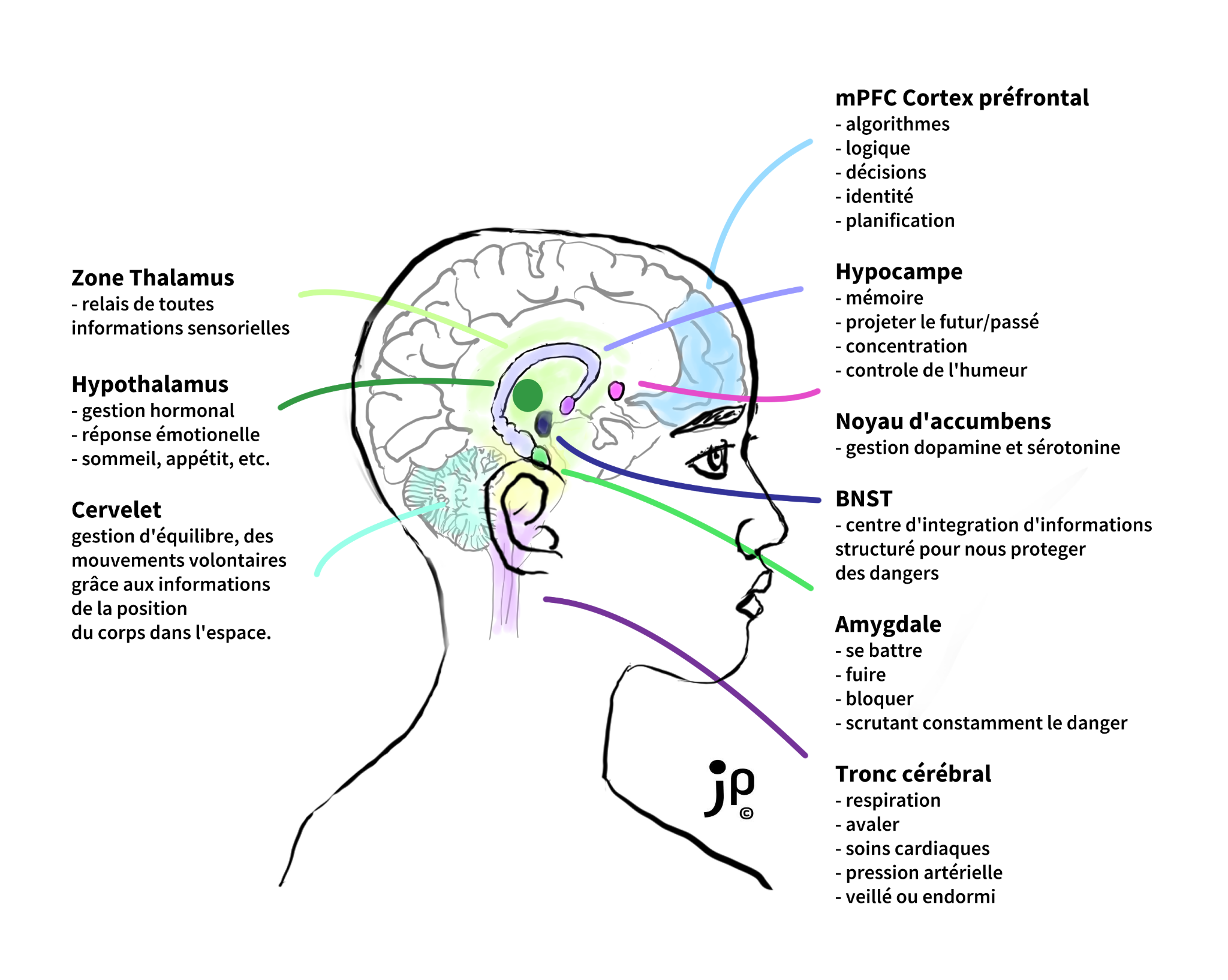
The nucleus accumbens is a brain region central to the reward circuit and the mechanisms of drug addiction. It is a bilateral structure, present in both the right and left hemispheres.
Also called ‘nucleus accumbens septi’ (literally ‘nucleus adjoining the septum’), these nuclei consist of clusters of neurons nestled in the rostral part of the forebrain. They play a major role in the reward system, addiction (habituation and dependence), as well as the emergence of laughter, pleasure, fear and the placebo effect.
Each hemisphere has its own nucleus accumbens, positioned at the junction of the tip of the caudate nucleus and the anterior portion of the putamen, just outside the globus pallidus. Together with the olfactory tubercle, it forms the ventral striatum, one of the components of the basal ganglia.
Two subregions are distinguished within the nucleus accumbens: the ‘core’, corresponding to the dorsal part, and the ‘shell’, corresponding to the ventral part. These two areas differ in both morphology and function.
The nucleus accumbens plays an essential role in regulating dopamine in the brain. In people with AD(H)D, one or the other (or both) of these nuclei functions atypically, resulting in an irregular distribution of dopamine.
When an impulse drives you towards dependence — whether on a game, a habit or any other fixation — it is like a snake casting a spell over you: it seizes you, squeezes you, puts you under pressure, fights your will and forces you to give in to what you no longer wish to do. This is the grip of the need for dopamine, the evidence of addiction's power.
The solution begins with interrupting this pressure for at least an hour. Take a shower, go out for a walk, detach yourself from everything to relieve the mental tension: do not think about a long list of tasks, focus only on the coming hour. Ask yourself: ‘What am I going to do in the next hour?’ ‘What is the best next step?’
Ask yourself this question again and again: ‘What is the most appropriate next action?’
Open the door, walk to the station, take the train on foot or by bicycle. In this movement, you leave dependence and mental pressure behind. The act of going out is sometimes enough to silence that inner voice driving you towards addiction. It is not complicated, and as soon as you have chosen the best action, follow it through.
This is your form of meditation: continually ask yourself about the next step, the best thing to do, drawing on your abilities and will. Music can also help you escape this spiral and enter a calmer state of mind.
To break away from the dopamine ‘train’, change your surroundings, even within your work or gaming environment. Switch to ‘work mode’: distance yourself from anything that creates dependence or distraction — Twitter, TikTok, Instagram and other social networks — and arrange an uncluttered workspace. Use your motivation to set clear boundaries. Clean, cook, tidy and organise your home: an orderly space helps break the cycle of dopamine addiction.
The collective unconscious, archetypes and synchronicity:
These famous ‘meaningful coincidences’ trace the outlines of Jung's thought, both vast and branching. He distinguishes an eternal, immutable world from an ephemeral world subject to time, and explores every horizon of the human soul with circular, tree-like thinking.
Initially focused on pathologies, Jung very quickly freed himself from this sole perspective to explore everyone's capacity to grow, improve and establish a true dialogue between the conscious and the unconscious in the quest for wholeness of being. Founder of what would later be called personal development and positive psychology, he sees the unconscious not as a mere receptacle for disorders, but as a vast chest of locked doors that each of us carries within.
Within this collective unconscious lies the history of humanity, woven from archetypes, symbols, myths and dreams. Jungian analysis is a face-to-face encounter — or rather an encounter with a hidden face — intended to bring forth what has been repressed, extending the dialogue begun with Freud while departing profoundly from it.
The psyche consists of three levels:
1. The conscious Ego, seat of our immediate identity.
2. The personal unconscious, a reservoir of our forgotten or repressed individual experiences.
3. The collective unconscious, a symbolic world where universal archetypes and myths circulate.
Beyond the Ego extends the Self, the principle of unity and totality of the personality, integrating all these dimensions. The individual, shaped by conditioning, must move towards their singularity to realise the Self: eliminate what is detestable within them and integrate what is admirable.
Synchronicity, meanwhile, refers to events apparently separate but connected by a meaning beyond the laws of space-time, sometimes manifesting spectacularly in the physical world. Like Viktor Frankl, Jung recognises that human beings have a vital need for meaning; this need can, however, go astray under the influence of projections and illusions.
Finally, our limits are merely mental boundaries that we impose on ourselves: to reach true freedom, we must first learn to recognise them, then to move beyond them, or even abolish them.
Playing the strings of your own heart.
We cannot be fully ourselves without the sum of our experiences and what our heart holds. Through authentic expression, life does not merely flow by, but surges forth in a true torrent.
By setting our own heartstrings vibrating, we touch others through the music of our lives.
Beyond any label, I am convinced that this is how we were designed: to be fully who we are, embrace what we are and, as we evolve, raise our consciousness towards a higher horizon, for the good of all.
— Terry Hampton, Playing My Heartstrings
Hyperlexia
Hyperlexia manifests as early reading skills remarkably above the level of comprehension, acquired without formal teaching, as well as a strong attraction to anything written. In most cases, it is accompanied by autism spectrum disorders.
Procrastination and autism
In autistic people, procrastination can have several origins: a lack of self-confidence, low self-esteem, difficulty concentrating, fear of failure or perfectionism. Its consequences can be severe, sometimes leading to anxiety and depression.
This phenomenon often takes hold as a vicious circle: we encounter blocks, suffer the pressure of passing time, and anxiety and depression intensify. We then start searching for a spark, an energy capable of setting us in motion again.
To break this circle, we need to surprise ourselves: perform a small, simple action, lean forward without losing balance, take one step and then another. Choose an enjoyable activity, allow ourselves to become mentally immersed in a game and feel pleasure. The aim is no longer to think endlessly, but to act, again and again.
The key lies in personal reprogramming.
● Soften perfectionism: ‘I do not need to be perfect.’
● Rediscover pleasure: ‘I can have fun with my own difficulties. Making mistakes is not so serious.’
● Shift the time scale: ‘Even if I have little time, I view my work in a different time frame: a minute can become an hour, a day a week. I have all the time I need.’
Thus, there is no longer any insurmountable urgency: I do my best, and that is enough.
Testament and promise
I began my existence on my knees, like a still-closed bud ready to open to life. And when the final moment of my journey comes, I shall return to my knees, humble before the mystery of existence, to whisper a single word: thank you. Then my being will rise and return to its secret dwelling, somewhere in the heart of the stars. I shall rediscover my wings of light, which I have missed so much throughout this journey, and finally join my stellar sisters in the infinite celestial radiance. JP
Nunchi
Nunchi is a fascinating concept in Korean culture. It consists, as many autistic people do, of observing carefully to grasp social codes and the dynamics of a group. To survive in the social sphere, these people analyse every interaction and try to adapt to it. It is a slow process, often strewn with doubts, which makes them cautious and sometimes manifests as impoverished social expression, lacking spontaneity.
I come from a family line of four generations on the autism spectrum. Sometimes our reactions, dictated by our passions, can escape our control. Adopting the culture of nunchi could greatly help us navigate everyday interactions better.
A big thank you to Euny Hong!
Rules of nunchi
(Origin: ancient Greece, the Stoic movement)
● ‘You have two ears and one mouth: listen twice as much as you speak.’
● Nunchi is neither empathy nor sympathy; it simply involves perceiving what is happening in the mind and heart of others, without necessarily feeling their emotions.
● You do not have to put yourself in other people's shoes, because you might lose your identity and make yourself vulnerable. The aim is to understand the other person without erasing yourself.
● In Korea, empathy is often perceived in gendered terms: women are considered more empathetic than men. This is not a universal truth, but rather a debatable cultural habit.
Reflection
The truth I wish to share in this book is that most autistic or AS people go unnoticed: they are distinguished not by a spectacular sign, but simply by slightly more marked intensity and passion in many areas. The rare cases that are immediately noticeable have served as the reference for defining a clinical norm in the DSM-5.
I am convinced that ‘neurotypical’ science is, for now, incapable of grasping the richness of the autism spectrum, because it lacks comparable abilities. The autism spectrum represents a genetic evolution of humanity, put to the test in a world conceived by and for allistic people.
For millennia, this world has failed to recognise women at their true worth; it continues to exclude every difference: the cultures and appearances of Black women, White women or people of Asian origin are frequently rejected, while the values of the heart are ignored. Above all, it is a primitive, self-centred, almost animal world hurtling towards self-destruction, where different extrasensory qualities are mocked.
In such a context, autistic people like us often choose to live in the shadows, simply to survive. JP.
Do not think white, do not think black, do not think black-and-white, think without fear in the colour of your heart.’ Frank Boeijen +JP.
Loneliness
Loneliness is deeply felt by the AS person: the one who thinks differently, perceives the world differently, whose sharpened awareness unintentionally deciphers the hidden traits of others, and who moves through a bewildering universe. It accompanies the person concerned every day. The ‘abandoned’ person repeatedly denies themselves, leaving complex relationships and situations behind, and finds themselves isolated and alone.
Loneliness also means facing a task, job or mission alone that overwhelms and causes anxiety day after day. It is impossible to speak to anyone about it: there is neither an attentive ear nor warm support. We feel abandoned, isolated, a stranger rejected by the world.
I saw my brother sink into this state: abandoned by our parents, he became addicted to drugs and gradually shut himself away in his loneliness.
One of psychiatry's objectives is to discover the story hidden behind each individual. Why have they reached this point? How can the balance between psyche and biochemistry be restored? Medication is only a short-term crutch: true behavioural change requires sustained commitment and time, at least three months, often much longer.
Restructuring the psychic ‘vehicle’ takes place on several levels to rediscover:
● inner beauty,
● flexibility,
● a sense of security,
● the ability to bounce back.
A therapist's reflection
I listen with my soul, attentively and perceptively, to my client's signs and expressions, and I strive to give the other person what they need to move forward. I am imperfect and I can make mistakes, but I always give the best of myself.
The therapist's responsibilities
Therapy must offer solutions and methods for resolving psychological and, if necessary, physiological difficulties. It aims to develop autonomy, self-management and coaching in the face of everyday uncertainties, providing responses that are both immediate and lasting. The therapist also accompanies her client in the search for meaning.
The reason for being a therapist
Life is not a straight line, but a succession of events: a whirlwind of surprises and changes. If we do not learn to teach our client adaptation, flexibility and autonomy, to draw on their inner resources, cultivate their resilience and find peace, neither the therapist nor the therapy has a reason to exist.
Questionnaires for autistic people and therapists
Advice from Valérie Gaus
1. Questions an autistic person asks themselves
● What questions can I ask (or avoid) when meeting someone for the first time?
● What topics should I rule out?
● What behaviours should I avoid in a group?
● How many questions is it appropriate to ask at once?
● When is it appropriate (or inappropriate) to start a conversation?
● What mistakes should I avoid in general discussion?
● What activities could I take up to make friends?
● Am I really ready to face all of this?
Note: this succession of criteria can become paralysing for the AS person and prevent us from acting.
2. Objectives for an interview with an autistic person
1. Preparation
○ Gather precise information about your client: history, symptoms, issues.
2. Establish a connection
○ Create an authentic bond from the very first moments.
3. Observe communication
○ Identify their verbal and non-verbal characteristics as early as possible.
4. Respect personal space
○ Do not touch their hands, shoulder or head without being expressly invited to do so.
5. Adapt your language
○ Take their style into account: often highly articulate, sometimes very literal.
○ Choose your words carefully to avoid any misunderstanding.
3. Facilitate the end of the session
Autistic people (AS) often find it difficult to perceive when an exchange is coming to a close:
● They may continue talking and remain seated, even when the therapist stands up.
● To avoid an abrupt transition, announce the end of the session 5 to 15 minutes in advance, for example:
‘We have five minutes left before the end of the session.’ ‘Let us get ready to finish.’
Setting clear limits also helps the therapist accept any unusual behaviours, while reducing the patient's anxiety during the first sessions.
4. Limits of intake sessions
● No active teaching of social skills or corrective feedback, except in cases of self-harm or destructive behaviour.
● Do not force eye contact: many autistic patients do not make eye contact, and compelling them to do so is counterproductive.
● Do not display authority or social markers (parents, therapists, loved ones): allistic culture can be a source of pressure and misunderstanding.
Here you are immersed in a new culture, after years of conditioning to codes that do not fit you. It is a challenge, but not unknown territory: with support and kindness, it is entirely possible to find your bearings. JP.
Better concentration
During the interview, some patients feel the need to handle objects or fiddle with something while talking; this behaviour is not only tolerated, but can also help them stay focused. Others readily get up to explore the room, look at shelves or examine pictures hanging on the walls. Here too, this behaviour is entirely acceptable and does not hinder the session in any way.
However, instructions such as ‘Don't do this, don't do that ’ or ‘This is how you have to do it’ are counterproductive with an autistic person.
Abandoning an authoritarian stance
For anyone wishing to accompany and support an autistic person, one point is essential: become aware of your tendency to impose your will or viewpoint, and to lecture. Quickly abandoning this stance — often perceived as traumatising and disturbing — is a decisive step towards appropriate support. This does not mean giving up having opinions; on the contrary, they are necessary for building a constructive exchange.
The real question to ask is: ‘Has the autistic person accepted me into their world?’ If so, they will be able to perceive you and communicate with you; otherwise, you will remain invisible to them, needlessly increasing their stress.
Important: do not touch.
Never touch an AS person: not their hands, shoulder, head or back. Do not use gestures typical of allistic people to compliment them, and do not impose anything on them, verbally or physically. Avoid gestural praise, because you do not know their true level of intelligence and understanding.
Many videos about the ABA method show a succession of errors such as inappropriate touching, the imposition of ideas, physical restraints or pressure applied to the arms.
This is not about training a dog (‘Dog Training’), and you do not spoil an AS child with treats or industrial junk food. This child is particularly sensitive; you could disrupt their metabolism. A specific diet is even recommended.
Source: Paige Layle
Social cognition
Some people gain access to the ‘AS person's world’ for specific reasons: they then become perceptible to the system, their facial expressions and other markers being identified, synthesised and recorded.
Others, however, do not: there is neither room, urgency nor reason to integrate them. This is not a disability strictly speaking, but a selection of information deemed a priority. It is also a matter of intimacy: the data an individual transmits can be so intense and personal that there is neither space nor resources to decode it.
How much information can one person convey to the AS person? And how much can an entire group sustain?
An excess of information becomes a disability: it is not a sign of cognitive dysfunction, but of a protective mechanism.
The soul and the self (the spirit) express themselves through the person and their ‘vehicle’: a body of animal origin endowed with its own autonomy. The so-called ‘AS’ interface, for its part, is designed and operated differently, but from the viewpoint of the soul or spirit, the expression remains the same. When an interface functions in an impaired or simply different way, this does not imply the absence of soul or spirit. This question concerns autistic and allistic people alike, and the way this interface is viewed varies according to the model of the autism spectrum.
Well-being – integration – harmony
Integration consists of bringing elements together functionally to create harmony in our lives. It is an essential concept, both in our social interactions and in our reflection on our inner world.
Who is Daniel Siegel?
A neuropsychiatrist and researcher, Daniel Siegel began his career in biochemistry before devoting his evenings to a helpline for suicidal people. This experience showed him that extreme pain and isolation can lead someone to consider ending their life. For Siegel, this critical point is the exact opposite of well-being. He understood that the way we regulate our emotions can mark a true tipping point between life and death.
Integration and biochemistry
Within a cell, enzymes orchestrate different elements to maintain the balance needed for growth, reproduction, development and adaptation. This same principle of interactivity operates in our human relationships: when we respect each person's differences, compassion, vitality and ultimately a sense of well-being arise. We can compare this cellular harmony to the course of a river whose two banks develop in parallel: without integration, chaos sets in (a well-known model in mathematics).
Links between trauma and rigidity
In psychotherapy, trauma often manifests as psychological rigidity or a flood of disordered images, emotions and thoughts. Similarly, in bipolar disorders, the alternation between depression and a manic phase illustrates an inability to regulate and integrate these two poles. According to the DSM-5, almost all psychiatric disorders stem from a dynamic of chaos or rigidity.
The role of integration in well-being
The question then arises: does well-being result from successful integration, and mental disorders from an inability to integrate, leading to chaos or rigidity? Psychological disorders, whether genetic in origin, linked to toxins or induced by environmental disturbances (without direct trauma), such as schizophrenia, bipolar disorder or autism, are all examples of poorly connected brain areas.
Neuroplasticity and change
The good news is that neuroplasticity demonstrates our ability to reshape the brain throughout life. We can thus consciously create ‘currents’ of energy and information wherever we direct our attention.
By differentiating and connecting, for example, the right and left hemispheres, we generate energy, creativity and vitality.
Mindfulness and creativity
Mindfulness is a form of meditative integration that opens us to ‘mindsight’, that is, inner vision. By cultivating this practice, we strengthen neural connections and allow creativity to emerge. Remember those moments when you were frozen, closed off or in the grip of emotional chaos: if, at those moments, you had consciously introduced the idea of integration, how much might your life have been transformed?
Towards an opening of the heart
Learning to learn also means learning to integrate ideas and remove the barriers that hinder openness of mind. Our heart, a true photonic power station, fuels change and gives rise to new currents of integrative thought and creative inspiration. By directing our benevolent intentions towards a positive goal, we create tangible channels between the heart and the brain.
Conclusion
By adopting integration as a stance, you bring all the science of the brain and well-being into the service of your vitality. You will do more than make your existence more dynamic: you will also encourage compassion, kindness and creativity around you. This is the essence of Daniel Siegel's work over the past fifteen years, enriched here by JP's contributions.
In the Buddhist teachings of Yongey Mingyur Rimpoche, there is a series of meditation and breathing exercises particularly beneficial for AS people.
These exercises help balance the brain in terms of the distribution of neurotransmitters and endocrine glands.
This concerns hypersensitivity, autism, dyslexia, dyspraxia, Tourette syndrome, bipolarity and ADHD (attention deficit hyperactivity disorder).
Jeffrey Schwartz, a neuropsychiatrist at UCLA, states: “You are more than your brain.”
In obsessive-compulsive disorder (OCD), brain circuits run in loops: the prefrontal cortex, a veritable ‘gear lever’, remains connected to the structure of our habits, housed in the ‘habit centre’. Automatic behaviour, necessary for our functioning, can nevertheless become obsessive. As for the orbitofrontal cortex — the seat of decision-making — it can become blocked, like a seized mechanism.
One solution involves therapeutic training aimed at reinterpreting emotions and thoughts: relabel and reframe these obsessive signals, then tell yourself: ‘This is not necessary; it is a false message from my brain, I can change it.’ For OCD, behavioural therapy alone is not enough: real training is indispensable to relearn how to reconsider one's emotions, thoughts and behaviours. This training borrows heavily from animal training methods, but we are more than just a brain: an animal cannot declare: ‘This is not me, I am not these feelings or these thoughts.’ It is precisely at this moment that we find the leverage: we understand the mechanism and can choose not to react to the next feelings or thoughts.
The Wise Advocate: discovering your true Self
A person cannot be reduced to the mechanisms of their brain alone.
The inner self manifests as a benevolent narrative voice that guides you through trials, focusing your attention on the positive.
The Wise Advocate is the outcome of Jeffrey Schwartz's response after forty years of research into mindfulness. It acts as an impartial spectator: far more than a simple conscience, it is a loving inner guide, an intimate narrative and an observer's perspective.
To overcome your countless difficulties, the Wise Advocate must establish a relationship with your true Self and communicate with it.
Disidentification and detachment
I am not my body, my emotions, my thoughts or my anxieties. In neuroscience, ‘self-observation’ is often practised in a detached way: by examining emotional states separately from the reactions that follow from them, we manage to regain control of the situation.
The aim is not to become an automaton, but to free oneself from certain emotions, thoughts, physical sensations or dependencies so as no longer to be their slave. It is about breaking with automatic and obsessive reactions.
The AS person adopts an intrinsically detached and disidentified stance: nothing is fixed, everything depends on who we are and the context in which we find ourselves. The AS person does not rely on a fixed identity and, more often than not, postpones impulsive reactions until later.
Stepping back strengthens our self-control: we are no longer at the mercy of our impulses and emotions, and we can learn to manage our psyche rather than remain its victims.
Daniel Siegel, of the University of California, Los Angeles (UCLA), introduced the concept of ‘mindsight’ (literally ‘sight of the mind’), meaning the ability to perceive one's own emotions and mental processes clearly. He structures it around three principles: openness, observation and objectivity.
● Openness: welcome your inner world as it is, without distorting it.
● Observation: notice, from a detached perspective, our fleeting emotional and mental reactions, without identifying with them or yielding to automatic responses.
● Objectivity: become aware that our thoughts and emotions do not define us.
In the autistic person (AS), certain brain areas involved in time management, the construction of identity, spatial orientation and communication function differently from those of an allistic person. Unlike the ‘integration centre’ of allistic people, the AS person develops alternative ways of processing.
According to Siegel, ‘mindsight’ is rooted in the prefrontal cortex, set back from the limbic brain: it allows calm observation, freed from impulses and anxiety. In the AS person, this form of ‘sight of the mind’ can resemble a trance; it often manifests through extrasensory skills and great intellectual subtlety.
Some researchers, such as Jeffrey Schwartz of UCLA, regard inner detachment as a powerful means of healing: naming our emotional states reduces their hold. Schwartz proposes a four-stage protocol:
1. Relabel: clearly identify and name each emotional or mental state.
2. Reframe: distance yourself by affirming: ‘It is not me, it is my brain producing this panic.’
3. Refocus: deliberately redirect your attention towards another activity: sport, writing, music…
4. Revalue: engage in dialogue with your ‘inner coach’, adopting a wiser and broader view of the situation.
These methods, tested in everyday life, are an integral part of our experience: because of their neurological characteristics, people with AS often have to use them to function better and survive in a world adapted to allistic people.
Siegel and Schwartz agree on the importance of disidentification: observing our thoughts and emotions without confusing ourselves with them, a first step towards psychosynthesis — that is, the harmonious integration of all our aspects. If we identify with illness, pain or age, we limit our possibilities; by stepping back, we discover that we are much more than the passing states of our body or mind, and that well-being, growth, work and relationships open up to new possibilities.
For someone with AS, learning to detach requires a particular effort: exceptional memory, fixed ideas and specific perceptions make the exercise longer and more demanding. In-depth work is needed to dismantle false beliefs and remove inner obstacles. In the case of overwhelming anxiety, for example, identifying with fear traps us in a narrow emotional world: recognising that this fear does not belong to us, that our Self remains unchanged, allows us to reclaim the inner space we need to live as something other than a suffering body.
Make sure that your relationship with your child with AS is based on genuine love.
A child with AS must manage not only their inner emotions but also those connected with their environment — relationships with their father and mother, brothers and sisters, and so on. Make sure that your bond is founded on sincere affection, not overwhelming emotions. Take a little distance in your reactions: this is fundamental for your child as well as for you, because many difficult relationships with a child with AS arise from emotional flooding and ultimately lead to a breakdown.
In my view, Freud misinterpreted the mother–child dynamic in the context of autism. On an energetic level, the mother may seem more intrusive: she is often deeply connected and sensitive to the emotions of the child with AS. Yet anger and frustration, perceived with heightened intensity, inevitably trigger a defensive system.
Free yourself from traditional patterns of parenting and become more of a guide; this takes nothing away from the love you have for your child. For my part, I consider all the children in the world to be my children: I feel responsible for their well-being, even if my means of supporting them are limited.
Some reflections inspired by Piero Ferrucci, an Italian psychotherapist, on our overwhelming desires.
Detachment — and even more so detachment from our desires — is advocated in many spiritual traditions. Yet repressing or suppressing a desire is almost impossible: desire is an intrinsic force that will not let itself be defeated. In fact, it is even a sign of vitality when our desires assert themselves intensely. But they can quickly become excessive, overwhelm us unexpectedly and push us to extremes.
We then find ourselves caught in a frenzy: hungry for satisfaction, restless, impatient and often desperate in a world where our needs are sometimes purely imaginary. While we cannot eradicate these impulses, we can take a step back: by observing our desires clearly, they lose some of their hold. We then learn to distinguish a passing desire from a genuine necessity.
Setting boundaries from an early age.
It is crucial to set boundaries from an early age, because once undesirable behaviours become established, it is too late to change them deeply. A person with “AS” sometimes behaves without limits and genuinely needs their parents to serve as role models: the rules must be made explicit and their application explained. From childhood, these frameworks must be set out clearly, otherwise bad habits become entrenched and are imitated.
There are also emblematic examples of influential AS personalities lacking sufficient boundaries: Elon Musk intervenes in world politics and elections; Mark Zuckerberg (Meta) is regularly criticised for the misuse of personal data and for neuroscience-based persuasion techniques applied to social networks. Bill Gates (Microsoft) is accused of appropriating ideas, resorting to industrial espionage and adopting an overpowering commercial strategy. In their respective fields, their desires for power and profit have often had harmful consequences for society.
These examples illustrate a lack of awareness of the repercussions of certain actions. In an age when people want all their desires fulfilled, preferably without delay, perspective is often missing and moral blindness becomes apparent.
Freedom and AS
To attain freedom, we must first become aware of our prison. We all aspire to freedom, whatever our age. The person with AS, an independent thinker, constantly fights for theirs. That freedom is often hindered by both physical and psychosocial obstacles. The wall of anxiety is immense, the incompatibility with society overwhelming, and physiological challenges demand discipline at every moment.
These are some of the obstacles to freedom. The best way to free ourselves is first to visualise our inner prison: detach ourselves, one by one, from the emotional bars, fears and social prejudices. Becoming aware of these chains, exercising our will to loosen them gradually, anchoring ourselves in our centre of well-being and inner peace, identifying with our soul… this is the path towards becoming one with ourselves and leaving our own prison.
Our ideas are an integral part of our identity. If I identify completely with my convictions, I will constantly fear being shown that they are false or contradictory, and I will argue endlessly with anyone who questions them. Even if my ideas are outdated, incomplete or contradicted by the facts, I will cling to them and continue to defend them — because my belonging to the group, or even my existence, depends on it!
For a person with AS, it is different: they defend their ideas passionately, but without confusing them with their own identity. Distancing ourselves from our thoughts can be a great help. If we identify 100% with our beliefs, we risk making them rigid. By contrast, letting go of preconceived ideas and old mental habits can stimulate our imagination and broaden our horizons. Knowing how to disidentify opens up our field of vision, makes us freer and more dynamic, and releases us from the tyranny of a single way of thinking.
We then return to the pivot of our being, that unchanging part within each of us: the “I”, present throughout our lives. Whether in joy or sorrow, childhood or old age, success or failure, this same “I” persists. Discovering this vital core is essential, because it is where our inner strength resides.
Unlike an allistic person, a person with AS does not have a fixed identity, but can find this centre of inner strength. They do not seek to build a strong outward identity, except perhaps when they enjoy performing as an actor or actress — and there are excellent actors with AS.
There is nothing wrong with living everything life offers intensely, provided we remain aware that this is not all that exists. Find your centre! This centre is also the best remedy for stress.
We can act on stress in two ways:
1. From within: if I am tense, I learn to relax; if I am short of breath, I learn to breathe deeply; if my thoughts torment me, I replace them with soothing thoughts.
2. By stepping back: I see that I am not my stress, and I reconnect with that part of me where peace reigns.
The “centre” is that place of calm, away from fears and turbulence. On Sundays, we practise disidentification — but not the person with AS! For them, every day is a quest for unity with the Self and the Soul, founded on a sincere desire of the heart. The person with AS takes no time off: at every moment, they pursue harmony and well-being.
Why does a person with AS find it difficult to manage their emotions and thoughts? Because their prefrontal cortex — that great manager of information — develops more slowly and requires more time and stimulation than average to mature.
This is where certain parents come in, guided by genuine “intelligent love”: from early childhood, they actively support their child. This personal investment — sacrifice of time and energy, priority and the intention to do well — bears fruit a thousand times over.
This support takes several forms:
● Connection: responding to the child’s invitation and entering their world;
● Stimulation: offering options without imposing them;
● Sensory awakening: introducing the child to music, singing and sound games.
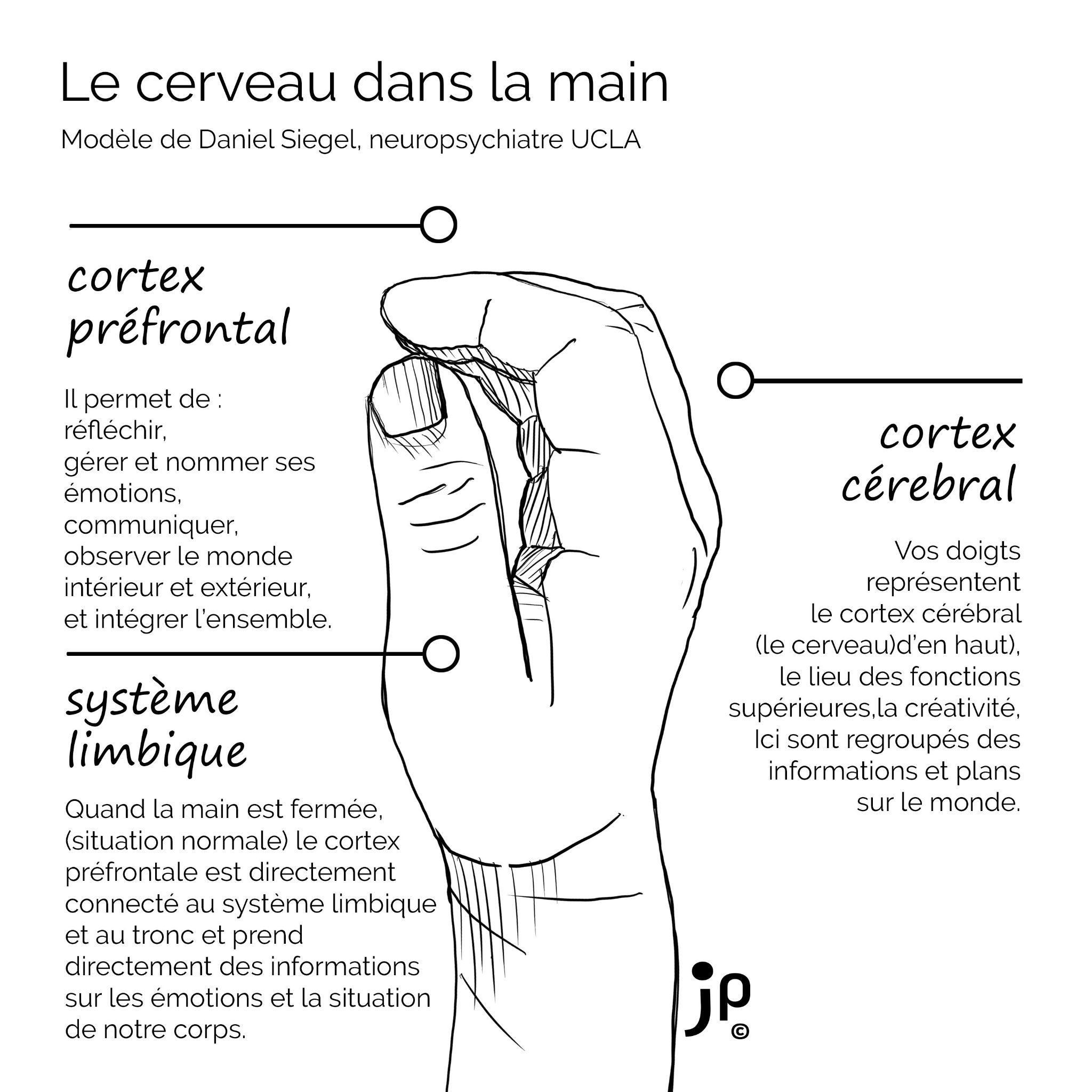
Learning to use “the brain in the hand” helps us regulate our reactions better and step back from the overwhelming processes of our mind. Interpersonal neurobiology encompasses all the sciences of the brain and body: it reminds us that technology must remain a tool at our service, not the other way round. Above all, it is relationships that stimulate our growth and foster learning!
The brainstem, an ancient structure already formed in the womb, keeps us awake and alert; it triggers defensive reactions — fight, flight, freeze — or sometimes a total collapse, as often happens to people experiencing overload.
The limbic area, also present before birth, works with the brainstem to generate our emotions and record memories. It also allows us to feel a connection with others.
The cortex, meanwhile, develops through our experiences. Its posterior part maps the outside world, while the frontal cortex enables reflection and decision-making. The underside of this cortex contributes to managing and evoking our emotions. This is where self-awareness arises: the ability to observe our thoughts and feelings, and adjust the flow of information within us, including the way we communicate.
At the heart of the prefrontal cortex, right beside the limbic area and directly connected to the brainstem, the central part processes emotional information very quickly. Here we see the anatomical proximity of the three major systems: cortex, limbic system and brainstem — hence the image of the brain in the hand.
The frontal cortex can even perceive the emotions of others: facial blushing is one example. This ability is one of the keys to relationships. In autism spectrum disorder, the issue is not so much detecting information as managing it within a given context. Autistic people may perceive a multitude of signals yet have difficulty organising and interpreting them.
Our relationships with others
The frontal part of the brain integrates information from our heart, every corner of our body and the brain itself, adding information from our interactions. When you think about a person or the quality of your relationship — communication, attention, connection — you engage what is called the “integrative relationship”.
Maintaining attentive, connected relationships strengthens your brain’s “integrative fibres”, meaning the neural connections that make you more resilient in the face of hardship. This integrative stimulation allows you to think about the common good — including the future of the planet — develop your intuition, place your past, present and future in perspective, and connect with others.
All of this is built by cultivating inner reflection and learning to evoke and manage our emotions. Supportive relationships, such as those offered by parents and teachers, play a decisive role in this development; they make reflection, relationship and resilience — the three “R”s — the foundations of a frontal cortex that remains active and continues to mature, even in children.
Parents are, above all, their children’s first educators: it takes three to four years for the circuits of kindness and benevolence to become firmly established. Science does not yet have an operational definition of the mind; this is why it is essential to use your relationship with your child to reframe and strengthen their mind, so that they can adapt harmoniously to their environment.
Understanding how the brain works allows us to transform it: you are not your brain, you are so much more! Building a strong bond with your child is by far the most important element of parenting. First learn to connect; only then, once that bond is established, can you reason together.
The mind is not reducible to brain activity: through your intention, you can stimulate your cultural development. Mindfulness is a method of neural integration; the relationships between mind and brain are built step by step.
What is self-regulation? It is the ability to make feelings, thoughts and emotions manageable. Reflection, relationship and resilience form the basis of social intelligence. Children can learn to name their emotions to manage them better: this ability then allows them to understand others.
By first developing kindness and compassion towards themselves, they acquire the foundations needed to show them towards others. When we help others, we release dopamine and feel joy: if you want to be happier, think of others.
When your child is going through inner turmoil, with emotions and thoughts swirling around, do not give in to authoritarianism by ordering them to “be quiet” or “stop screaming”. Do not immediately try to reason; first choose caring contact: place your hand, where they can see it, on their arm or shoulder, with the sincere intention of reassuring them. Once they have calmed down, you can then talk and reason together.
That said, always respect their space: never touch a child without being invited to do so. Your role is to support this child in structuring and understanding their world, creating a climate of openness and calm. Once this approach becomes second nature to you, you will have more than earned a medal!
A simple breathing exercise
Sit comfortably, close your eyes and breathe deeply through your nose, without forcing it. When your mind wanders, gently bring your attention back to your breath. Be fully aware of every inhalation and exhalation. “In everyday life, well-being is only a few breaths away!”
Occupational therapy and sensory stimulation
Occupational therapy aims to engage and regulate the different senses to promote appropriate brain processing. “Sensory programmes” are offered throughout the day to:
● Sensitise or desensitise you to noises and textures
● Harmonise your reactions to different situations
● Control your breathing and refine your fine motor skills
● Gradually accustom you to auditory stimuli. The aim is to become more independent and better manage the intense reactions caused by disturbing impressions.
Music therapy
Music therapy uses music to express and explore emotions. You become familiar with:
● Rhythms
● Timbres and sounds
● Melodies, to develop your emotional language and your ability to communicate through sound.
Dietetics
To balance blood sugar and promote well-being:
● Reduce wheat, refined carbohydrates and casein
● Limit fruit late in the day, and lactose
● Favour vegetables (preferably organic) and quality proteins
● Avoid sweets and processed foods
● Prepare your own meals if possible. A balanced “food triangle” of vegetables – proteins – starchy foods is a simplified approach to keeping control of your diet (see the chapter “Dietary disorders” for more details).
Speech and language therapy
Speech and language therapy allows you to work on:
● Pronunciation and articulation
● Sound production
● Verbal expression and communication
An approach using primitive reflexes
Primitive reflexes are automatic movements present from life in the womb and active for several months after birth. They develop in three phases:
1. Emergence
2. Activation
3. Integration
If this progression is disrupted, it can lead to postural, learning or behavioural difficulties. Specific techniques now make it possible to stimulate or integrate these reflexes, thereby helping to rebalance the brain, build neural connections and repair the brain’s matrix.
Excerpt from the website of Caroline Llonch, a certified IMP practitioner trained in RMT (Rhythmic Movement Training).
Brain Gym® — literally “gymnastics for the brain” — consists of 26 basic movements that are simple, precise and playful, designed to optimise learning and performance in all areas. Originating in Educational Kinesiology®, this programme draws on the close link between body movements and brain functions involved in neurodevelopment, learning and perception. By combining movement with listening to the body, it offers everyone the opportunity to explore and fully develop their potential.
— Excerpt from the website of Caroline Llonch, a certified Educational Kinesiology® practitioner and Brain Gym® instructor
Rediscovering inner peace
To reach a state of calm, ease your nervous system and recharge your batteries, several approaches are possible: meditation, yoga, mindfulness, physical activity, music. Artistic expression — whether through visual arts, drawing or making music — encourages beneficial time alone in your own bubble, as does attentive listening to a melody. Video games, on the other hand, although they offer a temporary refuge, can lead to dependency and counterproductive results over the long term. Thus, one (art) proves constructive, while the other (video screens) tends to be destructive and addictive.
Sport, walking, dancing and singing remain essential pillars for releasing tension. A few yoga or tai chi exercises are sometimes enough to transform a day: learning to release nervous tension, recharge your batteries and lighten the mind of excessive impressions, to adapt better to different moments and situations.
Cognitive behavioural therapy (CBT)
When an autistic person feels threatened in their integrity and unable to cope with a situation, they may experience an extreme panic reaction, or even a general breakdown of bodily functioning (a catastrophic reaction). CBT allows unhelpful patterns of thought and reaction to be analysed, followed by learning new mental and behavioural strategies to manage crises better.
Here is a proposed rewrite in polished French, respecting the meaning of the text:
Keywords in the world of the autism spectrum:
● processing speed and recognition of emotions
● communication cues
● social interference
● empathy
● reading and understanding non-verbal body and facial language
● “pre-messages” and “pre-definition” of available information
● verbal messages that slip under the radar
● managing expression
● dysfunctional cognition and understanding
● linguistic flexibility needed to meet social demands
● expectations
● emotional regulation
● control of internal perceptions
Allistic thinking and the organisation of the school system are often at the root of crises.
“I impose my will on you so that you become exactly what I want.”
An imposed framework generates crises, tension, exhaustion and depression. Conversely, a freely chosen activity arouses attention and desire, encourages the child’s active engagement, offers immediate feedback (allowing continual adjustment) and, through repetition, leads to genuine learning.
Cognitive science according to Céline Alvarez
The four levers of learning and child development (including the child with “AS”)
1. Attention
Above all, it is the desire to focus attention on a task that starts the learning process.
2. Active engagement
The desire to become practically involved allows the child to engage directly with the challenge presented.
3. Immediate feedback
With every action, the brain makes a prediction; if this differs from the observed reality, an error signal is triggered and corrected immediately. This sequence of hypotheses, detected errors and corrections constitutes the very mechanics of learning.
4. Consolidation
Once attentive and engaged, and after receiving feedback, the child needs to repeat the exercise to embed what has been learned and make movements automatic. Automatic processes reduce cognitive load and conscious effort.
JP’s note: in autistic children, automatic processes are underdeveloped, and the constant demand on their mental resources can be very tiring.
Activities that are not imposed
Allowing children to choose their activity freely naturally encourages repetition, consolidation and progress.
The independence of the “gifted” child
Gifted children, often encouraged in their freedom of action, benefit from even faster development.
Main objective
To develop children’s executive skills and independence.
Understanding bodily and neural cycles, metabolism and the consequences of an imbalance in an autistic child is like observing the movements of the sun, stars, planets, Moon and tides: it takes time and a long period of observation.
An autistic child first seeks inner balance before responding socially. They process each piece of information separately, without automatic processes: every event, sensation and piece of data requires new neural connections to place it in context. First managing the information, then responding appropriately.
Their way of functioning is different: rather visual, they speak a language of their own. There is no point trying to “normalise” them: every gesture has meaning. Allistic (neurotypical) people see their brain as the norm and any deviation as a problem, whereas an autistic person sees their atypical functioning as their way of being.
In terms of managing environmental information, we often observe:
● Strong punctuality in autistic people, whereas allistic people tend to “go with the flow”.
● A visual preference: what is invisible often escapes them.
● Difficulties processing information in real time, as well as managing emotions.
● Difficulties with neural, cognitive and psychological synchronisation, which may manifest as overconnection or underconnection in the brain.
While the allistic brain manages these processes automatically, the autistic child must almost manually “pilot” the reception and processing of every piece of information. Neurodevelopment is precisely this learning and organisation of information that gradually reduces processing time.
Emotional triggers often differ from those of neurotypical people, and an autistic person may quickly find themselves in “survival” mode, risking exhaustion. Their “autistic bubble” is not a form of emotional withdrawal or social isolation, but the time needed to manage incoming information: when it becomes too abundant or complex, it is like a power cut.
Neurodevelopmental support aims to teach them to anticipate and manage future situations and information. Even a simple label can disturb their concentration and assimilation.
For sensory processing:
● Every stimulus must be visible to make information easier to manage. The brain first connects visually with the event before experiencing the feeling associated with it.
● An autistic child often holds an object to orient themselves better in space: this object becomes indispensable to the balance of their brain. “Please leave it with them!”
Finally, so-called “autistic” movements are a way of correcting an inner imbalance using external stimulation. By understanding and modulating these stimuli, we can limit excessive movement and bring the child greater well-being.
The anxious personality
Anxiety is one of the major dimensions of the spectrum of “AS” disorders. This is why I believe it is essential to draw on the work of those who have offered effective solutions to ease this distress. People on the AS spectrum often feel deep anxiety, sometimes hidden from others… and even from themselves. This inner tension can also manifest as psychosomatic disorders: asthma attacks, chronic intestinal or gastric pain, and so on.
When we face our fears, step by step, we gain confidence and courage. We do not “cure” anxiety in the strict sense, but we learn to tame it so that we can move forward despite it.
Why does anxiety arise, and where does it come from?
● Protective function
Anxiety prepares us to respond to danger.
● Cognitive and physiological roots
1. Mentally: our mind anticipates the future, imagines negative scenarios and goes into a loop.
2. Physically: we secrete hormones (adrenaline, cortisol) that keep our attention on alert, sometimes at the expense of our well-being.
The role of adrenaline
Under stress, the body releases adrenaline to make us react faster, with “all-or-nothing” thinking. This binary vision (danger = yes or no) can reinforce anxiety: either everything is fine or everything is wrong. For example, we may mistakenly believe that “these people are laughing at me” as soon as a glance lingers a moment too long.
The role of cortisol
Cortisol, meanwhile, prevents us from relaxing and sleeping, keeping us in a state of hypervigilance.
How does the anxiety loop form?
1. An initial thought (worry, anticipation of a problem)
2. Other thoughts follow to assess the danger
3. Rumination sets in: we go round in circles mentally
4. The emotional atmosphere grows heavier, anxiety increases
These negative thoughts can paralyse us: we not only worry about what might happen, but also anticipate what others might think of us.
What approaches can help us break free?
● Accepting some social discomfort
To escape the “prison” of anxiety, we sometimes need to detach ourselves from other people’s judgement. Daring to be ourselves, even when uncomfortable, creates real breaths of freedom.
● Practising meditation
By bringing us back to the present moment, it slows the flow of future-oriented thoughts.
● Taking a holistic approach
○ Relaxation exercises and breathing techniques (physiological)
○ Cognitive therapies to identify and defuse irrational thoughts (psychological)
○ Understanding the brain mechanisms of anxiety (neuroscientific)
“Anxiety is our natural ability to anticipate future consequences so that we can adjust and protect ourselves.”
Some keys to understanding
● The self-centredness of anxiety
It draws its strength from our insecurities and sense of identity.
● Intolerance of uncertainty
The more reluctant we are to accept the unexpected, the more anxiety increases.
References and further reading
● Dr K. (Alok Kanojia), Boston, June 2021
● Tyrer, P. (1999). Anxiety: a multidisciplinary review.
● Krugers H.J., Karst H. & Joëls M. (2012). “Interactions between noradrenaline and corticosteroids in the brain: from electrical activity to cognitive performance”.
Thought loops
Thought loops, or mental ruminations, are unproductive chains of ideas. Our brain loves to think, and our mind never wants to stop, even if it ends up tormenting us. Why this feeling of mental torture? Because the mind’s role is to stay active: it avoids boredom at all costs and feeds on these repetitive thoughts. Anxiety, meant to alert us to danger, then becomes additional fuel for catastrophic scenarios that never happen. The harder we try to stop these loops, the more we reinforce them. Only awareness of this mechanism, followed by a moment of calm without struggle, can finally break the spiral. For these ruminations always revolve around the same insecurities: identifying these recurring themes gradually reduces their hold.
Bringing the mind back to the present
Anxiety often arises from projecting ourselves into a future perceived as threatening. Our “anxious self” accumulates past traumas and anticipates a hostile world. Each of us carries scars and insecurities that must first be acknowledged before they can be processed.
To step outside the ego and return to a more peaceful “self”, we can draw inspiration from the concept of **ahaṃkāra*¹: it refers to the ego, that sense of individuality attached to our fears and pride.
¹ Ahaṃkāra (Sanskrit, अहंकार): the notion of the ego as an obstacle to inner freedom.
Imprints of the past: samskaras²
Every experience leaves unprocessed emotional traces in our unconscious, called samskaras. When they reawaken, they cause suffering and anxiety in the present.
² Saṃskāra: in Patañjali’s Yoga Sūtras, these are the subtle mental imprints of our past actions that condition thoughts (vṛttis).
Understanding anxiety disorder
● Anxiety = uncertainty + lack of confidence
● Psychiatric criteria: anxiety is considered a disorder when it
○ prevents you from carrying out certain activities,
○ leads you to avoid situations out of fear,
○ interferes with your personal, professional or school life,
○ manifests physically (palpitations, muscle tension, nausea, panic attacks, thought loops).
When these symptoms significantly disrupt your daily life and health, anxiety becomes “clinical” and warrants care.
Origins and forms of anxiety
● Temperament and learning: some people are naturally more anxious, and an anxiety-provoking family or social environment can reinforce this tendency.
● Trauma: losing a loved one, public humiliation or any significant event can leave a lasting imprint.
● Social anxiety: it develops gradually, eroding self-confidence over the long term.
The panic attack
A panic attack is a brief but intense episode of anxiety, characterised by:
● profuse sweating (particularly on the palms),
● a feeling of nausea or a lump in the throat,
● a rapid rise in heart rate,
● paralysing fear.
Finding relief through breathing
During an attack, a few simple exercises may be enough to interrupt the spiral of anxiety:
● Abdominal breathing: breathe in slowly through your nose, expanding your belly, then breathe out gently through your mouth.
● Counting: breathe in for four counts, hold for two, then breathe out for six.
● Grounding in the present: focus on sensations (the air coming in and going out, your feet touching the ground).
With practice, these techniques help bring the mind back to the present and restore calm.
—---------
Solutions and treatments for anxiety
1. Nutritional approaches
Certain dietary adjustments can promote greater digestive harmony and help rebalance the biochemistry of your body and mind.
2. Medication
● Selective serotonin reuptake inhibitors (SSRIs)
○ Gradually create new cellular balances
○ Generally need 4 to 8 weeks to produce their full effects
○ Are prescribed for several weeks or months
○ Do not treat the underlying cause of anxiety, but can stabilise mood
○ Beware of interactions, particularly with alcohol and certain other psychotropic drugs (risk of complications)
○ In cases of severe anxiety, they temporarily allow a return to more ‘normal’ mental functioning
● Benzodiazepines
○ Act very quickly, within a few hours
○ An effect comparable to a small dose of alcohol: calming but short-lived
○ High potential for addiction: symptoms return as soon as the medication leaves the system, encouraging increased doses
○ Useful only for managing acute attacks or emergencies
Note: none of these drug treatments alone resolves the roots of anxiety. They must be used under medical supervision, in particular to avoid dangerous interactions (for example SSRIs + alcohol).
3. Psychotherapies and meditation
● Psychotherapy
○ Requires time and perseverance
○ The first effects often appear after 8 weeks of regular work
○ Personal commitment is essential: motivation often arises from the desire to find a way out of a dead end
● Meditation
○ To be effective, it must be practised seriously and consistently
○ Significant benefits generally become apparent after 8 weeks of daily practice
4. A combined strategy
Using medication (SSRIs or benzodiazepines, depending on the situation) for 4 to 8 weeks can provide ‘breathing space’:
● Rapid relief from anxiety or acute symptoms
● Time needed to establish more lasting habits (psychotherapy, meditation, dietary adjustments)
Some people, whose brain and bodily functioning is more vulnerable, will need prolonged drug treatment. The aim remains to gradually free the person from suffering, support them in moving beyond trauma and restore a lasting balance.
Now let us turn to psychotherapy. There are three main approaches:
1. Psychodynamic therapy
This is the classic form of talking therapy. The therapist primarily listens to you and intervenes little. The aim is to explore your past and your personal history. This long-term work provides access to deeper aspects of your personality. Because this approach rests on many theories, it remains complex to study and can seem rather nebulous.
2. Cognitive behavioural therapy (CBT), Cognitive behavioural therapy (CBT) is a brief method that helps gradually replace negative thoughts and maladaptive behaviours with ideas and responses more in tune with reality. Patient and therapist work hand in hand to identify and analyse three key components:
1. Emotions (what we feel),
2. The thoughts that accompany these emotions,
3. The behaviours that result from them.
This approach focuses on difficulties encountered here and now and rests on a shared understanding of the problem. Step by step, CBT helps reduce symptoms that impede everyday life: rituals and repeated checking, stress, avoidance behaviours, inhibition, aggressive reactions, poor self-esteem or any other form of psychological distress.
3. Dialectical behaviour therapy (DBT), called TCD in French, was developed by Professor Marsha Linehan to treat borderline personality disorder. It is a form of what is known as ‘ third-wave cognitive behavioural therapy’, because it combines several theoretical approaches and offers a wide range of practical tools to help patients in everyday life.
At the heart of DBT lies the idea of dialectics: learning to accept two opposing points of view simultaneously, in order to find a fair balance between extreme attitudes or emotions. In practical terms, this encourages mental flexibility and openness, essential for regulating one's reactions more effectively.
Treatment is structured around several complementary modules (for example: emotion regulation, distress tolerance, interpersonal effectiveness, mindfulness). These modules form a ‘winning combination’: each provides specific skills, but it is their integration that enables effective progress.
Studies show that DBT is very effective: more than 60% of people following this programme see a rapid and significant improvement in their borderline symptoms. It rests on clear principles and a ‘therapeutic contract’ established with the patient, which includes a commitment not to act on suicidal impulses.
Treatment generally takes place in two main phases:
1. Strengthening self-control The patient learns to recognise and manage problematic behaviours (impulsivity, self-harm, outbursts of anger), gradually taking responsibility again for their choices and actions.
2. Reducing emotional suffering The aim is to decrease the intensity and frequency of distressing emotions, then normalise relationships with oneself and with others.
Beyond borderline disorder, DBT has demonstrated its value for other conditions: addictions, eating disorders, attention deficit disorder with or without hyperactivity (ADHD), and even certain mood disorders in people on the autism spectrum.
Despite its reliability and relevance, DBT remains relatively undeveloped in France.
The control and protection centres of our brain
Amygdala
The amygdala triggers rapid fear responses and sends us abrupt warning signals in the face of immediate danger.
Bed nucleus of the stria terminalis (BNST)
The BNST acts as a centre for integrating emotional information. Often called the ‘extended amygdala’, it is located in the oldest part of the brain and consists of 12 to 18 substructures. Its main role is to monitor emotional ‘valence’ (that is, whether a situation is perceived as positive or negative) and protect us from potential threats.
Medial prefrontal cortex (mPFC)
The medial prefrontal cortex processes information, focuses our attention and filters incoming data. It can detect more diffuse or long-term dangers and modulate our emotional responses.
The duel between the mPFC and the BNST/amygdala
Anxiety can be seen as a battle between the medial prefrontal cortex and the BNST-amygdala pair. When the mPFC loses this ‘duel’, emotional alarm signals take over and anxiety becomes difficult to control. Conversely, when the mPFC wins, we manage to regulate our fears and remain calm: this is sometimes called the ‘blue zone’ of emotional control.
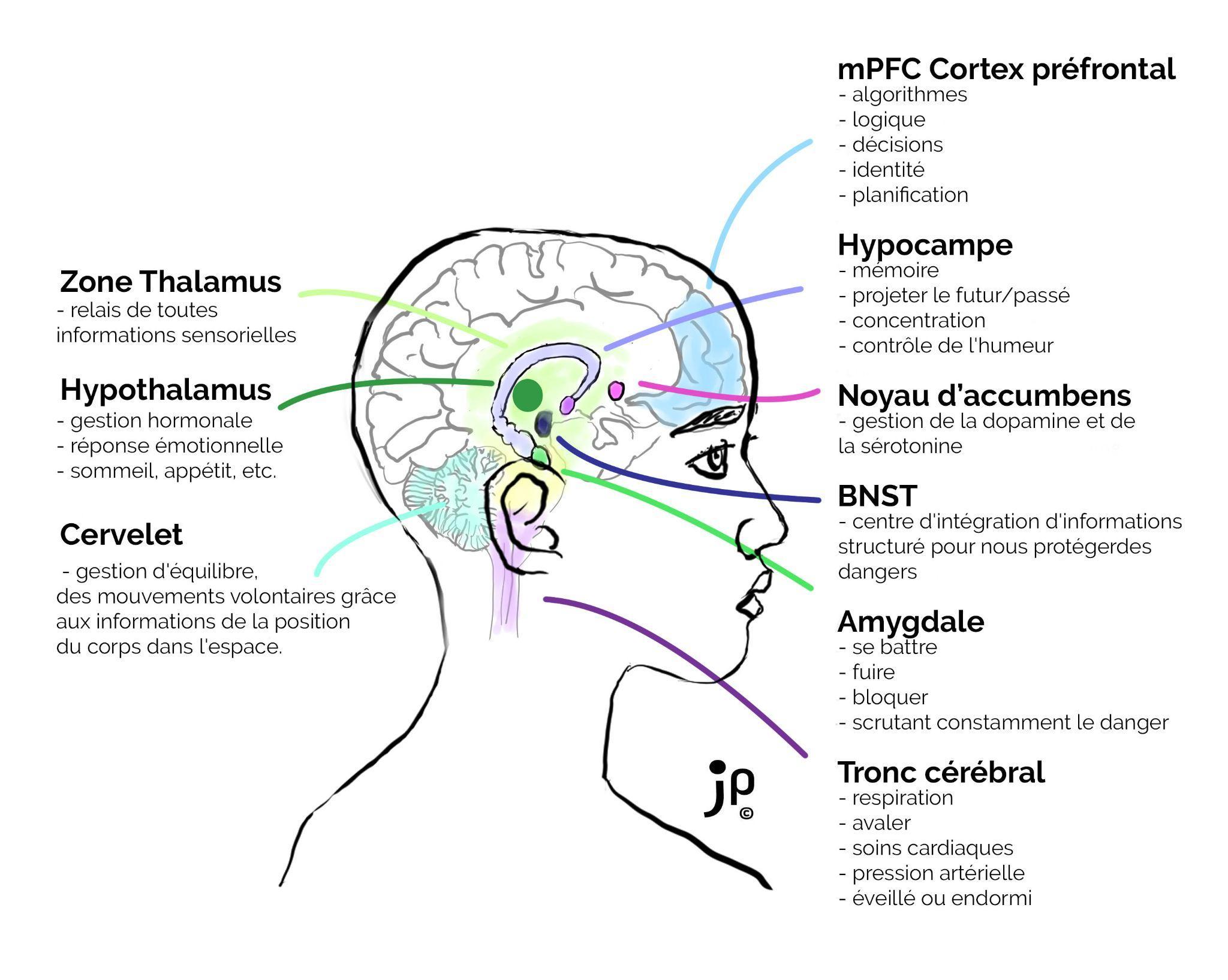
Breathing techniques
When we remain still or stressed, stale, oxygen-depleted air can stagnate in the throat and lungs. To stay healthy, it is essential to renew this air regularly.
This is called three-phase breathing because fresh air follows three successive pathways:
1. Diaphragmatic (abdominal)
○ Breathe in slowly, inflating your belly like a balloon.
○ Breathe out while drawing your belly in.
2. Thoracic
○ Focus on expanding the rib cage.
○ Raise your shoulders slightly as you breathe in.
3. Clavicular
○ Finally, gently raise your collarbones to complete the filling of your lungs.
It is normal to feel slightly light-headed during the first sessions: it is a sign that oxygenation is taking place optimally.
Panic disorder
Panic disorder is characterised by episodes of intense fear, often perceived as an imminent catastrophe.
● Prevalence: It is estimated to affect 2 to 3% of the population, with twice as many women as men.
● Symptoms: palpitations, trembling, a feeling of suffocation, dizziness, hot or cold flushes, numbness, tingling, and sometimes depersonalisation (feeling estranged from oneself) or derealisation (feeling that the world is not real).
● Course: within seconds, the person feels as though they are losing control or dying. These attacks can happen anywhere — at home, on a train, on a plane, or for no apparent reason. Their frequency varies from person to person.
● Isolation: fear of another attack often leads to avoiding certain situations and withdrawing into oneself.
● Solutions: several treatments and therapies are effective, including dietary adjustments, breathing exercises and meditation.
Meditation for better sleep
Meditation is a valuable tool for calming the mind and making it easier to fall asleep:
1. Learning to relax the mind: let your thoughts pass by without judging them.
2. Returning to the past: briefly visualise significant memories (emotions, frustrations), acknowledge them, then let them fade.
3. Counting exercise: count backwards from 100 to 1, pausing for five seconds at each multiple of ten. Gradually slow your pace until sleep arrives.
Meditation and states of consciousness
We experience several levels of consciousness:
● Wakefulness
● Deep sleep
● REM sleep (dreams)
To benefit from these states:
● Catching hypnagogia: that moment between waking and sleeping, when consciousness remains active just long enough to record the images that appear.
● Dream lucidity: practise noticing, even during the day, the signs that you are dreaming. With practice, you will recognise these clues in your dreams.
● Conscious trance: a deeper state in which we connect with our inner wisdom.
Social anxiety disorders
Social anxiety affects our sense of belonging to a group. Rejection, physical or virtual, can be very painful, especially in adolescence (around age 13). With age, the importance attached to other people's judgement diminishes, and anxiety subsides.
● Self-observation: examine your thoughts and automatic responses without judgement.
● The vicious circle: the more we fear an awkward behaviour, the more likely we are to produce it.
● Disproportionate fear: our fears are often exaggerated compared with reality.
● Centring one's life on one's fears: systematically avoiding certain situations reinforces anxiety.
● The key to management: examine your thoughts closely and check their plausibility. The mind tends to assume that others are always judging us, which is rarely the case.
Social anxiety begins early and can shape our way of life for a long time. If you recognise these symptoms in yourself, do not hesitate to take stock of your mental health and consult a professional.
DEPRESSION
A clinical illness or simply a passing state?
Depression often reflects a profound lack in our lives. It can affect our body, our brain and our mind. How does it act on each of these dimensions, and what can we do at each level?
The main forms of depression
1. Neurotic depression versus psychotic depression
○ Neurotic: less intense; contact with reality remains broadly preserved.
○ Psychotic: a serious disorder involving delusions and a break with reality.
2. Psychogenic depression versus endogenous depression
○ Psychogenic: triggered by psychological factors (stress, trauma, inner conflict).
○ Endogenous: attributed to biological causes (chemical imbalance), without a clear emotional trigger.
3. Reactive depression versus autonomous depression
○ Reactive: occurs in response to a specific event (loss, a break-up, failure).
○ Autonomous: develops without an identifiable external cause.
Complementary approaches
In addition to medical care (antidepressants, anxiolytics, etc.), one can adopt a holistic, Ayurvedic or herbal-medicine perspective.
● ‘Circular’ depression:
This is not strictly speaking a mental dysfunction, but a ‘state of mind’ in which one goes round in circles: excessive guilt, self-accusation, fixed ideas… These thoughts maintain the depressed mood and can become delusional (without necessarily developing into psychosis).
The effects of depression
● On the brain and body: fatigue, lack of motivation, sleep and appetite disturbances.
● On the mind: a pessimistic view of the future, a sense of constant suffering.
Freeing oneself from suffering involves meaning: finding a purpose, a responsibility to take on, a clear direction. In the Indian tradition, Dharma (doing one's duty in the service of others) is considered a universal antidote to suffering.
Medication and dependencies
Psychotropic treatments (neuroleptics, sleeping pills, anxiolytics) can shut down the dopamine reward system: no more effort, no more pleasure, and a loss of inspiration. A long withdrawal period, from six months to several years, without addictive substances, may be needed to restore balance. Plant extracts (griffonia, St John's wort, etc.) can accompany this withdrawal, provided one has a life plan to stay motivated.
Five thought mechanisms that feed depression
1. Conditional self-love
Self-esteem depends on performance: simply doubting one's abilities makes self-esteem drop and triggers a feeling of worthlessness.
2. Misunderstood despair
Hitting rock bottom should protect us and encourage us to bounce back. But we often see it as a problem in itself, when it can sometimes be a driving force for finding solutions and rediscovering hope.
3. Incessant projections
Imagining that ‘tomorrow everything will be better’ or endlessly dwelling on the past wastes precious cognitive energy and traps us in a repetitive pattern.
4. Inability to forgive
Anger at oneself and resentment towards others create an inner state of frustration and aggression that is conducive to depression.
5. An accumulating backlog
Faced with a growing to-do list, we feel overwhelmed and powerless. The thought of never catching up paralyses action and plunges us into inactivity.
Moving out of depression: building a personal roadmap
1. Meditation and breathing: finding an inner anchor.
2. Self-knowledge: exploring one's motivations and values and giving meaning to one's life.
3. Neuroscience and the microbiota: combining scientific learning and bodily practices to strengthen the brain–gut connection.
4. Goals and a life plan: defining small steps and a realistic, motivating action plan.
If depression stems from an unsatisfying life (lack of meaning, blockages, a stifling routine), it can continue indefinitely. You are not ‘ill’ in the strict sense, but functioning poorly in relation to your life. It is up to you, through your will and action, to break this cycle: psychiatry can help relieve symptoms, but real change comes from you.
Nadi Śodhana
(alternate-nostril breathing, closing one nostril at a time) allows you to ‘cleanse’ your energy channels and balance your energy system.
Effects of the nostrils
● Left nostril: stimulates the parasympathetic nervous system, strengthens Yin (the lunar aspect), and induces calm.
● Right nostril: stimulates the sympathetic nervous system, activates Yang (the solar aspect), and prepares for action (fight or flight).
Aim
To circulate air fully between the two nostrils and harmonise your Yin and Yang energies.
How to practise
1. Position of the right hand
○ Place your index and middle fingers on your forehead, between your eyebrows.
○ Use your thumb to close the right nostril, and your ring finger to close the left nostril.
2. Breathing cycle
○ Close the right nostril (thumb) and breathe in slowly through the left nostril.
○ Release the right nostril, close the left nostril (ring finger) and breathe out through the right nostril.
○ Breathe in through the right nostril, close it again, then release the left nostril and breathe out through it.
○ Continue this back-and-forth movement, alternating inhalation and exhalation through the opposite nostril each time.
3. Variation: before changing sides, you can complete several full cycles (inhalation + exhalation) through the same nostril to deepen the sensation of air circulating.
4. Finishing the exercise
○ Let your hands relax on your knees or thighs.
○ Keep your eyes open, breathe deeply and become aware of the inner calm.
○ Remain seated in this tranquillity for a few moments before resuming your activities.
This simple practice, accessible to everyone, will help you calm the mind, stimulate your vitality and restore a lasting energy balance.
Bipolar disorders
1. Mood lability and bipolarity
– Mood lability refers to brief, passing changes in mood. Unlike bipolar disorders, these fluctuations are short-lived and do not constitute a bipolar condition.
2. Characteristics of bipolar disorders
– Bipolar disorders involve episodes of very elevated mood (manic or hypomanic) and depressive episodes, which follow one another over several weeks or even months. The Diagnostic and Statistical Manual of Mental Disorders (DSM) offers precise criteria for identifying them.
3. Type I
– Manic episode:
○ Manic periods can last several days.
○ Some patients sleep very little, or not at all, for several days, while others experience excessive sleepiness.
○ Symptoms include uninterrupted speech, ideas flying about without logical continuity, distracted attention and a sense of omnipotence.
○ They launch numerous projects, sometimes risky ones, convinced they will succeed.
– After mania: a prolonged depressive episode often follows.
4. – Diagnostic difficulties:
in people who use drugs or stimulants, it can be difficult for the clinician to distinguish a genuine manic episode from a simple substance-related reaction.
5. Type II (hypomania)
– Hypomanic episodes are less intense than the manic phases of type I:
○ Energy increases and the need for sleep decreases (sometimes to only 2 hours a night).
○ Patients remain highly productive, creative and focused for several days.
– This ‘boost’ seems appealing, but it is most often followed by a long depression. This profile is frequently observed among artists.
6. Cyclothymia
– This involves rapid mood swings over just a few days: alternating a brief depressed state with a period of heightened activity, without a return to calm. These overly rapid changes prevent any balance.
7. Care and prevention
– Aim: to stabilise moods and prevent depressive episodes.
– Positive approach: talk things through, propose concrete solutions and encourage regular routines (sleep, activity, food).
Anhedonia
1. Definition
– Anhedonia is the loss of the ability to feel pleasure. It is common in major depression, schizophrenia and other disorders. The term was introduced in 1896 by the French psychologist Théodule Ribot to describe the psychological equivalent of insensitivity to pain.
2. Clinical signs
– Indifference in social relationships
– Absence of emotion, even towards family or friends
– Loss of satisfaction in usual activities
3. Medication: an asset or a trap?
– Psychotropic drugs (antidepressants, concentration stimulants, anxiolytics) can contribute to anhedonia by altering psychological balance. Every treatment affects the soul and, if poorly adjusted, can create a vicious circle of new disorders.
– Medication can provide rapid relief, but does not always resolve the problem in the long term.
4. Complementary approaches
– Meditation and breathing exercises: slower to act, these forms of support nevertheless help restore a lasting balance.
Author's note: meditation and conscious breathing often offer a lasting solution, even if the path is more gradual.